38.5% of Fearful Australians Fit Dental Fear’s Vicious Cycle
In an Australian study of dentate adults, 38.5% of Australians with moderate to high dental fear fit an avoidance pattern, against 0.9% with no fear. Here is what that means for a dental practice’s website.
 Vikas Thakur Founder, Perth 12 min read Fact checked
Key takeaways
- 38.5% of dentate Australians aged 15 and over with moderate to high dental fear fit a pattern of avoiding visits because of fear, having treatment need and visiting for a problem, against 0.9% of people with no dental fear (Armfield, 2013, n=1,036)
- 16.1% of respondents reported high dental fear in a 7,312-person telephone survey of Australians aged five and over (Armfield, Spencer and Stewart, 2006)
- In a separate sample of 6,112 Australians aged 16 and over, very afraid people had 3.33 times the odds of delayed visiting, dental problems and symptom-driven treatment seeking, compared with people with no fear (95% CI 2.67 to 4.15) (Armfield, Stewart and Spencer, 2007)
- Higher dental fear was associated with more decayed and missing teeth but fewer filled teeth, after adjusting for age, sex, income and other factors (Armfield, Slade and Spencer, 2009, n=5,364)
- Among 191 dentally fearful adults, smoking, toothbrushing frequency, coping strategy use and anxiety about numbness and cost accounted for 30% of the variance in dental avoidance (Armfield, 2013, European Journal of Oral Sciences)
- The 2006 survey found adults aged 40 to 64 had the highest prevalence of high dental fear and those aged 80 and over the lowest, and a higher percentage of females than males reported high fear
- About 60% of people aged 18 to 25 had experienced wisdom tooth-related issues, per the ADA’s 2025 Consumer Survey of more than 25,000 Australians, as reported by The Examiner
- We found no Australian regulator or industry body that publishes a dollar figure for revenue lost to fear-driven avoidance
38.5% of Australians with moderate to high dental fear fit a pattern of avoiding dental visits because of fear, having treatment need and visiting only for a problem. Among people with no dental fear, 0.9% do. That gap comes from an Australian study of 1,036 dentate Australians aged 15 and over. It is one of several peer-reviewed Australian studies suggesting fear is linked to whether and when the visit happens. This report pulls together the Australian statistics we could verify on dental anxiety prevalence and avoidance, and what they mean for a dental practice’s website.
How Common Is Dental Anxiety in Australia?
16.1% of respondents reported high dental fear in Armfield, Spencer and Stewart’s 2006 telephone survey of 7,312 Australian residents aged five and over from all states and territories, published in the Australian Dental Journal. It is the most recent national prevalence figure we found in the sources we checked, and it covers all ages from five, not adults only.
A higher percentage of females than males reported high fear. Adults aged 40 to 64 had the highest prevalence of high dental fear, and adults aged 80 and over the lowest. People from higher socioeconomic groups generally had less fear.
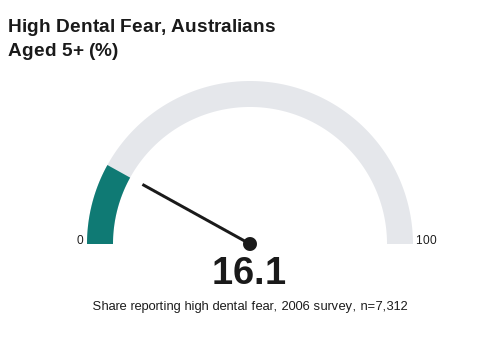
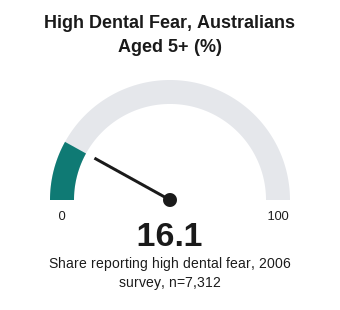
Source: Armfield, Spencer and Stewart, Australian Dental Journal, 2006, seen 24 November 2026. Figure is the percent of all 7,312 respondents aged five and over who reported high dental fear.
Takeaway: 16.1% of respondents in that survey reported high dental fear. It is a 2006 figure, so treat it as a reference point rather than today’s rate.
The Avoidance Numbers: When Fear Becomes a Vicious Cycle
Prevalence is one number. Behaviour is another. Armfield’s 2013 study tested what researchers call the vicious cycle of dental fear: fear leads to avoiding or delaying visits, which leads to treatment need and then problem-oriented visiting, which reinforces the fear. For people with moderate to high dental fear, 38.5% fit the pattern of avoiding dental visiting because of fear, having treatment need and visiting for a problem. Among people with no dental fear, 0.9% did.
A 2007 study from the same research group used a different Australian sample of 6,112 people aged 16 and over, and a different definition: delayed dental visiting, dental problems and symptom-driven treatment seeking. 29.2% of people who were very afraid of going to the dentist fitted that profile, against 11.6% of people with no dental fear. After adjusting for sex, dentate status, employment status and household income, the odds ratio for very afraid people was 3.33 (95% CI 2.67 to 4.15, p < 0.001).
Both studies point the same way, though they use different samples and different definitions of the pattern, so the percentages should not be compared directly across studies.
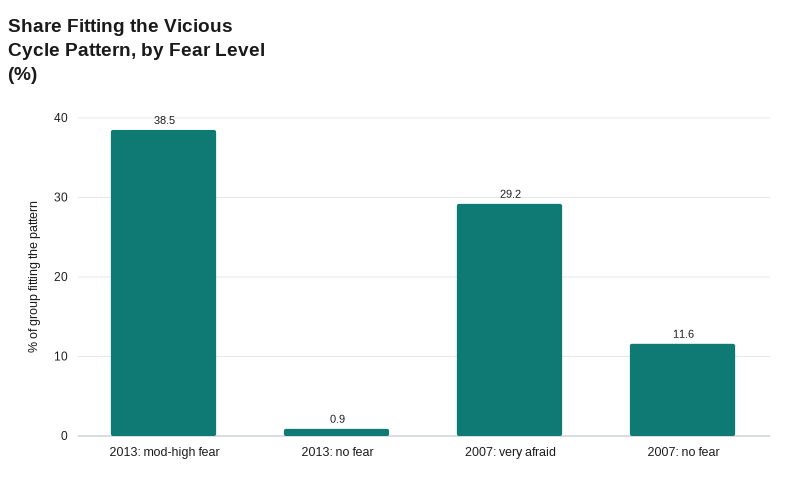
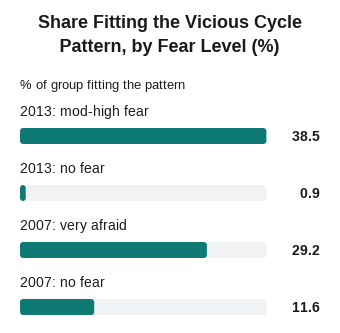
Source: Armfield, 2013, Community Dentistry and Oral Epidemiology and Armfield, Stewart and Spencer, 2007, BMC Oral Health, seen 24 November 2026. Figures are percent of each fear group. The 2013 pattern is avoiding visits because of fear, treatment need and a problem visit (n=1,036). The 2007 pattern is delayed visiting, dental problems and symptom-driven treatment seeking (n=6,112). The definitions differ.
Takeaway: In both studies the fearful group fitted the pattern far more often than the no-fear group. We have not combined the two studies into one figure.
What Avoidance Means for a Dental Practice
We found no Australian regulator, university or industry body that publishes a dollar figure for revenue lost to anxiety-driven avoidance. What exists are health findings.
Armfield, Slade and Spencer’s 2009 study examined 5,364 Australian adults aged 18 to 91. Higher dental fear was significantly associated with more decayed teeth, more missing teeth and a higher DMFT index (a count of decayed, missing and filled teeth), but with fewer filled teeth, after controlling for age, sex, income, employment status, tertiary education, dental insurance status and oral hygiene. The authors describe an inverted U-shaped association between fear and the number of filled teeth, and found no association between fear and periodontitis or gingivitis.
| Measure | Association with higher dental fear | Source |
|---|---|---|
| Decayed teeth | More | Armfield, Slade and Spencer, 2009 |
| Missing teeth | More | Armfield, Slade and Spencer, 2009 |
| Filled teeth | Fewer after adjustment (inverted U overall) | Armfield, Slade and Spencer, 2009 |
| Periodontitis and gingivitis | No association | Armfield, Slade and Spencer, 2009 |
Source: Armfield, Slade and Spencer, Community Dentistry and Oral Epidemiology, 2009, seen 24 November 2026. Findings from 5,364 Australian adults examined clinically; the table shows direction of association only, not counts.
In our view, a fearful patient with untreated decay is a patient whose treatment is happening later than it could. The study does not measure practice revenue, so we are not putting a number on it.
Takeaway: The health data show a link between fear and more decayed and missing teeth. The financial cost to a practice is not measured by any source we found.
Who Is Most Likely to Avoid Treatment
The 2006 national survey found a higher percentage of females than males reported high fear, and adults aged 40 to 64 had the highest prevalence of any age group. Among 191 dentally fearful adults in a 2013 Australian study, smoking status, toothbrushing frequency, coping strategy use, and anxiety about numbness and cost were significant predictors of avoidance, and the model accounted for 30% of the variance. Avoidance in that study meant currently avoiding or delaying care and not having visited a dentist in the previous two years.
Younger adults face their own barriers. The ADA’s 2025 Consumer Survey of more than 25,000 Australians found about 60% of people aged 18 to 25 had experienced wisdom tooth-related issues, including pain, swelling, crowding, infection or discomfort. The Examiner reported that barriers including cost, the move away from family-managed and publicly funded care after 18, long waitlists and fear of judgement contribute to young people avoiding the dentist. We did not open the ADA’s own release, so we cite the 60% figure as reported by The Examiner.
Takeaway: The highest reported prevalence of high fear in the 2006 survey was among adults aged 40 to 64, and fear of judgement is one of the barriers reported for young adults.
Design Choices That Lower Anxiety Before the First Call
A website cannot treat dental fear. In our view, it can remove some of the unknowns that make a first booking feel bigger than it is. In the 2013 avoidance study of fearful adults, avoidance was associated with perceiving visits as uncontrollable and unpredictable, and with anxiety about numbness and about not knowing what the dentist is going to do. Those are information gaps a website can address. We found no study measuring whether the content below changes booking behaviour, so these are our suggestions, not tested results.
A short virtual tour of the practice answers what the place looks and sounds like. A dedicated sedation-options page, listing what is available in plain language, tells a nervous patient there is a plan for people like them. An anxiety-specific FAQ section can cover questions such as whether treatment can be stopped if needed and what the numbing process involves.
Staff bio pages put a named face on a booking. A “meet the team” video is a more reassuring choice than a stock photo of gloved hands and steel instruments, in our view.
Takeaway: The goal is not to hide what dental treatment involves. It is to remove the unknowns that let anxiety fill the gap before a patient calls.
Staying Inside AHPRA’s Rules While You Build Trust
Trust-building content for an anxious audience runs into the same advertising rules as the rest of a dental practice’s marketing. Under the National Law, as set out in Ahpra’s advertising guidelines, advertising a regulated health service must not use testimonials or purported testimonials about the service or business. A “here’s what our nervous patients say” carousel is a risk if it refers to the clinical aspects of care. Process and people content, such as sedation pages, staff bios and virtual tours, can be written without testimonials or outcome claims.
The full set of rules that apply to dental advertising is covered at AHPRA advertising rules for cosmetic dentistry. ClinicCode checks a practice’s current site and ad accounts against the rules regulators are actively enforcing, before a complaint does it for the practice.
Takeaway: In our view, honest process information and real people is content that can be written to stay inside the testimonial rules.
Get Your Dental Practice’s Website Checked for Anxiety-Reduction Gaps
ClinicCode fixes dental practice websites against AHPRA’s advertising rules and the trust-building content that addresses fear, sedation pages, virtual tours, staff bios and anxiety-specific FAQs included.
The Source Pages
Screenshots of the pages cited in this post, taken on 24 November 2026 and framed on the passage each one supports.
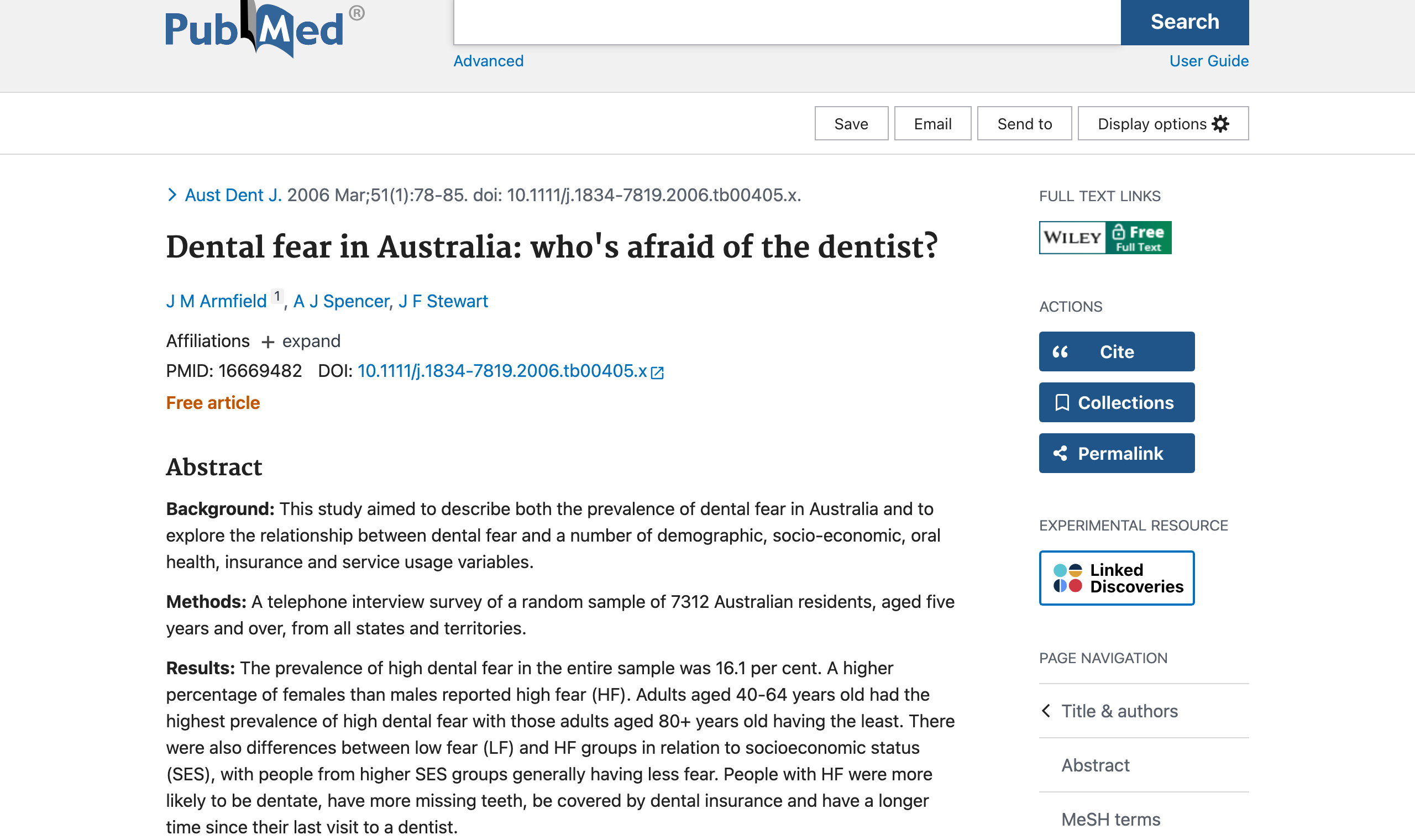
Source: Armfield, Spencer and Stewart, Australian Dental Journal, 2006 (PubMed), screenshot taken 24 November 2026.
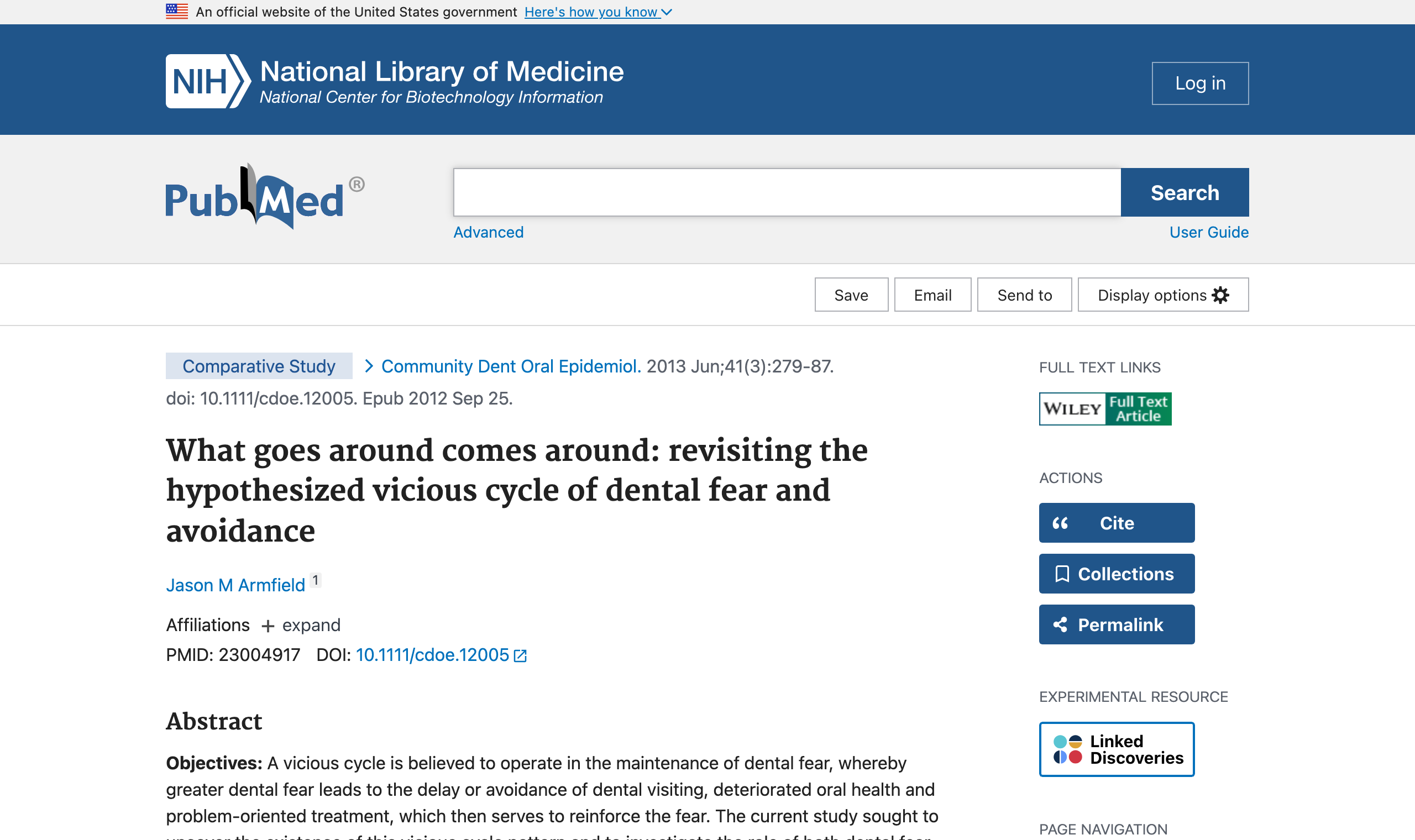
Source: Armfield, Community Dentistry and Oral Epidemiology, 2013 (PubMed), screenshot taken 24 November 2026.
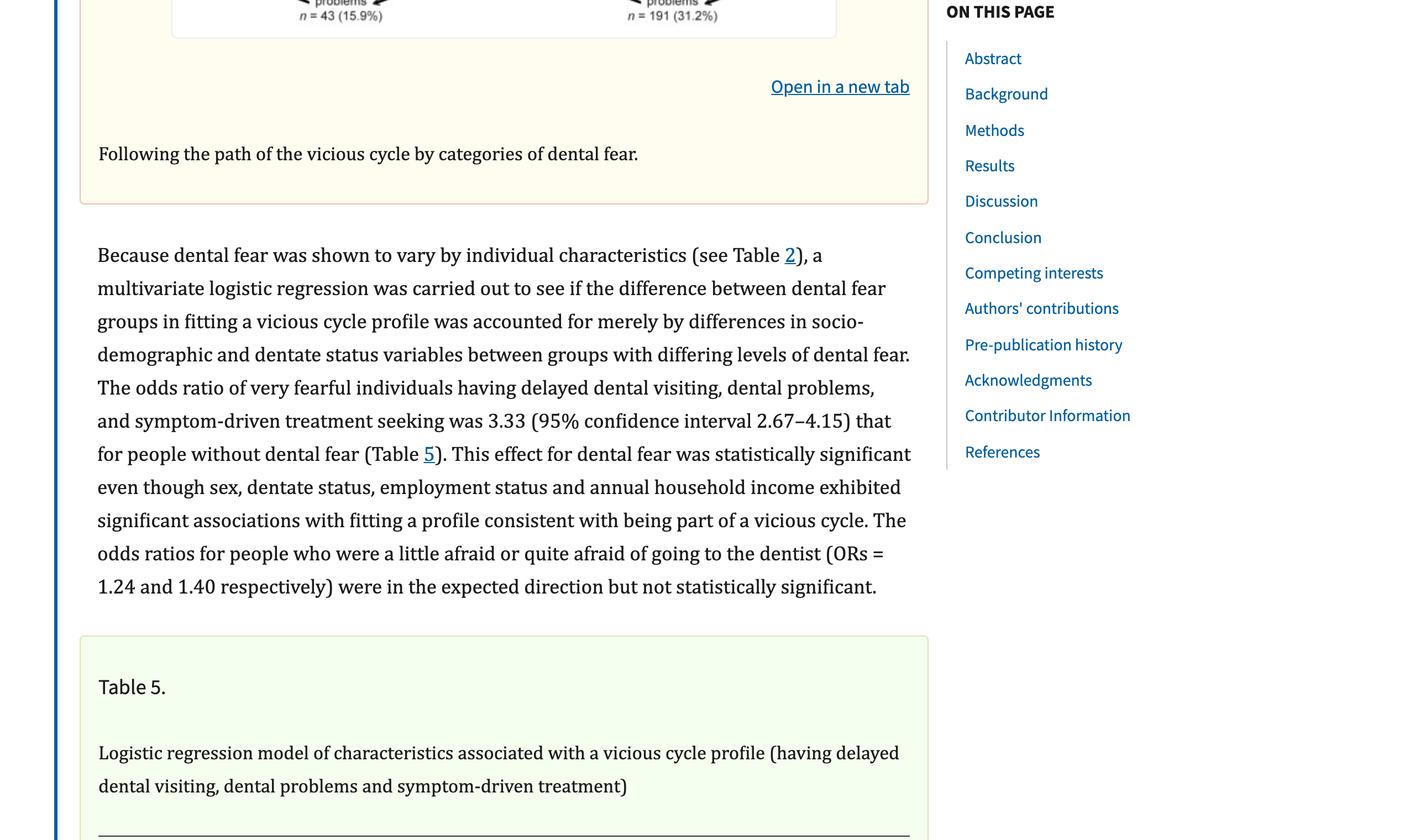
Source: Armfield, Stewart and Spencer, BMC Oral Health, 2007 (PubMed Central), screenshot taken 24 November 2026.
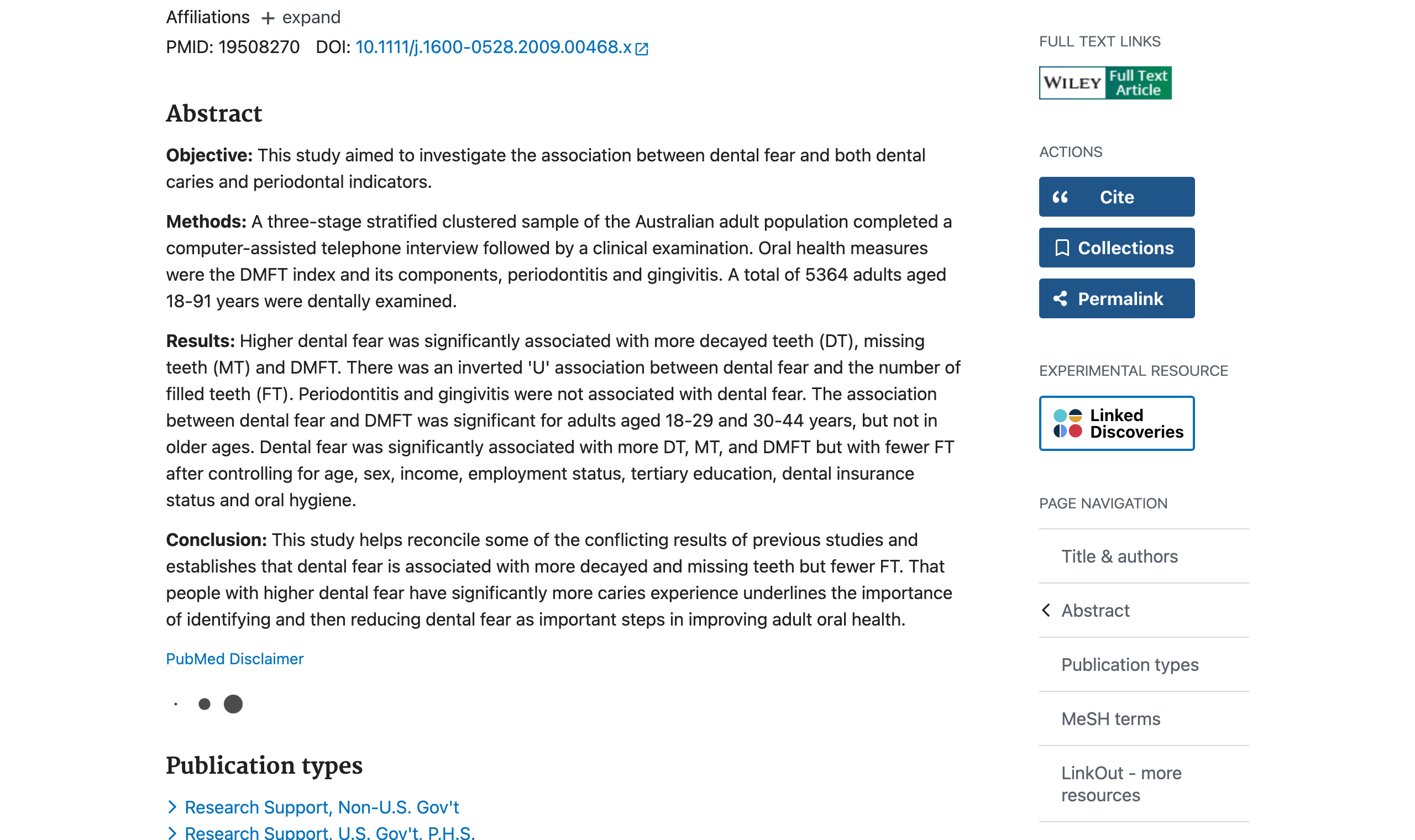
Source: Armfield, Slade and Spencer, Community Dentistry and Oral Epidemiology, 2009 (PubMed), screenshot taken 24 November 2026.
FAQ
How many Australians experience dental anxiety?
16.1% of respondents reported high dental fear in Armfield, Spencer and Stewart’s 2006 telephone survey of 7,312 Australian residents aged five and over, published in the Australian Dental Journal. We found no newer national figure in the sources we checked.
Does dental anxiety actually stop people going to the dentist?
In one Australian study, yes. Among dentate Australians aged 15 and over with moderate to high dental fear, 38.5% fit a pattern of avoiding dental visits because of fear, having treatment need and visiting for a problem, against 0.9% of people with no dental fear (Armfield, 2013, Community Dentistry and Oral Epidemiology, n=1,036).
Does avoiding the dentist because of fear end up costing more?
We found no Australian source that puts a dollar figure on anxiety-driven avoidance. A 2009 Australian study of 5,364 adults found higher dental fear was associated with more decayed and missing teeth but fewer filled teeth, after adjusting for age, sex, income and other factors.
How can a dental practice’s website reduce anxiety-driven avoidance?
In our view, anxiety-specific FAQ content, a sedation-options page, a virtual practice tour and staff bio content address unknowns before a patient calls. We found no study measuring their effect. AHPRA’s advertising rules still apply, including the ban on testimonials, so trust-building content needs to stay compliant. ClinicCode fixes a practice’s current site against those rules.
Need a hand with your website?
If you want a second pair of eyes on how this applies to your own site, request a callback and we will talk it through.
Sources and References
Armfield JM, Spencer AJ, Stewart JF. Dental fear in Australia: who’s afraid of the dentist? Australian Dental Journal, 2006 - the 16.1% high dental fear figure, n=7,312, aged 5 and over
Armfield JM. What goes around comes around: revisiting the hypothesized vicious cycle of dental fear and avoidance. Community Dentistry and Oral Epidemiology, 2013 - the 38.5% versus 0.9% comparison, n=1,036
Armfield JM, Stewart JF, Spencer AJ. The vicious cycle of dental fear: exploring the interplay between oral health, service utilization and dental fear. BMC Oral Health, 2007 - the 29.2% versus 11.6% comparison and 3.33 odds ratio, n=6,112
Armfield JM, Slade GD, Spencer AJ. Dental fear and adult oral health in Australia. Community Dentistry and Oral Epidemiology, 2009 - decayed, missing and filled teeth by fear level, n=5,364
Armfield JM. Predicting dental avoidance among dentally fearful Australian adults. European Journal of Oral Sciences, 2013 - predictors of avoidance among 191 fearful adults
The Examiner, Australian Dental Association: New adults avoid vital dental care - the ADA 2025 Consumer Survey 60% wisdom tooth figure and reported barriers to care
Ahpra, Guidelines for advertising a regulated health service - the testimonial prohibition in section 133(1)(c) of the National Law
Related reading:
- AHPRA Advertising Rules for Cosmetic Dentistry: the full advertising rules that apply to dental practice marketing
- Dental Tourism Statistics Australia: what happens when cost, not fear, drives Australians to avoid local treatment
- Early Super Release for Dental Care: the regulatory side of how Australians are paying for delayed dental treatment
For a website review built around what addresses anxiety-driven avoidance, see cosmetic clinic websites or talk to us about your practice’s marketing.
Vikas Thakur
Founder, Perth. 16 years of experience from working at TPG, iiNet and Monadelphous, now helping Australian clinics keep their websites, ads and online presence AHPRA compliant.