60% of Dental Patients Decide on Social: AHPRA Rules 2026
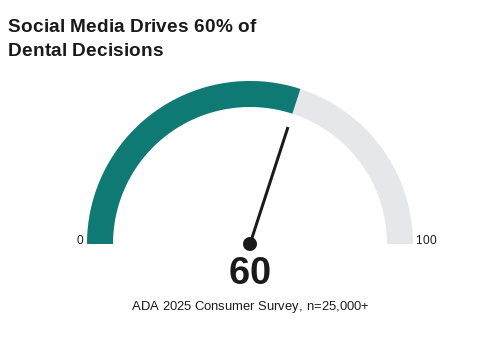
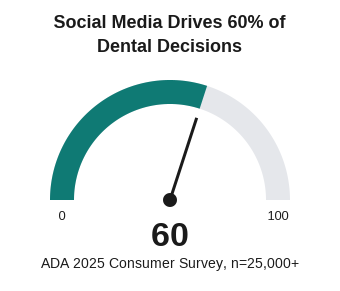
60% of Australians who considered a cosmetic dental procedure say social media influenced that decision, per the Australian Dental Association’s 2025 Consumer Survey. AHPRA’s social media rules, in force since 2 September 2025, treat liking or replying to a patient review as using a testimonial, a breach worth up to $120,000.
 Vikas Thakur Founder, Perth 12 min read Fact checked
Key takeaways
- 60% of Australians who considered a cosmetic dental procedure said social media influenced that decision, per the Australian Dental Association’s 2025 Consumer Survey of over 25,000 respondents, published 31 July 2026
- 20.9 million Australians, 77.9% of the population, were active social media users as of January 2025, per DataReportal’s Digital 2025 Australia report
- AHPRA’s cosmetic procedure advertising guidelines, in force since 2 September 2025, list liking, otherwise responding to, or re-sharing a review among the ways a practitioner is treated as using a testimonial
- A testimonial breach carries a maximum penalty of $60,000 for an individual dentist and $120,000 for a body corporate, under section 133 of the Health Practitioner Regulation National Law. Ahpra’s advertising guidelines page still carries footnote 3, which gives Western Australia maxima of $30,000 for an individual and $60,000 for a body corporate against the unlawful use of a protected title offence, and the page does not reconcile it with its statement that the higher penalties apply in all jurisdictions, including Western Australia, as of July 2024.
- AHPRA investigated around 360 notifications about non-surgical cosmetic procedures between September 2022 and March 2025, and had already closed about 300 of them
- A peer-reviewed 2023 study found 85% of 192 Australian dental websites already breached at least one AHPRA advertising rule, before testimonials were banned outright
- Dental-specific social formats, smile-transformation reels, teeth-whitening before/after carousels, and orthodontic “watch my teeth move” time-lapses, are structurally before/after or testimonial content and fail the same test as any other cosmetic post
- A star-rating widget that pulls curated reviews onto a practice website is treated the same way as sharing one, because the practice chose which reviews to display
AHPRA’s social media rules apply to every registered dentist in Australia, in force since 2 September 2025. Liking, replying to, or re-sharing a patient review counts as using a testimonial, a breach worth up to $120,000. 60% of Australians say social media shaped their decision to get a cosmetic dental procedure done, according to the Australian Dental Association’s 2025 Consumer Survey of over 25,000 people.
60% of Australians who considered a cosmetic dental procedure say social media talked them into it, according to the Australian Dental Association’s 2025 Consumer Survey of more than 25,000 respondents. That number should worry every practice owner still treating Instagram and TikTok as a free noticeboard. AHPRA does not distinguish between a paid Facebook ad and an organic Reel showing a patient’s teeth mid-whitening: both are advertising. Under the guidelines in force since 2 September 2025, a dentist does not even have to post the offending content to breach the testimonial ban. Liking a five-star Google review, replying to it, or embedding a star-rating widget on the practice website can each count as using a testimonial, and that single detail catches out more dental practices than any missing disclaimer ever will. This guide sets out exactly what AHPRA treats as a testimonial on dental social media, checks the specific content formats every dental practice posts against the compliant/banned line, and gives a short audit for checking a practice’s own review activity before AHPRA does it first.
What AHPRA’s Social Media Rules Cover for Dentists
Every practising dentist in Australia is registered with the Dental Board of Australia, which sits under AHPRA and the same Health Practitioner Regulation National Law as every medical board. That single fact removes the excuse dental practice owners reach for most often: “the cosmetic clinic rules are for injectables, not us.” They are not. Organic social media content, not just paid ads, meets AHPRA’s definition of advertising the moment it promotes a regulated health service, and a Reel, a Story, or a TikTok video promoting a dental practice is exactly that.
The scale of the audience makes the stakes concrete. 20.9 million Australians, 77.9% of the population, were active social media users as of January 2025, according to DataReportal’s Digital 2025 Australia report. A dental practice posting non-compliant content is not posting into a small, local audience. It is posting into a channel that most of the country checks daily, and that 60% of the country already lets influence a cosmetic health decision.
| Metric | Figure | Source |
|---|---|---|
| Cosmetic dental decisions social media influenced | 60% | ADA 2025 Consumer Survey (n=25,000+) |
| Australians active on social media, January 2025 | 77.9% | DataReportal, Digital 2025 Australia |
| Maximum penalty per testimonial breach, body corporate | $120,000 | Section 133, Health Practitioner Regulation National Law |
For the full breakdown of what dental advertising can and cannot say, from before/after imagery to outcome language like “smile makeover,” see our guide to AHPRA advertising rules for cosmetic dentistry. This post focuses specifically on the social media layer: platforms, content formats, and the review activity most practices never think to audit.
Takeaway: The Dental Board operates under the exact same National Law as every other AHPRA-registered profession, so a rule that applies to a cosmetic clinic’s Instagram page applies to a dental practice’s TikTok account without exception.
The Testimonial Trap: Reviews and Star Ratings You Don’t Control
This is the angle most dental practice owners get backwards. A patient’s five-star Google review naming their veneers is the patient’s own speech. AHPRA does not require a dentist to police what a patient writes. What AHPRA does require is that the dentist not turn that review into the practice’s own advertising by interacting with it.
AHPRA’s Guidelines for advertising higher risk non-surgical cosmetic procedures, in effect since 2 September 2025, define a testimonial as a positive statement about the clinical aspects of a regulated health service, used in advertising. The guidelines then list the specific ways a practitioner is treated as having used a testimonial, including “liking or otherwise responding to a patient’s social media post.” They go further and place an affirmative duty on the practitioner: “health practitioners must take steps to ensure that they do not interact with testimonials.” A dental practice replying “so glad you love your new smile!” to a veneers review has just written the testimonial itself, in its own words, even though the original review broke no rules at all.
| Activity | Treated as using a testimonial? | Why it matters for dentists |
|---|---|---|
| Liking or reacting to a review naming veneers, whitening, or Invisalign | Yes | Listed explicitly as an interaction under AHPRA’s guidelines |
| Replying with language that repeats the treatment or outcome | Yes | The reply becomes the practice’s own advertising |
| Re-sharing a patient’s before/after post to Stories | Yes | The practice endorses the content by re-sharing it |
| Embedding a curated star-rating widget on the practice website | Yes | The practice chose which reviews to display |
| A patient’s independent post with no practice interaction | No | The practice has no control over unprompted patient speech |
| Replying with a generic thank-you, no clinical content | No | Clears the clinical aspect test regardless of the review’s wording |
Takeaway: The review itself is usually protected speech a dental practice cannot control. Every like, reply, and curated widget on top of it is the practice’s own advertising, and that part is fully within the practice’s control.
A compliance check from ClinicCode checks exactly this layer, the interactions on top of reviews the practice never wrote, alongside the rest of a practice’s website and social presence.
Dental Social Content Formats: Compliant or Banned
Cosmetic clinics and dental practices post different content because they treat different things, and that difference matters for compliance. A dental practice’s highest-engagement formats are visual, sequential, and built around showing change over time, which is precisely the structure AHPRA’s before/after and testimonial rules target.
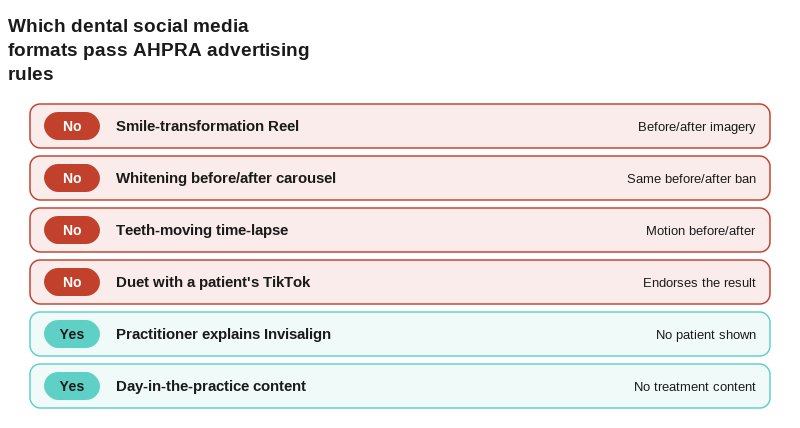
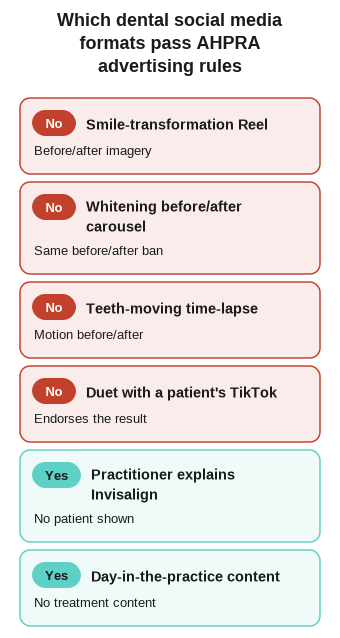
| Dental Content Format | Compliant? | Why |
|---|---|---|
| Smile-transformation Reel showing a patient’s before and after veneers | No | Before/after imagery for a cosmetic dental outcome |
| Teeth-whitening before/after carousel on Instagram | No | Same before/after ban applies to whitening results |
| Orthodontic “watch my teeth move” time-lapse video | No | A time-lapse is a before/after format shown as motion |
| Practitioner explaining how Invisalign works, no patient shown | Yes | Educational, no outcome imagery, no patient content |
| Duet or stitch with a patient’s transformation TikTok | No | The practice endorses the patient’s before/after by duetting it |
| Day-in-the-practice content, reception and equipment | Yes | No treatment content, no cosmetic outcome shown |
| Reposting a patient’s own whitening result to a practice Story | No | Re-sharing turns the patient’s post into the practice’s advertising |
| GBP post captioned “our patients love their new smiles” | Yes | Only when written without patient identification or outcome language; most versions of this phrase fail, so treat it as high-risk by default |
Notice what survives. Process and education content works. Outcome content, in any format, does not, and a time-lapse is still an outcome format even when nobody calls it “before and after.”
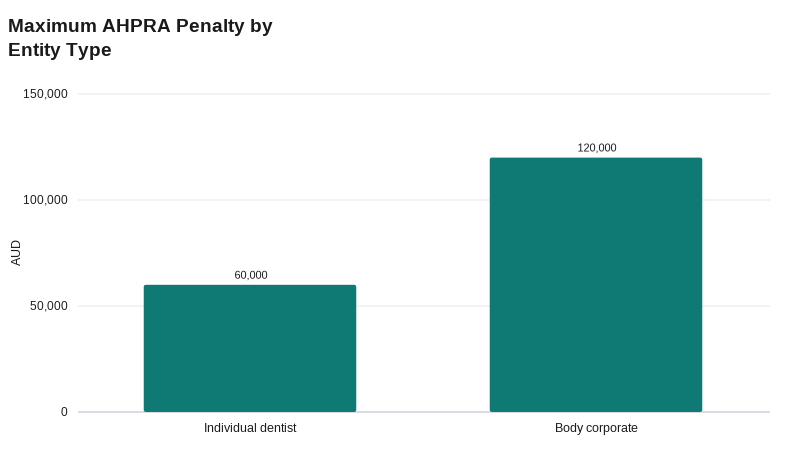
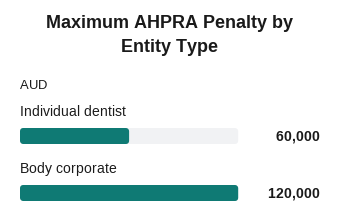
Section 133 of the Health Practitioner Regulation National Law sets these maximums, current as at 10 April 2026. They apply per breach, not per account, so a practice running one non-compliant Reel, one curated review widget, and one duetted TikTok is not looking at one violation. It is looking at three.
Takeaway: The format a dental practice’s marketing team reaches for most, the transformation video, is the exact format AHPRA’s rules were written to catch.
Star-Rating Widgets and Google Business Profile
Most dental practice websites carry a star-rating widget somewhere: a plugin pulling the practice’s Google or Facebook rating onto the homepage, sometimes with a scroll of the five best reviews attached. That widget is a curation decision. The practice picked which reviews the plugin surfaces, whether directly or by letting the highest-rated reviews sort to the top by default, and AHPRA’s guidance treats a curated display the same way it treats a reply: as the practice’s own advertising, not the patient’s independent speech.
Google Business Profile carries its own specific risks for dental practices:
- Owner responses to reviews that repeat outcome language (“so glad you’re loving your new veneers!”) are the same testimonial-use risk as an Instagram reply.
- GBP posts offering “free whitening consult with any smile makeover booking” combine an inducement with outcome language in one post.
- Q&A responses that describe a patient’s results, even hypothetically, carry the same risk as a reply to a real review.
- Service listings using outcome language like “Hollywood smile” rather than category terms like “cosmetic dental consultation.”
A compliant rebuild removes the curated widget entirely rather than trying to police which reviews it shows. If a dental practice wants a new site built around this from the ground up, ClinicCode’s cosmetic clinic and dental website builds start from the current advertising guidelines instead of retrofitting compliance onto a template that was never designed for it.
Takeaway: A star-rating widget feels like passive display, but AHPRA’s guidance treats curation as interaction, and interaction is what the rule was written to catch.
Auditing a Practice’s Social Accounts and Reviews
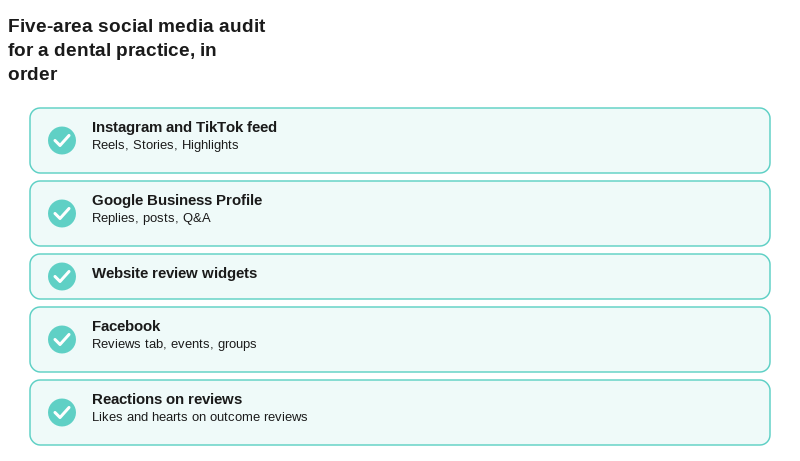
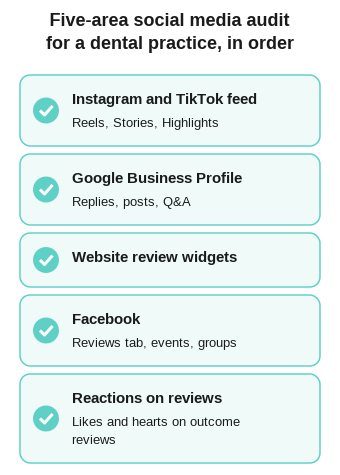
A social media compliance check for a dental practice should run through five areas, in this order:
- Instagram and TikTok feed. Every Reel, post, and Story (including archived Highlights) showing a before/after, a time-lapse, or a duet with patient content.
- Google Business Profile. Every owner reply, post, and Q&A response, checked against the clinical aspect test, not just for outright testimonials.
- Website review widgets. Any plugin or embed that pulls curated Google or Facebook reviews onto the site.
- Facebook. Reviews tab, event listings, and any group the practice administers.
- Reactions. Likes and hearts on reviews naming veneers, whitening, or orthodontic outcomes, across every platform the practice has an account on.
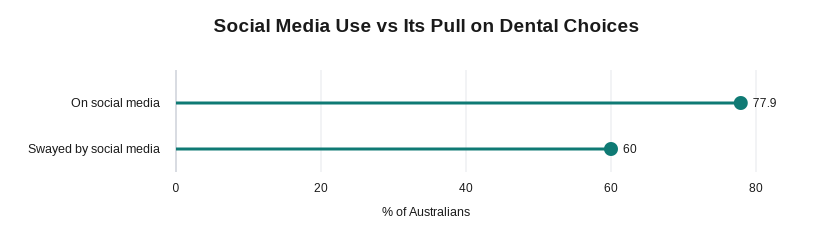
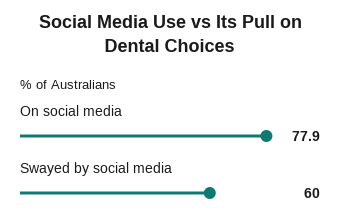
That gap between 77.9% and 60% is worth sitting with. Most of the country is on social media, and a majority of those weighing a cosmetic dental procedure let it shape the decision. A peer-reviewed 2023 study already found 85% of 192 Australian dental websites breached at least one AHPRA advertising rule before the testimonial ban even existed. AHPRA investigated around 360 notifications about non-surgical cosmetic procedures between September 2022 and March 2025 and had closed about 300 by the time it published that figure, a steady enforcement pace, not a dormant rule.
Takeaway: Run the five-point check before a patient complaint runs it for you. Every item on that list is fixable in an afternoon; a $120,000 exposure is not.
Get Your Dental Practice’s Social Accounts Checked
ClinicCode fixes dental practice websites and social accounts against AHPRA’s current advertising guidelines: every Reel, every GBP reply, every curated review widget. We rewrite what is at risk and provide compliant content templates for the formats that still convert.
Sources
- Australian Dental Association - 2025 Consumer Survey, 60% of respondents reporting social media influenced their decision to pursue a cosmetic dental procedure. Published 31 July 2026.
- DataReportal - Digital 2025: Australia, 20.9 million active social media user identities, 77.9% of the population, as at January 2025.
- AHPRA - Guidelines for advertising higher risk non-surgical cosmetic procedures, including the sections on testimonials and interacting with reviews. In force since 2 September 2025.
- AHPRA - Testimonials: Understand the requirements, including the clinical aspect test and third-party review platform responsibilities.
- Queensland Legislation - Health Practitioner Regulation National Law Act 2009, Schedule, section 133 (Advertising), current as at 10 April 2026. Primary source for the $60,000/$120,000 penalty maxima.
- AHPRA - Cosmetic procedure guideline announcement, including notification volumes for September 2022 to March 2025.
- Jensen, K. et al. (2023), “Advertising and general dental practice: how compliant are practice websites in Australia with legal requirements?”, Australian Dental Journal, 68(2), pp. 92-97.
Related reading:
- AHPRA Advertising Rules for Cosmetic Dentistry Australia 2026: the full advertising framework beyond social media
- The AHPRA Trap Hiding in Your Google Review Replies: the clinical aspect test for review replies, worked through in detail
- Google Reviews and AHPRA: A Reply Can Cost You $120K: the review-collection rules behind the replies
- 85% of Dental Websites Breach AHPRA Ad Rules: Study: the study behind the 85% breach figure
- Clinic Website Design: compliant website builds for AHPRA-regulated dental practices and clinics
Last reviewed: 11 August 2026.
Vikas Thakur
Founder, Perth. 16 years of experience from working at TPG, iiNet and Monadelphous, now helping Australian clinics keep their websites, ads and online presence AHPRA compliant.