Clinic Privacy Policy: The 7 Sections APP 1.4 Requires
The Australian Privacy Principles list seven specific things a privacy policy must cover, and most template policies on cosmetic clinic websites are missing two or three of them. Here is the checklist, the exact build changes, and the section about to become an eighth requirement.
 Vikas Thakur Founder, Perth 11 min read Fact checked
Key takeaways
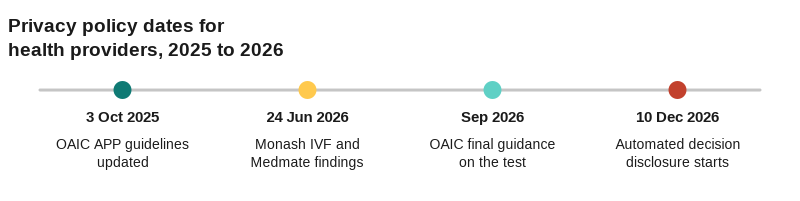
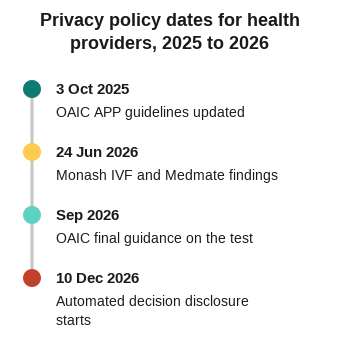
- APP 1.4 lists seven required matters for an APP privacy policy, set out in the OAIC’s Australian Privacy Principles guidelines, updated 3 October 2025.
- APP 1.3 requires the policy to be “clearly expressed and up to date”, not just legally accurate.
- Health service providers stay inside the Privacy Act regardless of turnover, so the general small business exemption does not help most cosmetic clinics.
- From 10 December 2026, APP 1.7 to 1.9 add an eighth disclosure: what personal information feeds any automated decision-making on the site, added by the Privacy and Other Legislation Amendment Act 2024.
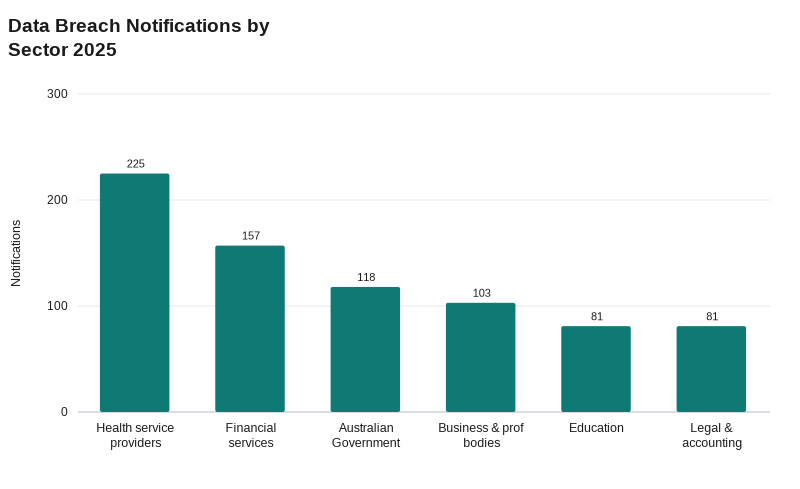
- OAIC data shows 225 of the 1,205 data breach notifications logged in 2025 came from health service providers, the single largest sector.
- In June 2026 the OAIC found two health providers, Monash IVF Pty Ltd and Medmate Australia Pty Ltd, had interfered with patients’ privacy through third-party tracking pixels.
- The overseas disclosure item, APP 1.4(g), is one of the most common gaps found when a clinic’s booking software stores data offshore and its privacy policy never says so.
APP 1.4 of the Australian Privacy Principles sets out seven specific things every privacy policy must cover, according to the OAIC’s guidelines updated 3 October 2025. Most cosmetic clinic websites run a privacy policy built from a generic legal template years ago, and it is common for two or three of those seven items to be missing, especially the overseas disclosure clause and the complaint-handling detail. From 10 December 2026 there is an eighth item to add: a disclosure about any automated decision-making that touches a patient’s personal information, and that covers a booking widget as much as any other software on the site. This guide covers what the rule says, what a compliant policy needs on the page, and what to check on your own site first.
Why a Template Privacy Policy Is a Bigger Risk Than It Looks
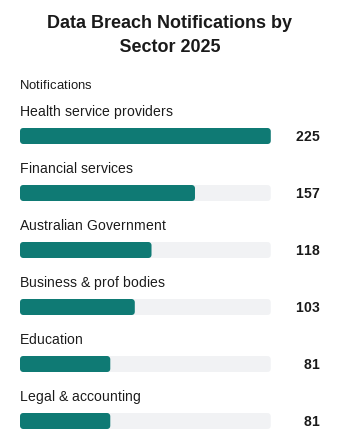
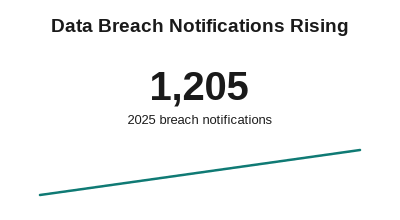
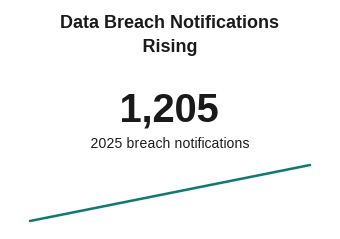
Picture the privacy policy on your clinic’s website right now. It is probably a page nobody has opened since the site went live, sitting behind a small link in the footer. That is a problem, because health service providers are already the sector the Office of the Australian Information Commissioner reports on most. In 2025, the OAIC recorded 1,205 notifications under the Notifiable Data Breaches scheme, an 8% rise on 2024’s 1,112, according to the OAIC’s 2025 NDB statistics release. Health service providers accounted for 225 of those notifications, more than any other sector, ahead of financial services on 157 and the Australian Government on 118.
A privacy policy will not stop a breach. But it is the first document a patient, a lawyer, or an OAIC investigator reads to work out whether a clinic handled data the way it said it would. A policy missing required items is, on its own, evidence the clinic has not met APP 1.3’s basic duty to keep the policy accurate.
Takeaway: Health providers already lead the breach notification numbers, and a thin privacy policy is the first thing anyone checks afterwards.
What APP 1.4 Requires, Item by Item
The OAIC’s Australian Privacy Principles guidelines, Chapter 1, set the bar precisely. APP 1.3 requires an APP entity to have a clearly expressed and up to date APP Privacy Policy about how it manages personal information. APP 1.4 then lists the matters that policy must cover: the kinds of personal information collected and held, how it is collected and held, the purposes for which it is collected, held, used and disclosed, how an individual accesses or corrects their own information, how a complaint about an APP breach is made and handled, whether the entity is likely to disclose information to overseas recipients, and, if practicable, which countries those recipients are likely to be in. APP 1.5 and 1.6 add two build-relevant duties on top: the policy must be available free of charge, and a copy must be provided in the format a person asks for on request.
| APP 1.4 item | What it must state | Typical gap on clinic sites |
|---|---|---|
| (a) Kinds collected | Categories of personal information the clinic collects and holds | Usually present, but written generically rather than matched to the actual intake form fields |
| (b) How collected | The mechanism: intake forms, booking widget, phone, in person | Rarely names the specific booking or CRM platform in use |
| (c) Purposes | Why data is collected, held, used and disclosed | Often missing marketing and remarketing uses, such as an Instagram or Meta pixel |
| (d) Access and correction | How a patient can see or fix their own record | Points to a generic email with no stated process or timeframe |
| (e) Complaints | How a complaint is made and how it will be handled | Address exists but is unmonitored, or skips the handling process |
| (f) Overseas disclosure | Whether data is likely to go to an overseas recipient | The most commonly missing item when booking software runs on offshore servers |
| (g) Overseas countries | Which countries, if practicable to specify | Missing even when (f) is present, because nobody asked the vendor |
| (h) Automated decisions, from 10 Dec 2026 | Kinds of personal information used, and kinds of decisions made or contributed to, by a computer program | Not yet written by most clinics, since the duty has not commenced |
What This Means for Your Website Build
A compliant policy is a build problem as much as a legal-writing one. Structure the page with one heading per APP 1.4 item, matching the table above, so a reader (or an AI answer engine summarising the page) can jump straight to the section they need instead of scanning a wall of legal text pasted from a generator. Stamp a visible “last updated” date near the top of the page, sourced from the same content collection field that drives your build, so it changes automatically whenever the page is edited, and never drifts out of sync with what APP 1.3 calls “up to date”.
For item (f) and (g), do not guess. Ask your booking platform, patient management system, and any marketing pixel vendor in writing where data is processed and stored, and write the actual country into the policy, not a placeholder like “our service providers”. For item (e), route the complaints contact to a monitored inbox and state a response process, even a simple one. Link the policy from every point that collects personal information, not only the footer: the booking widget, the intake form, and any newsletter signup should each carry a link to the specific section that covers them, using an anchor link such as #overseas-disclosure rather than sending the reader to the top of a long page.
A Worked Example: What a Cosmetic Clinic Audit Usually Finds
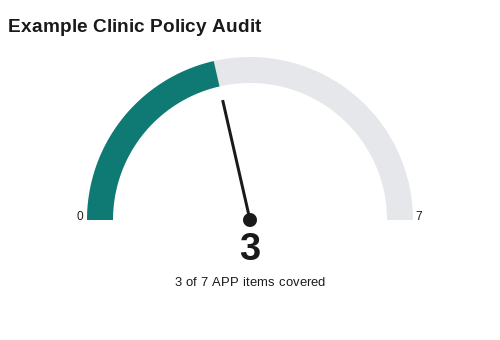
Take a composite example, built from patterns seen across cosmetic clinic sites, not a named business. A clinic runs a WordPress site with a booking widget embedded from a practice management platform, an Instagram remarketing pixel on the treatments page, and a privacy policy last touched when the site launched. Running that policy against the seven APP 1.4 items above usually finds it covers three cleanly: what the intake form collects, that the data is used for appointment reminders, and a general complaints email.
It usually stays silent on the rest. It never states that the booking platform’s servers sit outside Australia, so items (f) and (g) are both missing. It describes access to records only in the vaguest terms, so item (d) is incomplete. And once 10 December 2026 arrives, it will say nothing about the booking widget auto-confirming appointments without a staff member checking availability first, the new item under APP 1.7 to 1.9. Our earlier guide on what counts as automated decision-making on a clinic website covers that eighth item in detail.
Takeaway: A policy can look complete at a glance and still fail half of APP 1.4, because the missing items are the ones nobody thinks to check without the list in front of them.
What to Check on Your Own Site
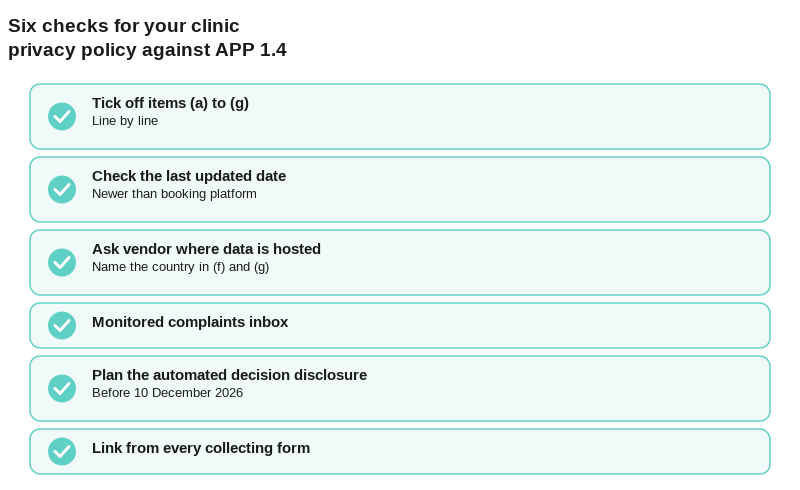
- Open your live privacy policy and tick off items (a) to (g) against the table above, line by line.
- Check the “last updated” date. If it predates your current booking platform, it is not “up to date” under APP 1.3.
- Ask your booking or practice management vendor, in writing, where patient data is hosted, and put the actual country into items (f) and (g).
- Confirm the complaints contact is a monitored inbox with a stated process, not a placeholder address.
- If your site auto-confirms bookings, runs a suitability quiz, or uses a chatbot, put a review of the new automated decision-making disclosure on the calendar before 10 December 2026.
- Link the policy from every form that collects personal information, with an anchor to the relevant section, not just a single footer link.
The Enforcement Anchor: What Happens When a Health Provider Gets This Wrong
Health providers are not a hypothetical enforcement target. In June 2026 the OAIC handed down determinations against Monash IVF Pty Ltd, a fertility services provider, and Medmate Australia Pty Ltd, a telehealth provider, finding both had interfered with the privacy of individuals whose sensitive health information was collected through third-party tracking pixels and used to target them with social media advertising, without the consent the Privacy Act requires. The OAIC announced the outcome on 24 June 2026 in a release stating that “the advanced technology used for tracking and targeting in the online realm still has to be used in compliance with the Privacy Act”, alongside a broader compliance sweep of health service provider websites for the same tracking pixel issue.
That determination is about consent for tracking pixels, not specifically about missing privacy policy sections. In the sources checked for this guide, no separate OAIC determination naming a cosmetic clinic or cosmetic dental practice over an incomplete APP 1.4 policy was found, and none is claimed here. What the Monash IVF and Medmate outcome does establish is that the regulator actively investigates health providers over exactly the kind of website data practices a privacy policy is meant to disclose, and that a policy silent on a real data flow is the sort of gap an investigation surfaces first.
Where This Gets Hard
A checklist can tell you a section is missing. It cannot tell you exactly how to word items (d), (f) and (g) for your specific vendor stack, because that depends on contracts and data flows only your practice can see. Whether your booking widget’s auto-confirm behaviour meets the threshold in APP 1.7, “could reasonably be expected to significantly affect an individual’s rights or interests”, is also a judgement call, and the OAIC’s own final guidance on that test is not due until September 2026, three months before the obligation commences. The regulator says a clearly expressed, complete APP 1.4 policy is required; the build consequence is a structured page with one heading per item, kept current with your actual vendor stack; whether that specific wording covers your circumstances is a question for your medical defence organisation or your lawyer.
Status
APP 1.3 and 1.4 are current, in-force law. The APP 1.7 to 1.9 automated decision-making disclosure duty is enacted and commences 10 December 2026. The broader proposal to remove the Privacy Act’s general small business exemption is a separate, unlegislated proposal with no Bill passed and no commencement date, as at 15 August 2026, and should not be confused with either of the above.
Frequently Asked Questions
What does APP 1.4 require a privacy policy to include?
Seven things, the kinds of personal information collected, how it is collected, why it is used, how a patient can access or correct it, how to complain, whether it goes overseas, and if practicable which countries, according to the OAIC’s Australian Privacy Principles guidelines.
Does a small cosmetic clinic have to comply with the Privacy Act?
Yes. The Privacy Act’s general small business exemption does not apply to an organisation that provides a health service and holds health information, so most cosmetic clinics and cosmetic dental practices are covered regardless of annual turnover.
Does a clinic privacy policy need to mention automated decision-making?
From 10 December 2026 it does, if the clinic uses software such as an auto-accepting booking widget or a triage chatbot. APP 1.7 to 1.9, added by the Privacy and Other Legislation Amendment Act 2024, require disclosure of the personal information used and the kinds of decisions made.
Need a hand with your website?
If you want a second pair of eyes on how this applies to your own site, request a callback and we will talk it through.
Sources and References
- OAIC, Australian Privacy Principles guidelines, Chapter 1: APP 1 open and transparent management of personal information, updated 3 October 2025. oaic.gov.au. Date checked: 15 August 2026.
- OAIC, Australian Privacy Principles (overview page). oaic.gov.au. Date checked: 15 August 2026.
- OAIC, “Data breach notifications increase to all-time high in 2025, new NDB stats show”, published 6 July 2026. oaic.gov.au. Date checked: 15 August 2026.
- OAIC, “Privacy Commissioner finds privacy breaches in third-party tracking pixel investigation”, published 24 June 2026. oaic.gov.au. Date checked: 15 August 2026.
- Privacy Act 1988 (Cth) and Privacy and Other Legislation Amendment Act 2024, Federal Register of Legislation. legislation.gov.au. Date checked: 15 August 2026.
Last reviewed: 15 August 2026.
Vikas Thakur
Founder, Perth. 16 years of experience from working at TPG, iiNet and Monadelphous, now helping Australian clinics keep their websites, ads and online presence AHPRA compliant.