Clinic Website Booking Conversion Under Ahpra Rules
How to lift consultation bookings on a cosmetic clinic website without testimonials, outcome claims or before and after imagery. Practical fixes to credentials, booking forms and mobile pages, with the Ahpra rules that apply.
 Vikas Thakur Founder, Perth Updated Nov 23, 2026 7 min read Fact checked
Key takeaways
- Ahpra defines a testimonial as “recommendations or positive statements about the clinical aspects of a regulated health service used in advertising”, so your trust signals have to come from somewhere else.
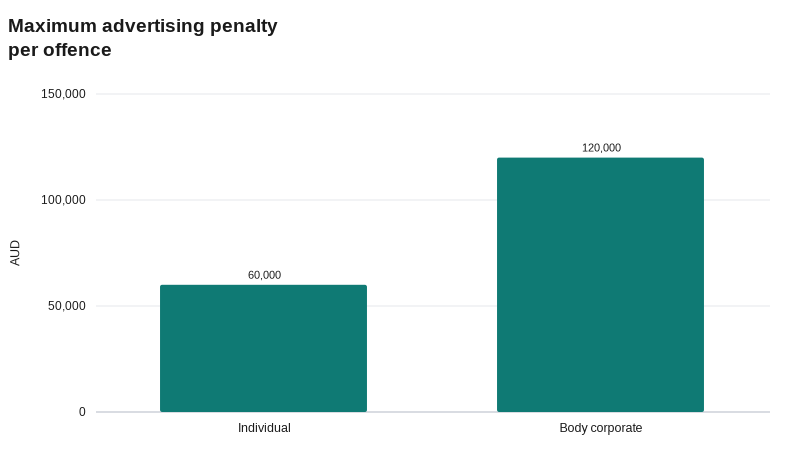
- The maximum penalty for an advertising offence is $60,000 per offence for an individual and $120,000 per offence for a body corporate, and the increased penalties apply in all jurisdictions including Western Australia.
- Mobile and desktop each carry about half of Australian web traffic, so a booking form has to work on a phone.
- We have no benchmark conversion rate to give you. The figures that circulate for “average cosmetic clinic conversion” are rarely sourced, so measure your own.
Removing testimonials and before/after content from a cosmetic clinic website feels like losing the floor. Those elements did real conversion work. The question is what compliant alternatives can do the same job.
The answer: practitioner credentials, verifiable accreditation signals, honest treatment content and a short booking flow. None of these replaces a testimonial one for one. Together they give a first-time patient reasons to book.
Know the rules before you change the page
Ahpra’s guidelines page says section 133(1)(c) of the National Law “specifically prohibits advertising a regulated health service in a way that uses testimonials or purported testimonials”. Ahpra’s testimonial tool describes a testimonial as “recommendations or positive statements about the clinical aspects of a regulated health service used in advertising”. It also says comments about customer service or communication style, with no reference to clinical aspects, are not testimonials.
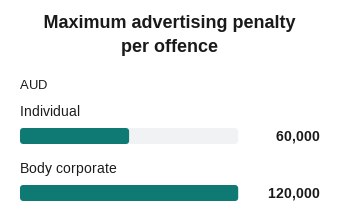
Penalties are real. Ahpra’s page on advertising and the law gives a maximum of “$60,000 per offence” for an individual and “$120,000 per offence” for a body corporate. Its footnote says the increased penalties now apply in all jurisdictions, including Western Australia. Footnote 3 on Ahpra’s advertising guidelines page lists $30,000 for an individual and $60,000 for a body corporate for Western Australia, but it is attached to the penalties for unlawful use of a protected title, and that page does not reconcile it with the July 2024 statement. Confirm the current position with Ahpra.
Source: Ahpra, Advertising and the law. Testimonial definition: Ahpra, Testimonials: Understand the requirements.
Source: Ahpra, Advertising and the law
Check your own wording against the current Ahpra advertising guidelines before you publish. This post is not legal advice.
Why Conversion Falls After Testimonials Go
Three problems show up again and again on clinic sites.
Trust deficit. Cosmetic procedures are high-stakes decisions. Without testimonials, many clinic websites offer no credible alternative signal. A visitor lands on a treatment page with a phone number and a booking form. That is thin reassurance for a first-time patient.
Booking friction. Some booking flows ask for full name, date of birth, Medicare number, health history and preferred treatment before a visitor can request a consultation time. That is a patient intake form, not a booking form. Visitors who hit that friction leave.
Mobile experience. Most cosmetic clinic websites were designed on desktop. Booking forms that work on desktop can collapse on a phone.
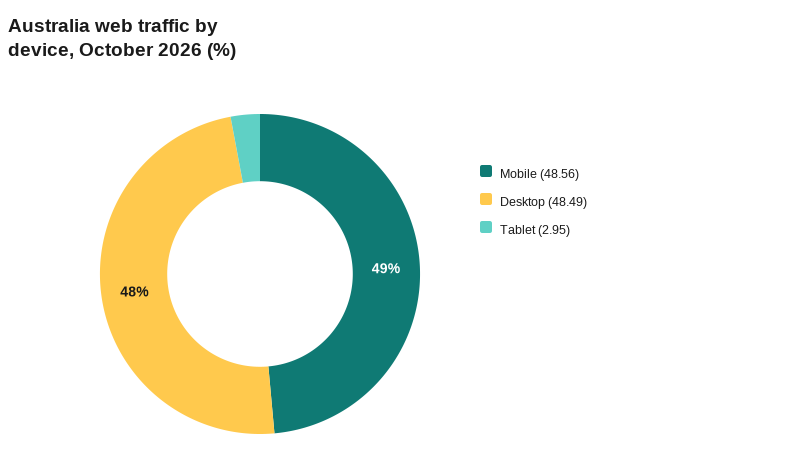
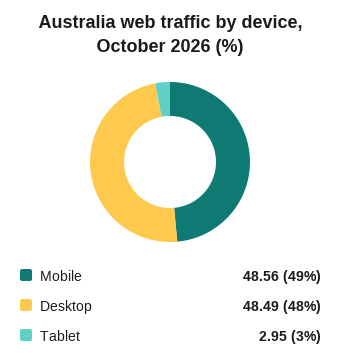
Source: StatCounter, Desktop vs Mobile vs Tablet Market Share in Australia, as at October 2026. This is all-site traffic that StatCounter measures, not traffic to clinic websites. Check your own analytics for your split.
The AHPRA-Compliant Conversion Stack
Element 1: Practitioner credential pages
A dedicated practitioner page covering qualifications, training history, professional associations, areas of focus and consultation approach works as a trust document. It answers the question every first-time patient has: who will treat me, and are they qualified?
Good practitioner pages include:
- A professional photo (not a stock image)
- Specific qualifications, not just “qualified practitioner”
- Training institutions and dates
- Professional association memberships you can verify
- How consultations run
- A direct booking link
Element 2: Verifiable credentials
Show credentials a patient can check, such as registration with the relevant National Board and memberships of professional colleges. Link to the register or the college page where you can.
Take care with signals that may read as outcome claims or testimonials, such as star ratings drawn from patient reviews on a page you control, review counts such as “trusted by thousands of patients”, and “award-winning” with no named award that a patient can verify. This is our caution, not an Ahpra rule. Ahpra’s testimonial tool says that where a clinic controls a social media page, the owner remains responsible for compliance. Have your compliance adviser check each signal.
Element 3: Clinical transparency content
Detailed treatment content that explains what happens, what to expect, what the realistic timeline is and what the limitations are suits high-consideration visitors better than promotional copy. Honest, educational content describing how a procedure works does not make outcome claims.
Element 4: A shorter booking flow
Ask for the minimum you need to call the patient back. Name and phone is often enough, with intake handled by phone or after the booking is confirmed. We have no sourced figure for how much each change lifts bookings, so test each one on your own site.
Changes worth testing:
- A short “Request a consultation” form in place of a long intake form
- Booking on the same page rather than a redirect to a third-party system
- Tap-sized fields and an auto-formatting phone field on mobile
- A confirmation page that names the practitioner and explains what happens next
- Showing real appointment availability, without urgency or scarcity wording. Ahpra’s guidelines page says advertising must not directly or indirectly “encourage the indiscriminate or unnecessary use of regulated health services”, so keep any availability message factual.
Mobile Conversion Specifically
Mobile is about half of Australian web traffic (see the chart above). Compare your own mobile and desktop booking rates in your analytics. A gap tells you where to look first.
Booking form: forms built for desktop need pinch-to-zoom on mobile, with fields too small to tap accurately, date pickers that fail on iOS and phone fields without auto-format.
Practitioner pages: long text with no visual hierarchy, credentials buried below the fold and no tap-to-call button visible without scrolling.
Treatment pages: desktop layouts that stack awkwardly on a phone.
You rarely need a full redesign. Targeted changes to existing pages usually cover most mobile friction.
Booking Flow Audit: What to Check
- Entry points: Which pages have booking CTAs? Are they visible above the fold on mobile?
- CTA copy: “Book now” or “Request a consultation”. Test both for higher-consideration procedures.
- Form fields: Count the required fields. Cut every field you do not need to make the first call.
- Redirect behaviour: Does the booking button open a form on the same page or send the visitor to a third-party system?
- Mobile behaviour: Test the full flow on an iPhone and an Android phone. What breaks?
- Confirmation messaging: What does the patient see after submitting? Is the next step clear?
- Follow-up speed: How quickly does the clinic call back? Track it, because slow callbacks lose enquiries.
Build a High-Converting Compliant Website
ClinicCode builds cosmetic clinic websites that aim to convert within AHPRA’s advertising guidelines. No testimonials. No before/after imagery. A compliant booking flow you can measure.
Related reading:
- Cosmetic Clinic Website Design Australia: full website build guide for AHPRA-compliant clinics
- AHPRA Treatment Naming on Your Clinic Website: what to call treatments on your treatment pages
- Cosmetic Clinic Patient Retention Australia: converting first-time patients into long-term patients
- Cosmetic Clinic Patient Acquisition Cost Australia: cost per consultation benchmarks to contextualise CVR value
- Cosmetic Clinic SEO Australia 2026: driving the organic traffic that needs converting
- AHPRA Compliance Audit Checklist: includes website compliance review
Vikas Thakur
Founder, Perth. 16 years of experience from working at TPG, iiNet and Monadelphous, now helping Australian clinics keep their websites, ads and online presence AHPRA compliant.