Cosmetic Clinic Website Design Australia: AHPRA Rules in 2026
Ahpra’s guidelines for higher risk non-surgical cosmetic procedures were issued on 2 September 2025. Here is what they say about testimonials and images.
 Vikas Thakur Founder, Perth Updated Jun 16, 2026 8 min read Fact checked
Key takeaways
- Ahpra’s guidelines for advertising higher risk non-surgical cosmetic procedures were issued on 2 September 2025. They ban testimonials, require genuine unedited before and after images with a prominent “results vary” warning, and say advertising must not be aimed at people under 18 (Ahpra)
- If your advertising names a specific practitioner, it must include their registration details, including their registration number
- Ahpra’s news release says people under 18 considering non-surgical cosmetic procedures get a mandatory seven-day cooling off period between first consultation and any procedure (Ahpra)
- Trust without testimonials comes from verifiable credentials, plain procedure information with risks and recovery, and real photos of the people who treat patients
- Google’s published “good” benchmark for Largest Contentful Paint is 2.5 seconds or less at the 75th percentile of page loads (web.dev)
Your website is the first consultation you give a new patient.
Most cosmetic clinic websites miss the mark. Not because they look bad. Because they are built by designers who do not know the advertising rules, and they treat a regulated health service like a day spa booking page.
Get the website right and it becomes your best marketing asset. Get it wrong and it can be a compliance problem. This post sets out what the Ahpra guidelines say and what that means for the build. It is not legal advice, so check your own situation with your Board or a lawyer.
Why a Cosmetic Clinic Website is Different
Patients are making health decisions, often while self-conscious, and often researching several clinics first. Ahpra’s guidelines describe cosmetic procedures as “often sought by potentially vulnerable people” and say good practice advertising is “honest, balanced, realistic, and informative”. A standard web agency may not know those rules.
What Ahpra’s Guidelines Mean for Your Website
The guidelines cover “higher risk non-surgical cosmetic procedures”. Ahpra’s examples include dental veneers, cosmetic injectables such as botulinum toxin and dermal fillers, injection lipolysis, thread lifts, sclerotherapy, procedures using platelet rich plasma and hair transplants. Ahpra’s news release says the guidelines are in effect from 2 September 2025. Here is what matters for a site.
Testimonials are prohibited. Ahpra says the National Law prohibits testimonials in advertising, including “patient stories and experiences, success stories or fake testimonials”. It counts a practitioner as using a testimonial if they publish one in print, on a website or on social media, link to testimonials on third-party advertising, re-share patient posts that recommend the procedure, or interact with a review by liking or replying to it. Ahpra also says patients can still post reviews on review platforms. Ahpra’s wording covers positive statements about the experience, the reason for or the outcome of the procedure, or the practitioner’s skills. A widget that displays positive patient comments falls inside that definition.
Before and after images have conditions. Ahpra says images must be genuine, meaning actual patients who had the advertised procedure from that practitioner. They must not be edited or enhanced, for example with filters or retouching. The two images should match in lighting, angle, background, framing, posture, clothing and makeup. The first or most prominent image should be the “before” image or a combined image. Every outcome image needs a prominent warning that the outcome applies to that patient only. Images of people under 18 must not be used.
Claims must be realistic. Advertising must not imply any desired outcome can be obtained. Ahpra’s example of unacceptable wording is “perfect pout”. It must be clear that individual results vary. Terms such as “gentle”, “simple”, “safe”, “quick” or “easy” should not be used without clear information about risks, and that risk information must be easy to find.
Sexualised and trivialising imagery is out. Ahpra lists sexualised poses, lifestyle shots (beach, poolside, bedroom), emojis as reactions, and captions such as “more natural”, “ideal” or “instant”.
Advertising must not be directed at under 18s. Advertisers must limit exposure of young people, and social media advertising of these procedures must be identified as “adult content”.
| Website element | What the Ahpra guidelines say |
|---|---|
| Testimonials | Prohibited, including linked or re-shared third-party testimonials |
| Before and after images | Genuine patients of that practitioner, no editing, similar conditions, time of “after” image stated, prominent “results vary” warning |
| Outcome claims | Must be realistic; must not imply any desired outcome can be obtained |
| Practitioner credentials | Qualification and experience claims must be accurate; “specialises” claims need specialist registration |
| Registration details | Required in advertising that references a specific practitioner, including registration number |
| Patient photos | Separate, documented informed consent for advertising use; patients can withdraw |
| Costs and insurance | Must be clear, easily understood, accurate and honest |
Source: Ahpra, Guidelines for advertising higher risk non-surgical cosmetic procedures (date of issue 2 September 2025, page reviewed 14/10/2025).
The Booking Flow and Under-18 Patients
Most clinic sites have a “Book Now” button that lets anyone pick a time. For under-18 patients, two Ahpra statements matter.
First, Ahpra’s news release says people under 18 considering non-surgical cosmetic procedures get “a mandatory seven-day cooling off period between their first consultation and any procedures”. Second, Ahpra says the Boards consider it not appropriate to prescribe botulinum toxin and dermal fillers to anyone under 18 for cosmetic purposes, and that practitioners must follow state and territory law on under-18 procedures (Ahpra).
We found no Ahpra wording on how deposits or payments should be handled during the cooling off period, so confirm that with your Board before you design payment steps. A sensible build looks like this:
- Ask for age at enquiry or booking
- Send under-18 enquiries to a consultation request, not a procedure booking
- Stop the system confirming a procedure date inside the cooling off period
- Explain the consultation requirement before any treatment
Building Trust Without Testimonials
If you cannot use patient testimonials, build trust through credentials and clear information.
Display registration details. Ahpra says advertising that references a specific individual must include their registration details, including the registration number. Its example format is “Dr G (DEN000456789) Registered dentist, general registration”.
State qualifications accurately. Ahpra says saying a practitioner “specialises” in an area without specialist registration can mislead. Memberships can be listed, but acronyms must not stand alone without explanation. Terms such as “world’s best” and “magic hands” are named as ones to avoid.
Show real staff and facility photos. This is our recommendation, not an Ahpra requirement.
Publish plain procedure information. Ahpra says advertising should give realistic information on risks and recovery. Treatment pages that cover who a procedure suits, risks, recovery and the consultation do that job.
Page Speed
Google’s web.dev guidance says a good Largest Contentful Paint is 2.5 seconds or less, measured at the 75th percentile of page loads (web.dev). We found no clinic-specific load time figures we could verify, so we quote none. Compress before and after galleries, load booking widgets only where needed, and test your own site with PageSpeed Insights.
Technical Requirements
Privacy. Clinic forms collect health information. Your privacy policy should match what the site collects, how it is stored and who sees it. Have it reviewed for your clinic rather than copying a template.
Booking tools. Make sure any connected booking tool does not promise outcomes and shows costs clearly and accurately. Price lists for injectables must also meet TGA advertising requirements, which Ahpra’s page points to.
What a Compliant Site Costs
We have no verified market price range to quote, so we will not give one. Cost depends on scope: number of treatment pages, a custom booking flow with age-based routing, consent form integration, multiple locations and ongoing compliance reviews. Ask any agency for an itemised quote that shows each of those lines, and ask what they know about the Ahpra guidelines before you sign.
What the Penalties Are
Ahpra’s advertising guidelines page says the 2022 National Law amendments raised the maximum penalty per offence for an individual from $5,000 to $60,000, and for a body corporate from $10,000 to $120,000. It adds: “As of July 2024 these increased penalties now apply in all jurisdictions, including Western Australia.” Footnote 3 on the same page says that in Western Australia “different penalties apply”, at a maximum of $30,000 for an individual and $60,000 for a body corporate, but it is attached to the penalties for unlawful use of a protected title, and the page does not reconcile it with the July 2024 statement.
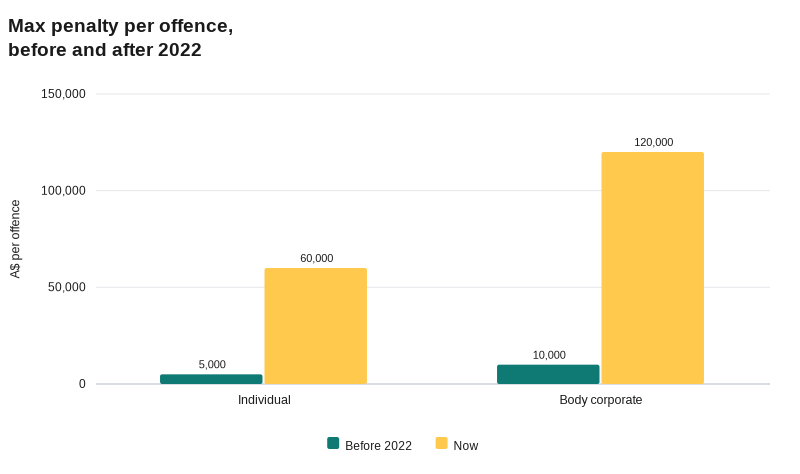
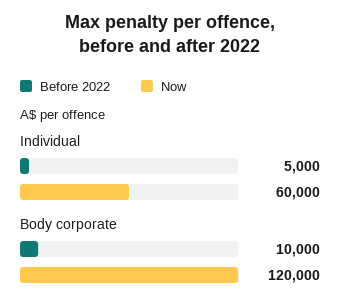
Source: Ahpra, Guidelines for advertising a regulated health service, penalty figures in the 2022 amendment note.
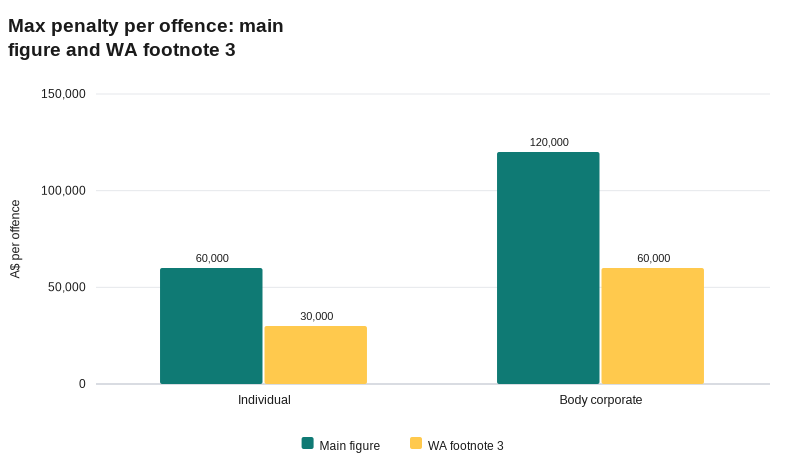
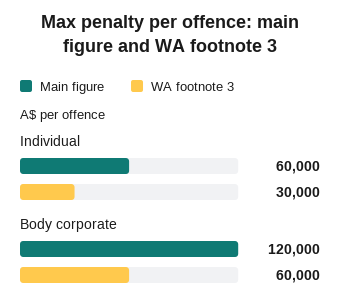
Source: Ahpra, Guidelines for advertising a regulated health service, main penalty figures and footnote 3 (Western Australia, attached to the protected-title offence), both stated on that page.
Ready to Build Your Clinic’s Website?
ClinicCode is a web design and marketing studio built for Australian cosmetic clinics. We build with the Ahpra guidelines in mind from brief to launch, and we do not give legal advice.
Vikas Thakur
Founder, Perth. 16 years of experience from working at TPG, iiNet and Monadelphous, now helping Australian clinics keep their websites, ads and online presence AHPRA compliant.