Cosmetic Clinic SEO Australia 2026: What You Can Rank For
Cosmetic clinic SEO in Australia sits between Ahpra’s advertising rules and the TGA’s limits on prescription-only injectables. Here is what each says.
 Vikas Thakur Founder, Perth Updated Jun 26, 2026 7 min read Fact checked
Key takeaways
- The TGA says most cosmetic injectables contain Schedule 4 substances that cannot be advertised to the public, and it no longer expressly permits terms such as “wrinkle reducing injections” or “dermal fillers” where they point to a prescription-only medicine
- Swapping a brand name for a generic injectable term is therefore not a safe SEO strategy on its own
- The TGA’s own guide is to focus advertising on the types of consultation you offer, not on the medicines used
- Ahpra’s maximum advertising penalty is up to $60,000 per offence for an individual and $120,000 for a body corporate, and Ahpra says they apply in all jurisdictions, including Western Australia, from July 2024
- Google Business Profile, practitioner pages and non-promotional patient education are the parts of SEO that do not depend on naming a product
Most cosmetic clinic SEO advice written before 2024 told clinics to stop using brand names and use “anti-wrinkle injections” instead. That advice is out of date.
The TGA’s frequently asked questions page (last updated 21 July 2026) says the legislation has not changed, but the TGA no longer expressly permits terms such as “wrinkle reducing injections” or “dermal fillers” where a reasonable consumer would understand the content to promote a prescription-only medicine. It also says acronyms, nicknames, abbreviations and hashtags can count.
That changes what an SEO plan can safely target. This guide covers what we found on the regulators’ own pages, and the parts of SEO that still work. It is not legal advice. Check your own advertising with your regulator, your insurer or a lawyer.
What the two regulators say
Two sets of rules apply to a clinic website, and they cover different things.
Ahpra regulates advertising by registered health practitioners. Its advertising guidelines say your advertising must not be false, misleading or deceptive, offer a gift, discount or other inducement unless the terms are also stated, use testimonials or purported testimonials about the service or business, or create an unreasonable expectation of beneficial treatment. Its guidelines for advertising higher risk non-surgical cosmetic procedures are “in effect from 2 September 2025”, according to Ahpra’s resources page for those guidelines.
The TGA regulates how therapeutic goods are advertised. Its FAQ page and its guidance on advertising health services that involve therapeutic goods say most cosmetic injectables contain substances in Schedule 4 to the Poisons Standard and, under the Therapeutic Goods Act 1989, cannot be advertised to the public. On how to advertise a service, it says: “it is best not to refer to any therapeutic goods used in the delivery of the service in the advertisement.” It adds that promoting the type of health practitioner consultation offered would be unlikely to make the material an advertisement about therapeutic goods, though context matters.
The TGA also says it does not give a list of acceptable or substitute terms, so no keyword list can be called “safe” from outside the regulator.
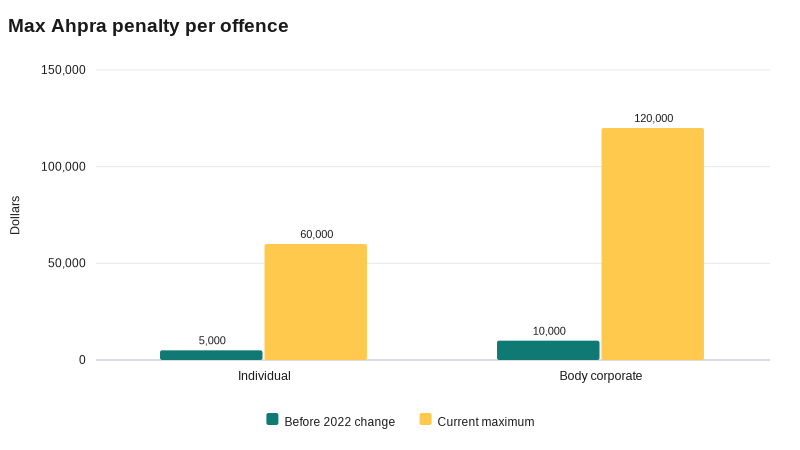
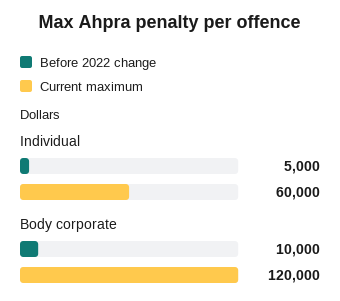
Source: Ahpra, Guidelines for advertising a regulated health service. Ahpra says the maximum per offence rose from $5,000 to $60,000 for an individual and from $10,000 to $120,000 for a body corporate, and that “as of July 2024 these increased penalties now apply in all jurisdictions, including Western Australia.” Footnote 3 on the same page says that in Western Australia “the maximum penalty is $30,000” for an individual and “$60,000” for a body corporate, but it is attached to the penalties for unlawful use of a protected title, and the page does not reconcile it with the July 2024 statement.
What the evidence says about compliance
A published audit gives a sense of how often cosmetic advertising falls short. Researchers reviewed the websites of medical practitioners listed on three professional association sites in Victoria in September 2023, against the Medical Board’s cosmetic surgery advertising guidelines that took effect on 1 July 2023. They found 158 practitioners and audited 120 eligible ones. Eighteen percent of Australian Society of Plastic Surgeons (ASPS) members, 33% of sole Australian Society of Aesthetic Plastic Surgeons (ASAPS) members and 71% of Australasian College of Cosmetic Surgery and Medicine (ACCSM) members breached a guideline.
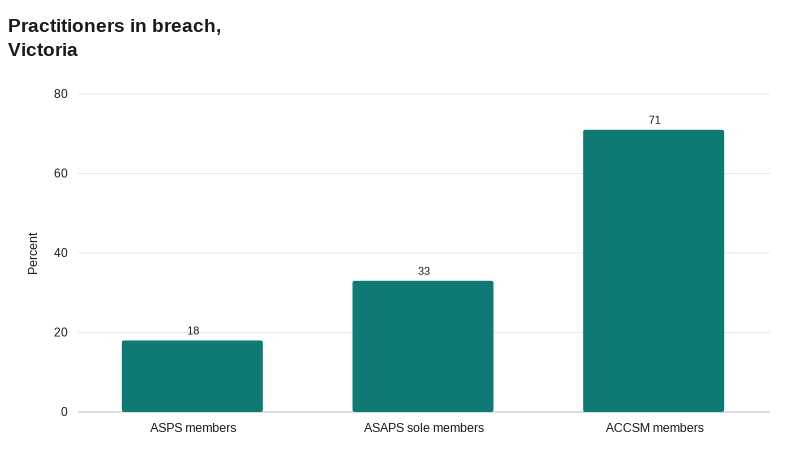
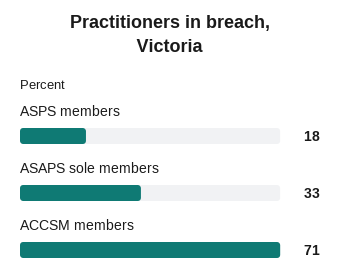
Source: Briffa et al., ANZ Journal of Surgery, 2026, PubMed abstract. Figures are for cosmetic surgery practitioners in Victoria only, audited against the Medical Board’s cosmetic surgery guidelines, not for non-surgical clinics or other states.
What still works: the three-layer approach
Three parts of clinic SEO do not depend on naming a product.
Layer 1: Google Business Profile
Your profile is often the first thing a local patient sees. Keep it factual: practitioner names and registrations, address, hours, a consultation booking link and photos of the clinic. Avoid patient photos, testimonials and offers.
Keep treatment names under review with the TGA points above in mind. The same rule applies to the services list, posts and Q&A replies as to the website.
Layer 2: Practitioner and consultation pages
A practitioner page should state qualifications, registration, training history and professional associations. Ahpra’s guidelines cover claims about titles, qualifications and experience, so state only what you can show.
A consultation page describes the type of appointment, who conducts it and how to book. This matches the TGA’s guidance to focus on the types of consultation available.
Layer 3: Educational content
The TGA says educational information that is purely factual, balanced (it communicates risks and benefits) and non-promotional is unlikely to be advertising. It lists before and after care instructions as an example. It also says that if content intended to be educational has the effect of promoting therapeutic goods, it must not refer to prescription-only goods, including in generic terms such as “dermal fillers treatments” or “anti-wrinkle injections”.
So educational pages need a careful read against that wording before they go live. Content about how to choose a practitioner, what to ask at a consultation, and how to check registration on the Ahpra register carries less risk than content about a specific injectable.
Local pages by suburb
If you serve several suburbs, a page per suburb can help people find you. Each page needs to be different in substance: address and hours, parking, public transport, the practitioners who work there and a booking link. A page that repeats the same text with the suburb name swapped adds little.
Name the consultation type, not the product, and keep the TGA and Ahpra points above in view for every heading and meta title.
Google Ads and SEO
We do not have sourced cost per consultation figures for either channel, so we have not included any. Paid search can show your clinic quickly, and SEO takes time to build. Both are subject to the same advertising rules, and Google Ads copy needs the same TGA check as page copy. See our Cosmetic Clinic Google Ads Benchmarks 2026 post for the paid side.
What to measure
Track what you can verify in your own accounts:
- Google Business Profile views and booking-link clicks
- Consultation requests from the website, by source
- Organic search impressions and clicks for pages about practitioners, consultations and clinic location, from Search Console
- Whether the people booking actually turn up and book a consultation
Set your own targets from your starting numbers. We do not publish industry targets because we have no sourced data behind them.
Get your SEO checked against the rules
ClinicCode builds clinic websites with Ahpra and TGA advertising rules in mind. We can review your pages and profile with you and flag wording you may want to check with your regulator or lawyer.
Related reading:
- AHPRA Treatment Naming on Your Clinic Website: keyword strategy within compliance rules
- Cosmetic Clinic Marketing Australia: full channel overview
- Cosmetic Clinic Google Ads Benchmarks 2026: paid vs organic cost comparison
- Cosmetic Clinic Website Booking Conversion Australia: turning organic traffic into booked consultations
- Who Controls Your Clinic’s Google Business Profile: GBP and local search data
- Cosmetic Clinic Website Design Australia: technical SEO foundation for clinic websites
Vikas Thakur
Founder, Perth. 16 years of experience from working at TPG, iiNet and Monadelphous, now helping Australian clinics keep their websites, ads and online presence AHPRA compliant.