Cosmetic Clinic Marketing Australia: What Works Under Ahpra Rules
Testimonials are banned in all regulated health advertising, and higher risk non-surgical cosmetic procedures have their own Ahpra advertising guidelines. Here is what that means for Google Ads, Meta Ads, SEO, email and your Google Business Profile.
 Vikas Thakur Founder, Perth Updated Jun 6, 2026 8 min read Fact checked
Key takeaways
- Testimonials are not allowed in any advertising of a regulated health service, and that includes cosmetic clinics (Ahpra, higher risk cosmetic procedure advertising FAQ)
- Before and after images are not banned outright, but Ahpra sets strict conditions and says they must be genuine, similar in framing and lighting, and not lead with the “after” image
- Most cosmetic injectables contain prescription-only substances, so the TGA says not to refer to them in ads, even indirectly
- The maximum penalty per offence is $60,000 for an individual and $120,000 for a body corporate, per Ahpra
- Google also restricts prescription drug terms in ads, landing pages and keywords, on top of Ahpra and TGA rules
Australian cosmetic clinics have always worked under advertising rules. Many clinics are still unsure which ones apply to which channel.
This guide covers each channel clinics use and what a compliant approach looks like. It is general information, not legal advice. For your own ads, read the sources linked below and ask your professional body or a lawyer.
What the Ahpra advertising rules say
Three sets of rules matter for cosmetic clinics.
1. Guidelines for advertising a regulated health service
These apply to anyone advertising a regulated health service. Ahpra’s page says your advertising must not use testimonials or purported testimonials about the service or business, and must not be false, misleading or deceptive. It lists the internet, including websites and social media, as a form of advertising. Source: Ahpra, Guidelines for advertising a regulated health service.
2. Guidelines for advertising higher risk non-surgical cosmetic procedures
Ahpra says these are in effect from 2 September 2025. Ahpra’s FAQ says higher risk procedures include cosmetic injectables such as botulinum toxin and dermal fillers, injection lipolysis, thread lifts, sclerotherapy, platelet rich plasma procedures and hair transplants. Source: Ahpra, Resources for advertising higher risk non-surgical cosmetic procedures.
3. Before and after images
Ahpra’s guidelines do not ban them. They say care should be taken because the images can mislead. For higher risk cosmetic procedures, Ahpra’s guidance lists conditions that include:
- both images are genuine, meaning actual patients treated by that practitioner
- the first or most prominent image is the “before” image, or a combined image of both
- images are as similar as possible in lighting, camera angle, background, framing, posture, clothing and make-up
Source: Ahpra, Cosmetic procedure advertising guidelines.
4. Prescription-only medicines (TGA)
The TGA says most cosmetic injectables contain prescription-only substances, so ads should not refer to those medicines or substances, even indirectly. It lists brand names, acronyms or abbreviations, colloquial names or nicknames, and hashtags. Its FAQ (last updated 21 July 2026) goes further: it says an ad must not refer to prescription-only goods “by referring to these in generic terms such as ‘dermal fillers treatments’ or ‘anti-wrinkle injections’”. The same FAQ says the TGA will not give a list of “acceptable” or “substitute” terms, and that clinics should focus their advertising on the types of consultations available. Source: TGA, Advertising health services that involve therapeutic goods and the TGA FAQ.
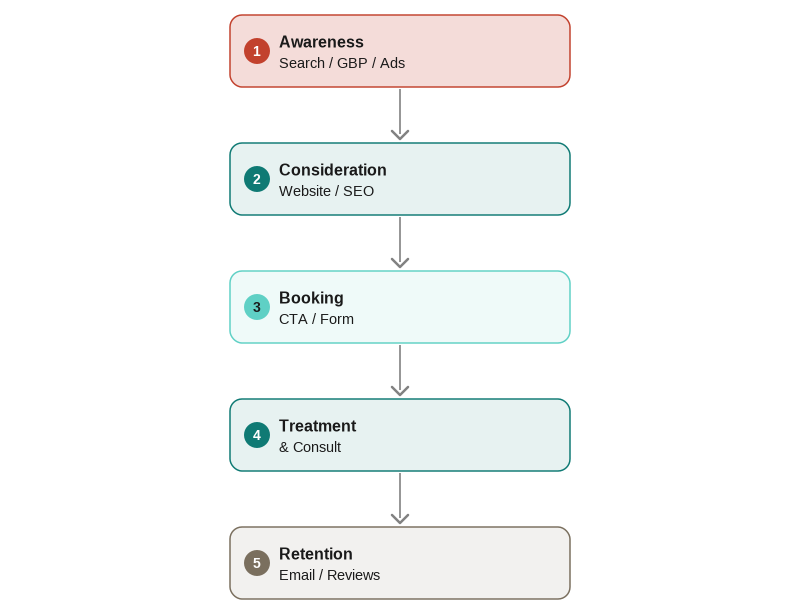
Google Ads for cosmetic clinics
Search users are actively looking for a treatment. Someone typing “lip filler Perth” or “anti-wrinkle injections Subiaco” is already in-market. That is why many clinics start here.
What tends to work within the rules:
- Search campaigns on treatment category keywords
- Responsive search ads that describe the service and the consultation, not outcomes
- Call and location extensions
- Landing pages built for consultation booking
What to avoid:
- Ad copy that names prescription-only substances by brand, nickname or generic term. The TGA FAQ gives ‘dermal fillers treatments’ and ‘anti-wrinkle injections’ as examples of generic terms that must not be used to refer to them, and offers no list of safe substitutes
- Testimonials or patient star ratings on landing pages that receive ad traffic
- Claims of superiority such as “world’s best” or “world renowned”, which Ahpra’s guidelines for higher risk cosmetic procedures name among the terms that trivialise those procedures
- Before and after images that do not meet the Ahpra conditions above
Google applies its own healthcare and medicines policy. Its page says Google restricts the use of prescription drug terms in ads, landing pages and keywords, and that rules differ by location. Check the Australia rules before you launch: Google Ads policy, Healthcare and medicines.
Meta Ads for cosmetic clinics
Meta (Facebook and Instagram) is an awareness channel. People are not searching for a treatment. You are reaching people who may book a consultation once they know the clinic exists.
What still works:
- Educational Reels and posts about treatment categories
- Practitioner credentials and the consultation environment
- Consultation booking campaigns with plain, educational copy
- Lookalike audiences built from your own client list
What to remove:
- Testimonials in any format, including video
- Ad copy naming prescription-only substances
- Patient-generated content that praises a procedure or its outcome
Ahpra’s FAQ defines a testimonial as a positive recommendation or statement about a clinical aspect of a regulated health service, “whether expressed by a patient, a social media influencer or any other person”.
See the Ahpra-compliant Meta Ads guide for copy templates and targeting.
SEO for cosmetic clinics
A page that ranks for “lip filler Perth” can bring in consultation requests without a per-click cost. The trade-off is time, because rankings build slowly and no one can promise a position.
Priority content for most clinics:
- Service pages: one page per type of consultation or service you offer, written without naming prescription-only substances. The TGA FAQ treats generic terms such as ‘anti-wrinkle injections’ and ‘dermal fillers treatments’ as references to the medicine, so check each page title and heading against it before you publish
- Suburb and treatment pages for the areas your clients come from
- FAQ content that answers real patient questions
- Practitioner pages covering training, registration and approach
Email marketing for cosmetic clinics
An email that promotes your services is advertising under Ahpra’s definition, which covers promotion in any medium. Ahpra’s list of advertising forms includes electronic media and patient recall notices, so treat recall and marketing emails with care. The same rules apply as other channels: no testimonials, no prescription-only substance names, no misleading claims.
Formats that work within the rules:
- Seasonal treatment category education
- Reactivation emails based on time since the last appointment
- Educational guides as a nurture sequence
- New practitioner or new service announcements
Google Business Profile for cosmetic clinics
Your Google Business Profile is often the first place a new patient sees your clinic. It is also where non-compliant content tends to appear: posts with outcome claims, photos in the gallery and descriptions that name substances.
Checklist:
- Remove before and after photos that do not meet Ahpra’s conditions
- Review recent posts and remove outcome claims
- Keep your business description in line with the rules above
What you can use:
- Clinic interior and exterior photos
- Practitioner team photos
- Posts about educational content and clinic news
What happens if you do not fix it
Ahpra publishes the maximum penalty per offence for advertising breaches. The 2022 National Law change raised them, as the chart shows. Ahpra’s page also says that from July 2024 the increased penalties apply in all jurisdictions, including Western Australia. However, footnote 3 in Ahpra’s advertising guidelines lists $30,000 for an individual and $60,000 for a body corporate for Western Australia. It is attached to the penalties for unlawful use of a protected title, and the guidelines page does not reconcile it with its July 2024 statement, so check the current position with Ahpra if you operate in WA.
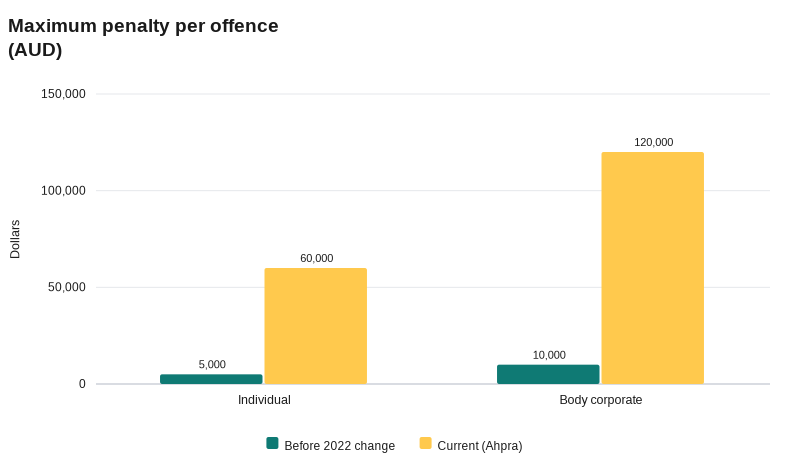
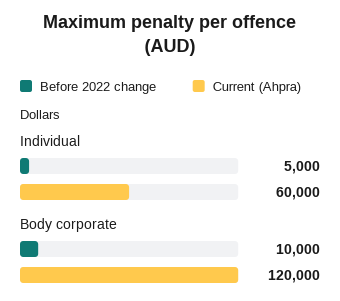
Source: Ahpra, Guidelines for advertising a regulated health service, “Increased maximum penalty for advertising offences”. The same guidelines say an individual may also face imprisonment of up to three years per offence.
The practical step is an audit of every channel before you spend more on marketing.
What a compliance audit should cover
- Google Ads account: active ads, extensions and landing page URLs
- Meta Ads account: ad sets, creative and destination URLs
- Instagram and Facebook: posts, stories, reels and highlights
- Website: service pages, blog posts, practitioner pages and any reviews section
- Google Business Profile: photos, posts, description
- Email templates: active sequences and broadcast templates
- Third-party directories: Health Engine, Yelp, True Local and any cosmetic-specific directories
The audit gives you a list of what to remove and what to update. Hold new advertising until the non-compliant material is fixed.
Compliant cosmetic clinic marketing
ClinicCode helps Australian cosmetic clinics plan Google Ads, Meta Ads and SEO around the Ahpra and TGA rules above. We cannot promise rankings, bookings or a particular result, and our advice is not legal advice.
Every new clinic starts with a call about its current advertising and the sources linked in this guide.
Book a call to start.
Vikas Thakur
Founder, Perth. 16 years of experience from working at TPG, iiNet and Monadelphous, now helping Australian clinics keep their websites, ads and online presence AHPRA compliant.