HotDoc Says 2.5M Appointments a Month: Booking Software Data
HotDoc says it handles 2.5 million appointments a month in Australia, and this post sets out the closest sourced booking data for cosmetic clinic owners.
 Vikas Thakur Founder, Perth 9 min read Fact checked
Key takeaways
- HotDoc says on its own About page that it handles 2.5 million appointments a month, with 13 million active patients and over 23,000 listed doctors. It also says “Nearly 1 in 3 Australians use HotDoc to connect with their preferred doctor”
- 26.0% of people reported waiting longer than they felt acceptable for a GP appointment in 2024-25, down from 28.0% in 2023-24, per the ABS Patient Experiences survey
- 67.2% of people could always see their preferred GP when needed in 2024-25, up from 66.4% the year before (same survey)
- 32% of Australian businesses received orders online in 2024-25, which the ABS describes as similar to 30% in 2021-22 (ABS Characteristics of Australian Business; economy-wide, not health-specific)
- 17% of health care and social assistance businesses reported using AI in 2024-25, the fifth-highest of the industries the ABS lists (same survey)
- We did not find booking-software adoption figures for cosmetic clinics from any regulator or statistics agency. The closest sourced figures come from HotDoc’s own claims and economy-wide ABS data
HotDoc says it handles 2.5 million appointments a month in Australia. It also says nearly one in three Australians use it to connect with their preferred doctor, and lists 13 million active patients and more than 23,000 listed doctors. Those are one platform’s own figures, and the platform is a medical booking service rather than a cosmetic-clinic one.
We did not find an equivalent number for cosmetic clinics. What we did find is a set of adjacent, sourced figures: booking friction Australians report, how many businesses take orders online, and how far AI has spread into health care businesses. This post covers each figure and what it means for a clinic’s own booking flow.
Why There’s No Cosmetic-Clinic-Specific Number
We searched for booking-software adoption data broken out by cosmetic clinic, medical spa or aesthetic practice and did not find any in the sources checked for this post. The ABS publishes its digital adoption data by whole economy or by industry, and the industry line for this sector is “Health Care and Social Assistance”, which is far broader than cosmetic clinics.
The closest data points come from two directions: a booking platform publishing its own scale, and ABS surveys showing where health care sits against other industries. Neither is a clean substitute for a cosmetic-clinic figure, and this post treats them as exactly that.
Takeaway: Treat every figure below as an adjacent proxy for a cosmetic clinic’s booking system, not as data measured on cosmetic clinics themselves.
How Big One Booking Platform Says It Is
HotDoc publishes its own scale on its practice-facing About page: “2.5M” appointments per month, “13 million active patients” and “over 23,000 listed doctors”, plus the line “Nearly 1 in 3 Australians use HotDoc to connect with their preferred doctor.” These are self-reported figures, not an independently audited count, and they describe HotDoc’s own network rather than the booking-software market as a whole.
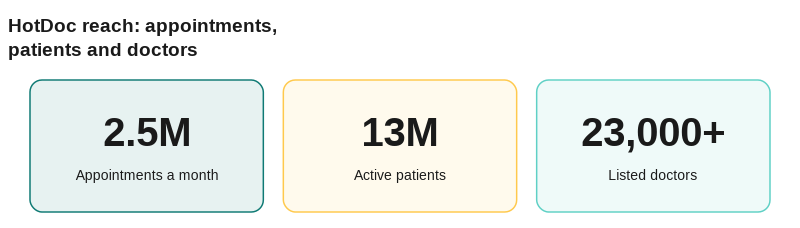
Source: HotDoc, About, seen 24 November 2026. Figures are HotDoc’s own claims: appointments per month, active patients and listed doctors.
In our view, a platform of that claimed size suggests many patients are used to booking medical appointments online, and a “call to book” instruction on a clinic site may feel like a step back from that. That is our reading, not a measured finding.
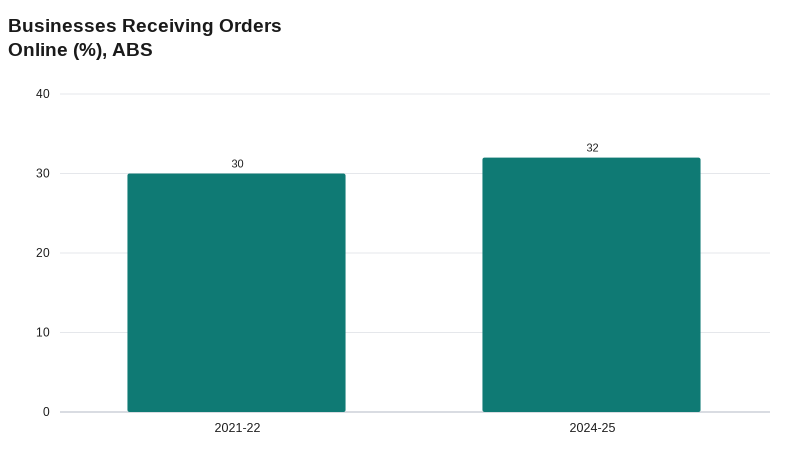
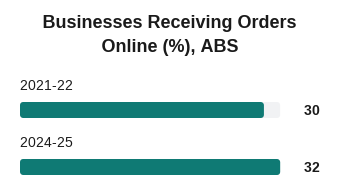
Source: ABS, Characteristics of Australian Business 2024-25, seen 24 November 2026. Percent of all Australian businesses, economy-wide. The ABS describes 32% as “similar to” 30% in 2021-22.
Takeaway: The question for a clinic is not whether patients can book online elsewhere, it is whether the clinic’s own site offers a booking path that is easy to use.
The Access Friction Behind the Booking Click
The ABS Patient Experiences survey covers people aged 15 and over in private dwellings. In 2024-25, 26.0% of people reported waiting longer than they felt acceptable for a GP appointment, a decrease from 28.0% in 2023-24. The proportion who could always see their preferred GP when needed rose to 67.2% from 66.4%. The same release put GP use at 83.4% of people and dental professional use at 53.9%.
Both measures moved in the right direction, but about one in four people still reported waiting longer than they felt acceptable for a GP appointment. In our view, a cosmetic clinic that asks a first-time visitor to phone during business hours or fill out a long enquiry form adds friction on top of that.
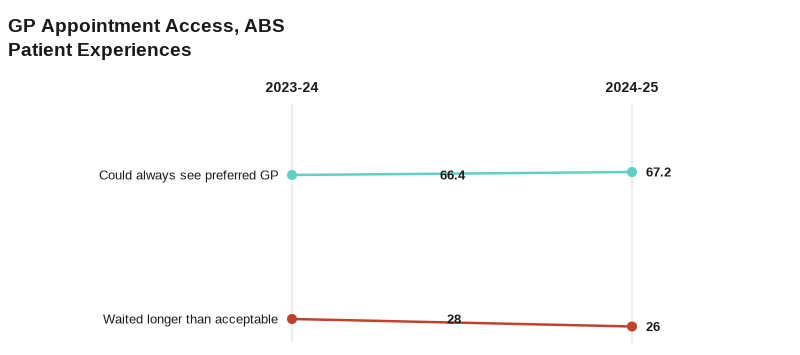
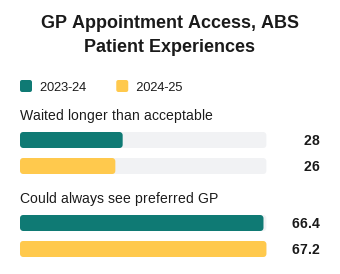
Source: ABS, Patient Experiences 2024-25, seen 24 November 2026. Percent of people aged 15 and over: waited longer than felt acceptable for a GP appointment (28.0% to 26.0%) and could always see preferred GP (66.4% to 67.2%).
Takeaway: Access to GP appointments is a baseline many patients bring with them, and a clinic’s booking flow is judged against it, whether it means to be or not.
Where AI Shows Up in Health Care Businesses
The ABS Characteristics of Australian Business survey found 17% of health care and social assistance businesses reported using AI in 2024-25, the fifth-highest rate of the industries listed, behind information media and telecommunications (38%), professional, scientific and technical services (24%), financial and insurance services (24%) and mining (18%). Across all industries, 12% of Australian businesses reported using AI.
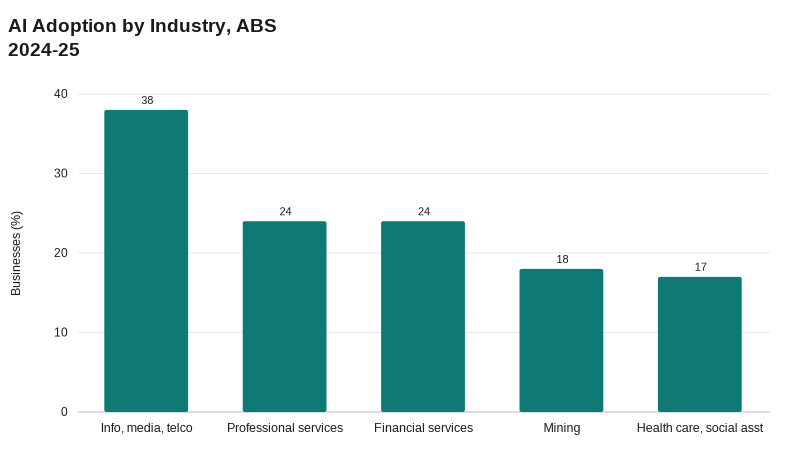
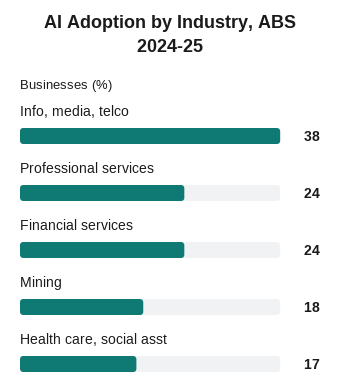
Source: ABS, Characteristics of Australian Business 2024-25, seen 24 November 2026. Percent of businesses in each industry reporting use of AI; the five highest industries shown.
The survey does not break out how many of those businesses use AI for booking, as opposed to clinical documentation or admin. For comparison, the same ABS table lists retail trade at 9% and construction at 6%.
Takeaway: The ABS data does not show how many clinics use AI for booking. In our view, an AI booking assistant is optional, and a booking flow that removes friction comes first.
What This Means for a Clinic’s Own Booking System
None of the figures above are cosmetic-clinic-specific. In our view, a clinic that publishes its own booking data, even something as simple as average time from enquiry to confirmed booking, would be offering something these sources do not cover.
Where a booking widget touches a prescription-only cosmetic treatment, the friction question sits on top of a compliance one. Ahpra’s advertising guidelines apply to advertising of a regulated health service and the TGA’s guidance on advertising health services that involve therapeutic goods applies to therapeutic goods, so in our view a booking flow that promotes a prescription-only treatment may fall under either, and reviewing a booking system is a natural point to check both at once. ClinicCode can review the booking flow alongside the rest of the site, and clinics rebuilding their booking flow should see how a compliant build looks on a cosmetic clinic website designed around the current rules, not retrofitted to them.
Takeaway: A clinic does not need HotDoc’s scale to offer a good booking experience. It needs a booking flow that is easy to use, built inside the advertising rules that apply to cosmetic treatments.
FAQ
How many Australians use online booking software to see a doctor?
HotDoc says nearly one in three Australians use it to connect with their preferred doctor, with 13 million active patients and over 23,000 listed doctors. That is a single company’s self-reported figure, not an independent census of every booking platform, so treat it as the scale of one platform rather than a national adoption rate.
Is there Australian-specific data on cosmetic clinic booking software?
Not that we could find. We did not find a government body or statistics agency publishing booking-software adoption figures broken out for cosmetic clinics. The closest sourced figures come from HotDoc, a general-practice booking platform, and from the ABS Characteristics of Australian Business survey, which tracks online order-taking across the whole economy rather than by health subsector.
Has appointment access in Australia gotten easier or harder recently?
Slightly easier on the ABS measure. The ABS Patient Experiences survey (people aged 15 and over) found that in 2024-25, 26.0% of people reported waiting longer than they felt acceptable for a GP appointment, down from 28.0% in 2023-24, and 67.2% could always see their preferred GP when needed, up from 66.4%.
Are AI booking tools common in Australian clinics yet?
The ABS found 12% of Australian businesses reported using AI in 2024-25. For health care and social assistance the figure was 17%, the fifth-highest of the industries listed, behind information media and telecommunications (38%), professional, scientific and technical services (24%), financial and insurance services (24%) and mining (18%). The survey does not break out how many of those businesses use AI for booking or scheduling.
Get Your Clinic’s Booking Flow Reviewed
ClinicCode builds and fixes cosmetic clinic booking systems against current Ahpra and TGA rules.
Talk to us about your clinic’s booking system
Sources and References
Australian Bureau of Statistics - Characteristics of Australian Business, 2024-25: businesses receiving orders online (32%, similar to 30% in 2021-22) and AI use by industry, including health care and social assistance (17%)
Australian Bureau of Statistics - Patient Experiences, 2024-25: GP appointment wait-time acceptability, preferred GP access, and GP and dental professional use
HotDoc - vendor source: self-published platform statistics (2.5M appointments per month, 13 million active patients, over 23,000 listed doctors, “Nearly 1 in 3 Australians”)
Related reading:
- Cosmetic Clinic Website Booking Conversion Australia: the booking-flow conversion benchmark for cosmetic clinic sites
- Clinic booking conversion tactics: what moves booking-page conversion once a visitor lands
- TGA and booking widget compliance: how booking widgets fall under TGA advertising rules
- Clinic Website Design: compliant website builds for Ahpra-regulated clinics
Vikas Thakur
Founder, Perth. 16 years of experience from working at TPG, iiNet and Monadelphous, now helping Australian clinics keep their websites, ads and online presence AHPRA compliant.