Dental Privacy Policy: What a Generic Template Misses
A generic small-business privacy policy template does not cover what a dental practice legally has to disclose. Here is what the Australian Privacy Principles require for health information specifically, and the exact clauses a template leaves out.
 Vikas Thakur Founder, Perth 14 min read Fact checked
On this page 12
- Key takeaways
- What APP 1.4 Requires, Reported Not Interpreted
- Why “Health Information” Changes the Build, Not Just the Wording
- Generic Template vs Dental-Practice-Ready Policy
- A Worked Example: A Perth Dental Practice’s Intake Form
- What to Check on Your Own Site
- The Enforcement Anchor
- Where This Gets Hard
- Status
- Frequently Asked Questions
- Get Your Privacy Policy Checked
- Sources and References
Key takeaways
- Australian Privacy Principle 1.4 lists seven required items for a privacy policy, according to the OAIC’s guidelines, updated 3 October 2025
- Health information is sensitive information under APP 3.3, and the OAIC’s guidance says an organisation “should generally seek express consent” before collecting it, a stricter standard than a generic template’s implied-consent language
- Under APP 7.4, using patient health information for direct marketing needs opt-in consent, even where the practice and patient already have a relationship, a materially stricter rule than the opt-out standard in APP 7.3 for ordinary personal information
- The Privacy Act’s small business exemption does not apply to a dental practice, because it provides a health service and holds health information, regardless of annual turnover
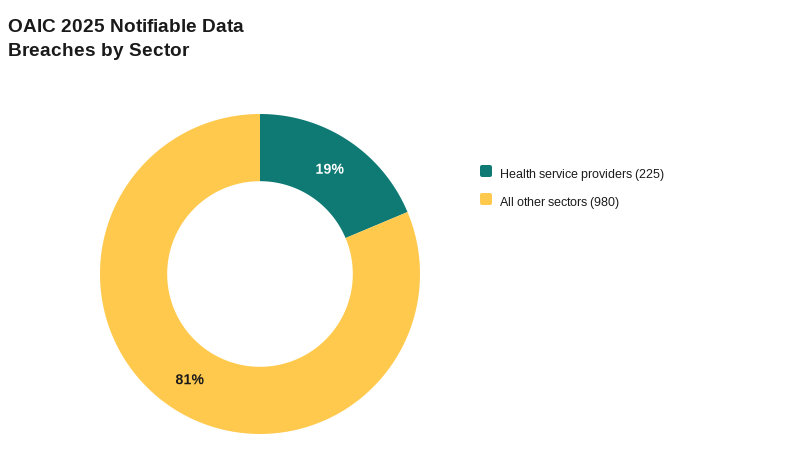
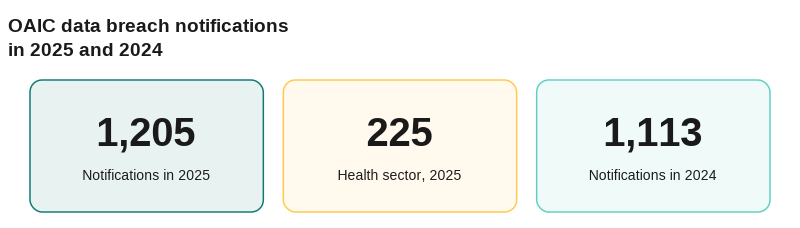
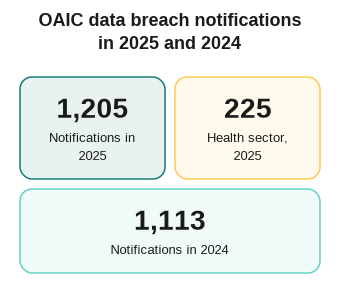
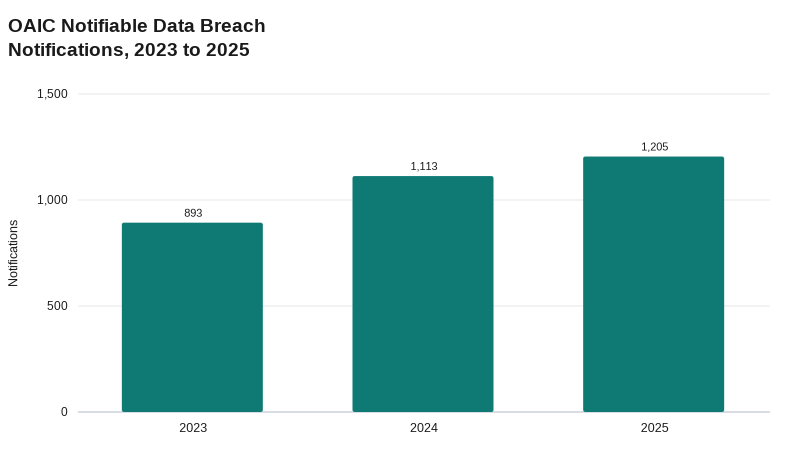
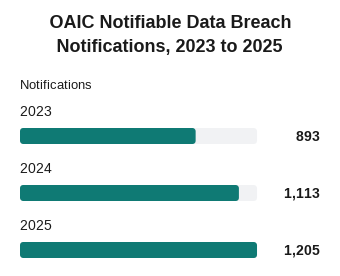
- The OAIC recorded 1,205 data breach notifications in the 2025 calendar year, with health service providers the single largest sector at 225, up from 1,113 total notifications in 2024
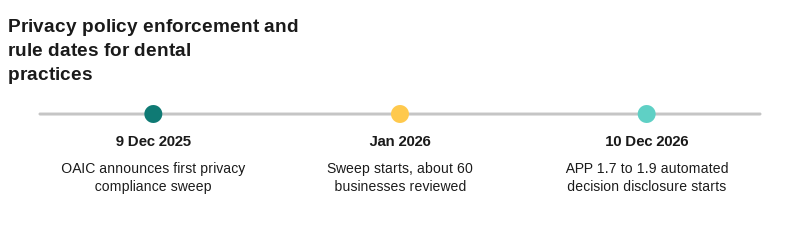
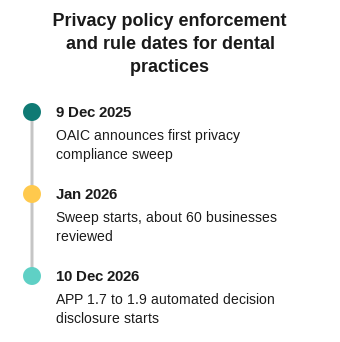
- From 10 December 2026, APP 1.7 to 1.9 add a disclosure requirement for automated decision-making, relevant to any dental practice running an auto-confirming booking widget or an intake chatbot
- The OAIC ran its first-ever APP 1.4 privacy policy compliance sweep from January 2026, reviewing around 60 businesses, with non-compliance able to draw an infringement notice of up to $66,000
As at November 2026, a generic small-business privacy policy template is missing several things a dental practice is legally required to disclose. The gap is not a stray clause here or there. It comes from one structural fact: a dental practice collects health information, which the Privacy Act 1988 classifies as sensitive information, and sensitive information carries a stricter consent standard than the ordinary personal information most template policies were written for. This guide covers what Australian Privacy Principle 1.4 actually requires, what changes specifically because the practice is a health provider, and what to check on your own site before assuming the policy your web developer copied in five years ago still holds up.
What APP 1.4 Requires, Reported Not Interpreted
Australian Privacy Principle 1.3 requires an APP entity to have a privacy policy that is “clearly expressed and up to date.” APP 1.4 then sets out what that policy has to contain, according to the OAIC’s APP Guidelines, Chapter 1, updated 3 October 2025:
- The kinds of personal information the practice collects and holds
- How that information is collected and held
- The purposes for which it is collected, held, used and disclosed
- How a patient can access their own information and seek its correction
- How a patient can complain if the practice breaches an Australian Privacy Principle, and how the complaint is handled
- Whether the practice is likely to disclose personal information to overseas recipients
- Which countries those recipients are likely to be in, if it is practicable to name them
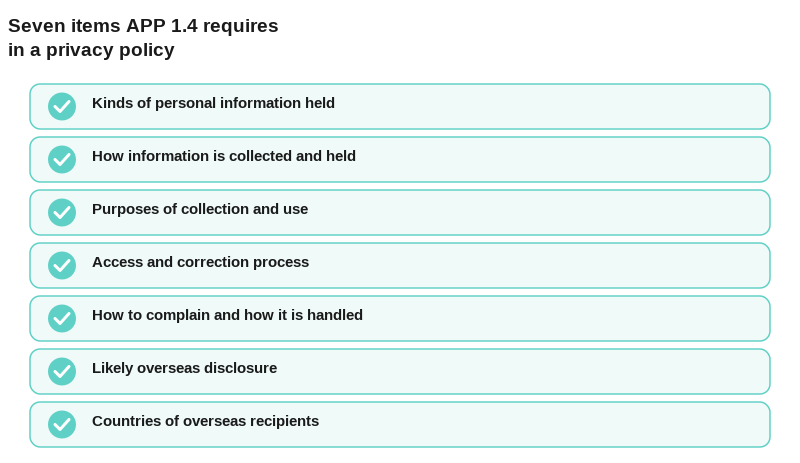
That list is generic. It applies to a hairdresser as much as a dental practice. What changes for a dental practice is not the list itself but what has to sit under item one (the kinds of personal information collected), because that answer includes health information, and health information triggers a different set of rules everywhere else in the Privacy Act.
Takeaway: APP 1.4 is the same seven-item checklist for every business; the content that fills it in changes because a dental practice holds health information.
Why “Health Information” Changes the Build, Not Just the Wording
A generic privacy policy template treats every field on an intake form the same way: name, phone number, email, maybe a note about cookies. A dental practice’s intake form collects medical history, current medications, allergies, prior procedures and, on many platforms, clinical images. Under the Privacy Act, that is health information, and health information is sensitive information under section 6 of the Act.
APP 3.3 sets a stricter collection standard for sensitive information than for ordinary personal information: consent is required, with limited exceptions. The OAIC’s Chapter 3 guidelines, updated 13 May 2026, say an entity “should generally seek express consent from an individual before collecting the individual’s sensitive information, given the greater privacy impact this could have,” and that consent cannot be inferred from silence or from a notice the patient may not have read. Four things have to be true for that consent to count: the patient is adequately informed before giving it, gives it voluntarily, gives consent that is current and specific, and has the capacity to understand what they are agreeing to.
That has three direct build consequences for a dental practice website.
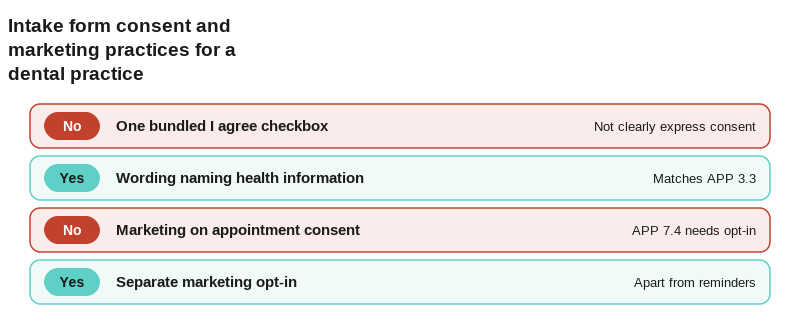
Intake form consent language has to be specific, not bundled. A single checkbox reading “I agree to the privacy policy” does not clearly obtain express consent for health information collection. The form needs wording that names what is being collected (medical history, treatment notes, clinical images) and why, sitting next to the field it applies to or immediately before submission.
Direct marketing needs its own opt-in, separate from appointment reminders. APP 7.4 requires consent before using sensitive information for direct marketing, and the OAIC’s Chapter 7 guidelines state this consent requirement applies “even if the individual and the organisation have a pre-existing relationship,” and cannot be waived on the grounds that obtaining consent would be impractical. That is a materially higher bar than APP 7.3, which allows some direct marketing using ordinary personal information without consent where obtaining it is impracticable. A recall reminder about a check-up is treatment communication. An email promoting teeth whitening to the same patient list is direct marketing using health information, and it needs its own opt-in, not an inherited one from the appointment booking checkbox.
The overseas disclosure item has to name the practice’s actual vendor, not a template placeholder. Item six and seven of APP 1.4 require disclosure of whether personal information goes overseas and, where practicable, which countries. A cloud-hosted practice management platform, a booking widget, or an SMS reminder service can each route data through an offshore server. A generic template’s boilerplate (“we may disclose your information overseas”) does not meet the “practicable to specify” bar if the practice already knows which vendor it uses and where that vendor hosts its data, which is something to confirm directly with each vendor rather than assume.
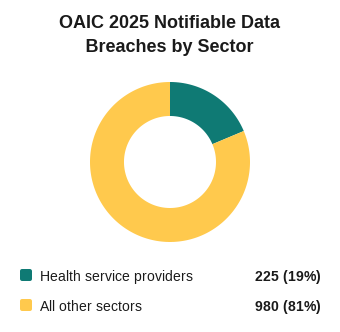
Takeaway: The same intake form field that a generic template treats as routine personal information is sensitive information once it touches a dental patient’s medical history, and that reclassification is what drives every other change.
Generic Template vs Dental-Practice-Ready Policy
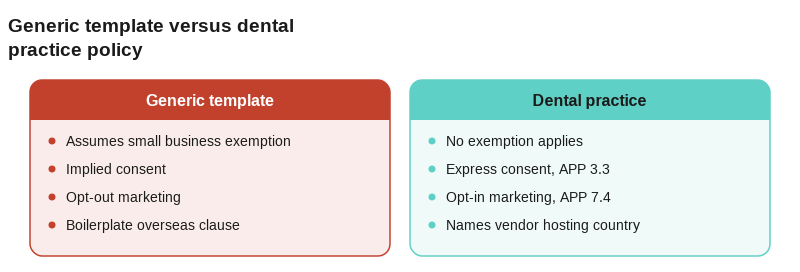
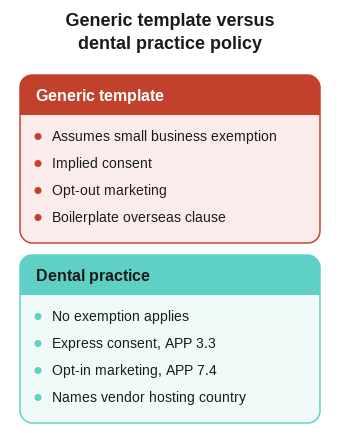
| Requirement | Generic small business template | What a dental practice needs instead |
|---|---|---|
| Small business exemption | Often assumes the exemption applies under $3 million turnover | Does not apply. A health service provider is covered regardless of turnover |
| Consent for collection | General, often implied by using the site or submitting a form | Express consent expected for health information (APP 3.3), named against the specific field it covers |
| Direct marketing | Opt-out language, consistent with APP 7.3 for ordinary personal information | Opt-in required for anything using health information (APP 7.4), separate from treatment reminders |
| Overseas disclosure | Boilerplate, rarely names a country | Names the actual practice management, booking, or SMS vendor’s hosting country where practicable |
| Automated decision-making (from 10 December 2026) | Not addressed | Must describe, in general terms, personal information used and decisions made by any auto-confirming booking widget or intake chatbot (APP 1.7 to 1.9) |
Takeaway: Every row in this table traces back to the same fact, that the practice holds health information, which is why swapping the business name on a generic template never closes the gap.
A Worked Example: A Perth Dental Practice’s Intake Form
A dental practice in Perth runs an online booking widget for new-patient appointments, embedded from its practice management platform. The intake form that follows a booking asks for medical history, current medications, and a photo upload for a rough triage assessment before the first visit.
The practice’s privacy policy, unchanged since the site was built four years ago, was adapted from a general small-business template. It has a single acknowledgement checkbox at the bottom of the intake form (“I agree to the Privacy Policy”) and no separate marketing consent. The policy’s overseas disclosure clause reads “we may share your data with third-party service providers,” with no country named, despite the booking platform’s own terms of service naming a specific offshore data centre region.
Under APP 1.4, that policy is missing a named country where naming one is practicable. Under APP 3.3, the single bundled checkbox does not clearly separate consent to be booked from consent to have medical history and a clinical photo collected and stored. Under APP 7.4, if the practice later emails that patient list about a teeth whitening promotion, it needs an opt-in it never separately captured. None of these are hypothetical enforcement scenarios; they are gaps a template audit finds on the first pass, in this exact combination, on a large share of the dental practice sites ClinicCode reviews.
Takeaway: The failure pattern is rarely one glaring omission. It is usually three or four small template gaps stacking up in the same form.
What to Check on Your Own Site
- Open your privacy policy and confirm all seven APP 1.4 items are present, including a named overseas recipient country where your booking, practice management, or SMS vendor makes that practicable
- Check the wording next to your intake form’s consent checkbox. Does it separately name health information (medical history, images, treatment notes), or is it a single bundled “I agree” statement?
- Confirm your marketing emails or SMS campaigns run on a separate opt-in from your appointment booking and reminder consent
- Ask your booking, practice management, and SMS vendors directly which country hosts patient data, in writing, so your policy can name it rather than guess
- If your site runs an auto-confirming booking widget or an intake chatbot, flag it now for a general-terms disclosure ahead of the 10 December 2026 automated decision-making requirement
- Confirm your complaint-handling process (APP 1.4(e)) names an actual contact method and a realistic timeframe, not just a link to the OAIC
The Enforcement Anchor
No published Australian enforcement action specifically against a dental practice’s privacy policy was found in this research pass, and this article says so rather than pointing at a case that does not exist. What does exist is direct evidence the regulator enforces APP 1 transparency generally. On 29 October 2024, the Privacy Commissioner determined that Bunnings Group had breached APPs 1.2, 1.3, 3.3 and 5.1, in part because its privacy policy did not adequately disclose its use of facial recognition technology. Bunnings appealed, and on 4 February 2026 the Administrative Review Tribunal set aside part of the original determination, but affirmed the Commissioner’s findings on APP 1 and APP 5, according to the OAIC’s statement on the Tribunal decision.
More directly relevant to a privacy policy specifically: the OAIC announced its first-ever privacy compliance sweep on 9 December 2025, launching in January 2026 and reviewing roughly 60 businesses across six sectors for compliance with APP 1.4, with non-compliance able to draw a compliance notice or an infringement notice of up to $66,000 under the amended Privacy Act penalty provisions. Health providers were not among the six named sectors in that first sweep, and this article does not claim otherwise, but the sweep confirms the OAIC is actively auditing privacy policy content, not just responding to complaints, which is a meaningful shift for a document most practices have not opened in years.
Takeaway: The absence of a dental-specific case is not evidence the rule has no teeth. It is evidence the regulator’s current enforcement attention on APP 1.4 has not reached this sector yet.
Where This Gets Hard
Confirming exactly which country a vendor hosts data in is often harder than it sounds. Some practice management and booking platforms use content delivery networks or backup regions that shift, and a vendor’s own privacy policy may itself use vague language rather than naming a specific country, which then limits how specific your own policy can honestly be.
The line between a treatment communication and direct marketing is not always obvious. A recall reminder (“you’re due for a check-up”) is treatment-related. A newsletter mentioning a new whitening service to the same list starts to look like direct marketing using health information, and the safer approach is to treat anything promotional as needing its own opt-in rather than relying on a borderline call.
Multi-practitioner and multi-location practices add another layer, because each location’s booking and intake flow may run through a different vendor, which means the overseas disclosure clause may need to vary by location rather than reading as one blanket statement for the whole practice.
The standing caveat applies here: the regulator says APP 3.3 requires express consent for sensitive information and APP 7.4 requires opt-in consent for marketing using it; whether your specific intake form and marketing setup meet that bar is a question for your medical defence organisation or your lawyer, not something a blog post can certify for your site.
Takeaway: The rule is clear in principle and genuinely hard in the specific detail of a real vendor stack, and the honest version of this guide says so.
Status
In force now: APP 1.3, 1.4, 3.3 and 7.4 of the Privacy Act 1988, and the requirement that a health service provider is covered regardless of the general small business exemption. Passed but not yet commenced: APP 1.7 to 1.9’s automated decision-making disclosure requirement, added by the Privacy and Other Legislation Amendment Act 2024, which commences 10 December 2026. The OAIC’s privacy policy compliance sweep is an active regulatory initiative, launched January 2026, currently scoped to six named sectors that do not include health providers.
Frequently Asked Questions
Does a generic small business privacy policy template work for a dental practice?
No. A dental practice collects health information, which the Privacy Act treats as sensitive information under Australian Privacy Principle 3.3, requiring a stricter, generally express, consent standard for collection than a generic template written for ordinary personal information assumes. A generic template also will not have the practice’s actual overseas disclosure countries, the health-specific direct marketing rule, or, from 10 December 2026, the automated decision-making disclosure a booking widget can trigger.
Does the Privacy Act small business exemption apply to dental practices?
No. The Privacy Act 1988’s general exemption for businesses under $3 million annual turnover does not apply to an organisation that provides a health service and holds health information, according to the OAIC’s Australian Privacy Principles guidelines. Nearly every dental practice in Australia is covered by the Privacy Act regardless of its size.
Can a dental practice use patient health information for marketing without consent?
No. Australian Privacy Principle 7.4 requires opt-in consent before an organisation uses or discloses sensitive information, which includes health information, for direct marketing, according to the OAIC’s APP guidelines. This is stricter than APP 7.3, which permits direct marketing using ordinary personal information in some cases without consent. Consent cannot be assumed just because the practice and the patient have an existing relationship.
Get Your Privacy Policy Checked
Book a call and ClinicCode will rewrite your dental practice’s privacy policy against all seven APP 1.4 items, your intake form’s consent wording, and your booking platform’s actual data hosting location, so a generic template cannot leave gaps a patient, or the OAIC, finds first.
Sources and References
- OAIC - APP Guidelines, Chapter 1: APP 1 Open and transparent management of personal information. Checked 15 August 2026.
- OAIC - APP Guidelines, Chapter 3: APP 3 Collection of solicited personal information. Checked 15 August 2026.
- OAIC - APP Guidelines, Chapter 7: APP 7 Direct marketing. Checked 15 August 2026.
- OAIC - Data breach notifications increase to all-time high in 2025, new NDB stats show. Checked 15 August 2026.
- OAIC - OAIC stats show record year for data breaches (2024 figures). Checked 15 August 2026.
- OAIC - Privacy Commissioner statement on Administrative Review Tribunal’s Bunnings decision. Checked 15 August 2026.
- OAIC - Privacy compliance sweep to put privacy policies under the spotlight. Checked 15 August 2026.
- Federal Register of Legislation - Privacy Act 1988 (Cth), Privacy and Other Legislation Amendment Act 2024. Checked 15 August 2026.
Last reviewed: 15 August 2026.
Vikas Thakur
Founder, Perth. 16 years of experience from working at TPG, iiNet and Monadelphous, now helping Australian clinics keep their websites, ads and online presence AHPRA compliant.