Cosmetic Clinic Numbers Australia: Market Sizing 2026
No government body publishes an exact count of Australian cosmetic clinics. Here is what IBISWorld, Mordor Intelligence and Grand View Research state, and why a 13% forecast growth figure is about device spending, not a clinic headcount.
 Vikas Thakur Founder, Perth 7 min read Fact checked
Key takeaways
- We found no official Australian count of “cosmetic clinics”. The closest published business counts depend on which industry class a researcher picks
- IBISWorld’s Plastic Surgeons industry lists 513 businesses in 2025, growing at a 2.6% compound annual rate from 2020 to 2025
- IBISWorld’s Health & Wellness Spas industry (day spas, medical spas and destination spas) lists 632 businesses in 2026, declining 0.6% a year from 2021 to 2026
- Mordor Intelligence forecasts that aesthetic clinics will grow at a 13.02% CAGR to 2031 within Australia’s aesthetic devices market. That is forecast device revenue, not a count of clinics
- Revenue forecasts from research vendors grow several times faster than IBISWorld’s measured business counts, and they cover different periods and different things
- Western Australia has the fastest population growth of any state, 2.1% in the year to 31 March 2026
What this data is, and is not
No government or industry body publishes an exact count of cosmetic clinics in Australia. We did not find one. What exists is business counts from a commercial research firm (IBISWorld), revenue forecasts from two other research vendors (Mordor Intelligence and Grand View Research), and population counts from the Australian Bureau of Statistics (ABS).
None of these is a headcount of cosmetic clinics. This post lays out what each source states, and where a number is often misread. Every figure below links to the page that states it. Figures are published by third parties and some sit behind a paywall, so check the linked page for the current edition.
Why a single clinic count does not exist
“Cosmetic clinic” covers a lot: a solo practitioner offering injectables from a rented room, a day hospital, a franchised laser chain, a dental practice adding facial aesthetics. Each lands in a different industry class, if it lands in one at all.
IBISWorld’s pages show how far apart the nearest classes are.
| IBISWorld industry class | Businesses | Year | Growth stated |
|---|---|---|---|
| Plastic Surgeons | 513 | 2025 | 2.6% CAGR, 2020 to 2025 |
| Health & Wellness Spas | 632 | 2026 | -0.6% CAGR, 2021 to 2026 |
| Hairdressing & Beauty Services | 38,066 | 2026 | 4.7% a year on average, 2021 to 2026 |
Source: IBISWorld industry and number-of-businesses pages linked in each row. These are one research firm’s estimates for its own industry classes, not a count of cosmetic clinics.
IBISWorld describes the spas class as covering day spas, medical spas and destination spas, with services such as massages, facials and body treatments. The hairdressing and beauty class is far broader than cosmetic clinics. It takes in every hair and beauty business.
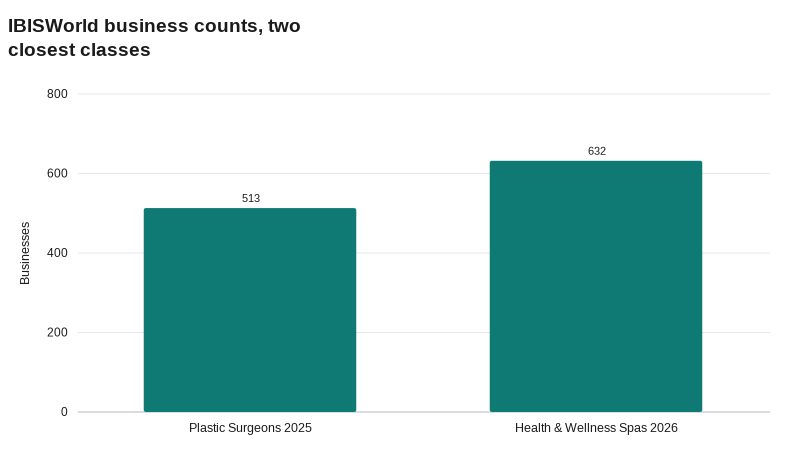
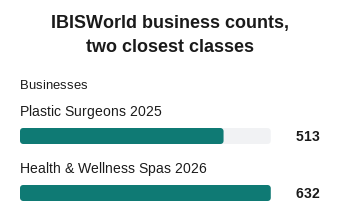
The chart shows the two narrower classes sit in the hundreds, and neither is a total for cosmetic clinics. The broad hairdressing and beauty class (38,066) is about 74 times the Plastic Surgeons count (our arithmetic, comparing 2026 and 2025 figures). Neither end of that range answers the question a clinic owner wants answered.
Source: IBISWorld, Plastic Surgeons and Health & Wellness Spas
Takeaway: If a report gives you one tidy “number of cosmetic clinics in Australia” without naming its industry class and year, treat it as marketing copy, not data.
Checking the 13% growth figure
The Australian aesthetic devices report from Mordor Intelligence states that aesthetic clinics are projected to grow at a 13.02% CAGR to 2031. That is a forecast for the clinic end-user segment of a device market. It is not a forecast of how many clinics will exist.
Other forecasts on the same subject measure different things over different periods:
- Mordor Intelligence puts the whole Australian aesthetic devices market at US$238.77 million in 2025 and US$419.18 million in 2031, a 9.83% CAGR over 2026 to 2031
- Grand View Research states the Australian aesthetic surgery procedures market was US$1,130.8 million in 2023 and is expected to reach US$2,844.2 million by 2030, a 14.1% CAGR from 2024 to 2030
- IBISWorld’s measured count of Plastic Surgeons businesses grew at a 2.6% CAGR from 2020 to 2025
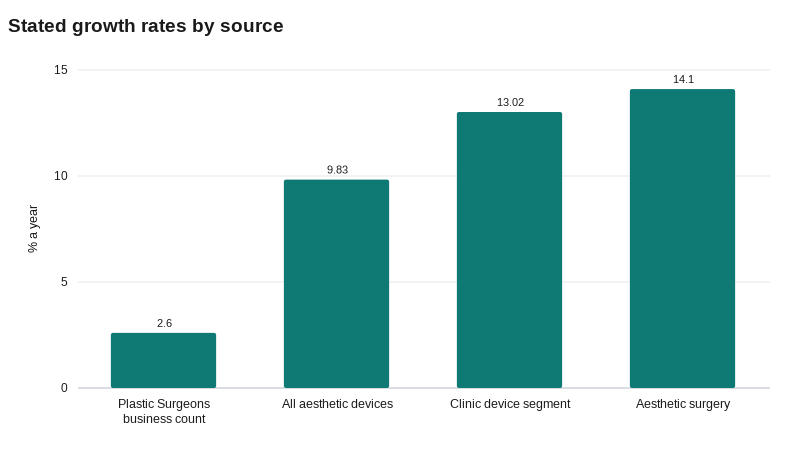
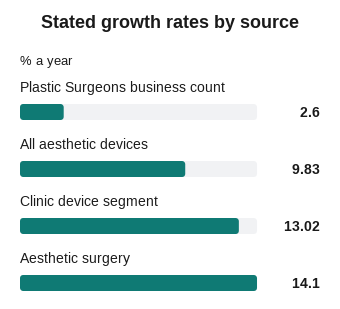
The chart puts four published rates side by side: IBISWorld’s measured business count (2020 to 2025), Mordor Intelligence’s devices market (2026 to 2031), its clinic segment (to 2031), and Grand View Research’s surgery market (2024 to 2030). The periods differ, so read it as a comparison of kinds of number, not a like-for-like trend. By our arithmetic, the three forecasts are about 3.8 to 5.4 times the measured business growth rate.
Source: IBISWorld, Mordor Intelligence, Grand View Research
Takeaway: About 13% is a real figure when attached to clinic device spending. Repeated as “13% more cosmetic clinics a year”, it is misquoted.
What may be behind the gap
If forecast revenue grows faster than the measured business count, one reading is that existing sites earn more rather than many new sites opening. This is our interpretation, not a finding of any source above. It fits the shape of the data, because a clinic that adds a treatment room or a device adds revenue without becoming a new registered business.
One related figure: Mordor Intelligence states that hospitals held 41.55% of the Australian aesthetic devices market in 2025. The rest sits with clinics and other settings. For more on the injectables side, see ClinicCode’s facial injectables market breakdown.
Takeaway: Treat “more revenue per site” as a hypothesis worth testing against your own books, not a proven national trend.
Where demand is likely concentrated
No official body publishes a state-by-state count of cosmetic clinics. The ABS does publish population by state, which is a rough proxy for where patients live. It does not tell you where clinics are.
| State or territory | Population at 31 March 2026 (thousands) | Growth over previous year |
|---|---|---|
| New South Wales | 8,670.1 | 1.1% |
| Victoria | 7,154.2 | 1.6% |
| Queensland | 5,739.5 | 1.6% |
| Western Australia | 3,096.2 | 2.1% |
| South Australia | 1,916.8 | 1.0% |
| Tasmania | 580.7 | 0.6% |
| Australian Capital Territory | 489.7 | 1.3% |
| Northern Territory | 268.9 | 1.5% |
Source: ABS, National, state and territory population, March 2026.
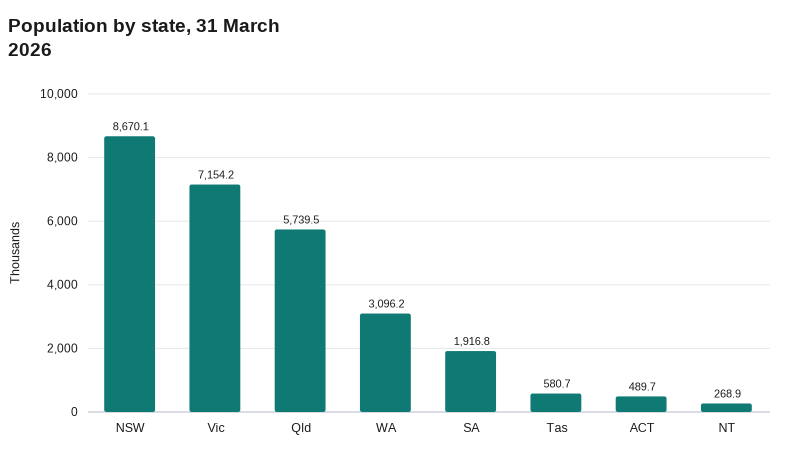
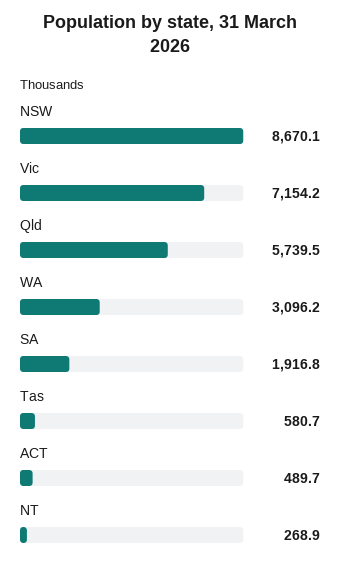
The chart shows New South Wales and Victoria far ahead of the rest. Together they hold about 56.7% of Australia’s 27,921,150 people (our arithmetic from the table above).
Source: ABS, March 2026
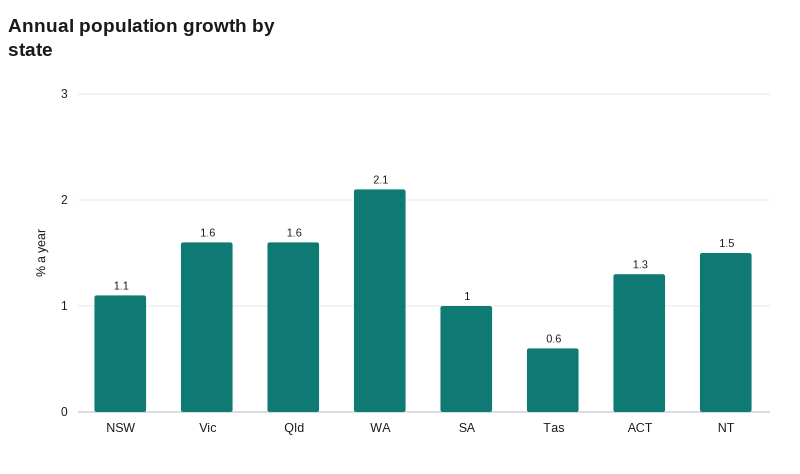
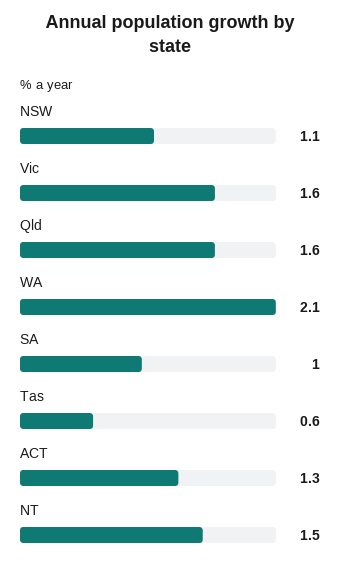
The second chart shows Western Australia with the fastest growth at 2.1%, and Tasmania the slowest at 0.6%. For a clinic in a faster-growing area, more local people are searching each year, so being easy to find matters.
Source: ABS, March 2026
Takeaway: Population is a rough guide to demand, and Western Australia currently leads on growth. It says nothing on its own about how many clinics each state has.
What this means for clinic marketing
A market where measured business counts grow modestly while revenue forecasts run higher is one where your competition is mostly the established clinics already near you. The work is winning the local search result, the review and the booking form against them.
Keep the advertising rules in view while you do it. Ahpra’s advertising guidelines say a regulated health service must not be advertised in a way that uses testimonials or purported testimonials about the service or business. Read the guidelines page itself for the full list of requirements and current penalties, and get your own advice if unsure.
If your website was built before you last checked it against those rules, it is worth a review. ClinicCode can look at your site and flag what needs attention.
Pro tip: when you quote a growth figure to a landlord, investor or bank, name the source, the industry class and the year. A business-count rate and a device-spend forecast are different things, and an informed reader will ask which one you mean.
Sources and References
Pages opened and checked for this post:
- IBISWorld, Plastic Surgeons in Australia: 513 businesses in 2025, 2.6% CAGR 2020 to 2025
- IBISWorld, Health & Wellness Spas in Australia: 632 businesses in 2026, -0.6% CAGR 2021 to 2026, scope of the class
- IBISWorld, Hairdressing & Beauty Services number of businesses: 38,066 businesses in 2026, 4.7% a year
- Mordor Intelligence, Australia aesthetic devices market: market size, 9.83% CAGR, 13.02% clinics CAGR, hospitals 41.55% share
- Grand View Research, Australia aesthetic surgery procedures: US$1,130.8 million (2023), US$2,844.2 million (2030), 14.1% CAGR
- ABS, National, state and territory population, March 2026: population and growth by state
- Ahpra, advertising guidelines: wording on testimonials
Contact ClinicCode to talk about your clinic’s website.
Vikas Thakur
Founder, Perth. 16 years of experience from working at TPG, iiNet and Monadelphous, now helping Australian clinics keep their websites, ads and online presence AHPRA compliant.