38% of Australians Are Considering Cosmetic Surgery: ACCSM Survey
A 2023 survey of 1,000 Australians commissioned by the Australasian College of Cosmetic Surgery and Medicine found 38% were considering cosmetic surgery in the next 10 years. Here is what it says by age, gender and state, and what it does not.
 Vikas Thakur Founder, Perth 7 min read Fact checked
Key takeaways
- The Australasian College of Cosmetic Surgery and Medicine (ACCSM) reports that 38% of Australians are considering cosmetic surgery in the next 10 years. That is “yes” (16%) plus “maybe” (22%), from a nationally representative survey of 1,000 people (ACCSM media release)
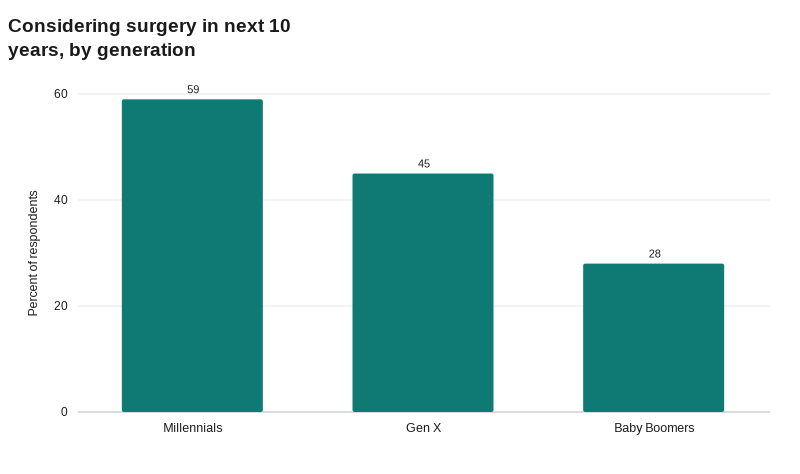
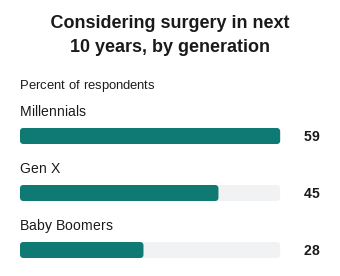
- By generation, 59% of Millennials, 45% of Gen X and 28% of Baby Boomers answered yes or maybe
- The most common reason given for considering surgery was repairing or correcting appearance after an injury or health issue (31%), ahead of self-esteem (24%)
- Asked what matters most for cosmetic patients, 39% said safety, security and hygiene. Affordability was 7%
- This is one survey from one college, published as a media release. It is a stated intention, not a count of procedures
What this data is, and what it is not
The only source for these figures is a media release and results tables from the ACCSM, a not-for-profit college of doctors who practise cosmetic medicine and surgery. The release says the survey was “a nationally representative survey of 1,000 respondents” run by PureProfile for the ACCSM. The survey covers surgical procedures such as rhinoplasty, breast augmentation and facelifts.
There is no official government count of how many Australians intend to have cosmetic surgery. These numbers are stated intentions from a small sample, not bookings. The release’s own tables show that only 16% answered a firm “yes” to considering surgery in the next 10 years. Another 22% said “maybe”. The 38% headline adds the two (ACCSM media release). The release describes this as “almost seven million Australians”, which is the college’s extrapolation to the adult population.
For how many procedures are actually performed, see our companion piece on how many cosmetic procedures Australia performs yearly.
Who is considering cosmetic surgery
Age shows the biggest gap in the ACCSM tables. The survey defines Millennials as aged 23 to 42, Gen X as 43 to 58 and Baby Boomers as 59 to 77. Share answering yes or maybe to considering surgery in the next 10 years:
Source: ACCSM media release, key findings and Table 8.
The chart shows Millennials considering surgery at more than double the rate of Baby Boomers (59% against 28%). The release also reports that 22% of Millennials have already had surgery, that 34% would be willing to travel overseas for it, and that Gen X had the highest share opting for a facelift (25%). Baby Boomers were the most satisfied group, with 50% “highly satisfied”, against 41% of all patients.
Overall, 88% of patients said they were satisfied with their results (41% highly, 47% somewhat). These are self-reported answers from people who have had surgery, in a survey run by a college of practitioners.
Why people say they are considering it
Table 11 of the release asked all respondents why they would consider surgery. Percentages are of everyone surveyed, including the 23% who said they would not have cosmetic surgery.
- Repair, improve or correct appearance after an injury or health issue: 31%
- Improve self-esteem: 24%
- Be better looking: 11%
- Look younger: 11%
- Look like a celebrity: 0%
- Would not have cosmetic surgery: 23%
Source: ACCSM media release, Table 11.
For a clinic owner, the useful reading is that the most common stated reason is corrective, not aspirational. A patient in that position tends to want a plain explanation of the procedure, the practitioner’s qualifications and what recovery involves. Ahpra advertising rules also restrict testimonials and before-and-after claims, so check the Medical Board’s cosmetic surgery advertising guidance before publishing anything. That page says advertising is audited against the cosmetic surgery guidelines from 1 July 2023. This is not legal advice.
Men and women
The release reports the most popular procedures by gender:
- Women: breast enlargement or reduction (31%), liposuction (14%), tummy tucks (10%)
- Men: facelifts (36%), rhinoplasty (29%), eyelifts (24%)
The release does not explain the base for these percentages, so read them as rankings, not market shares. On intent, Table 9 shows 29% of women answered yes and 21% maybe, against 12% and 20% for men. By our arithmetic from those figures, that is 50% of women and 32% of men answering yes or maybe.
On satisfaction, the release says 88% of women were happy with their new bodies and 85% of men with their faces.
Source: ACCSM media release, key findings and Table 9.
State by state
Past surgery, as reported in the release: Western Australia 19%, NSW 17%, Queensland 16%, Victoria 15% and Tasmania 9%. The release calls ACT residents “the most reluctant cosmetic surgical patients to date”, with only 6% having had a procedure. It gives no past-surgery figures for the other states and territories.
For the next 10 years, the release lists the share considering surgery (yes or maybe) by state:
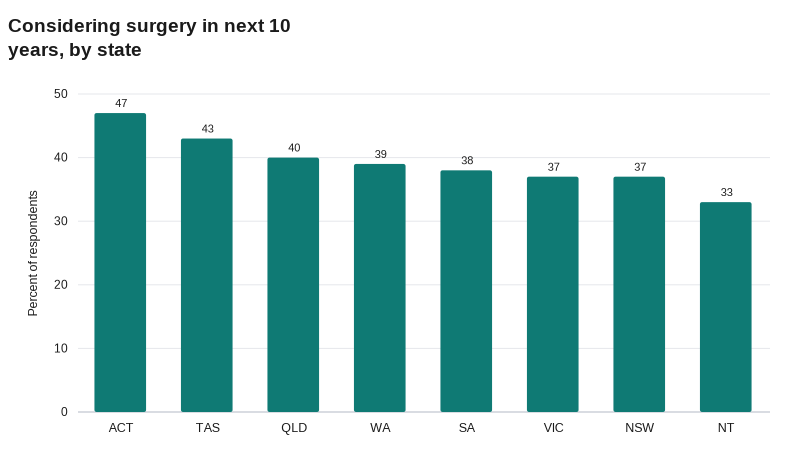
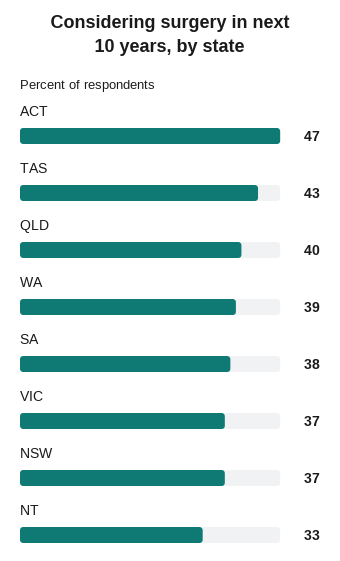
Source: ACCSM media release. The chart follows the release’s key-findings text (QLD 40, WA 39). The release’s Table 10 gives slightly different yes-plus-maybe totals for those two states (QLD 41, WA 38, our addition of its yes and maybe rows), so read each state to within a point or two.
The chart shows the ACT and Tasmania highest and the Northern Territory lowest. Treat the gaps with care. A national sample of 1,000 split across eight jurisdictions leaves very small groups in the ACT, Tasmania and the NT, and the release gives no state sample sizes or margins of error. Western Australia and Victoria had the highest share answering a firm “yes” (19% each).
What matters most to patients
Table 13 asked respondents what they think is most important for cosmetic patients, whether or not they have had surgery:
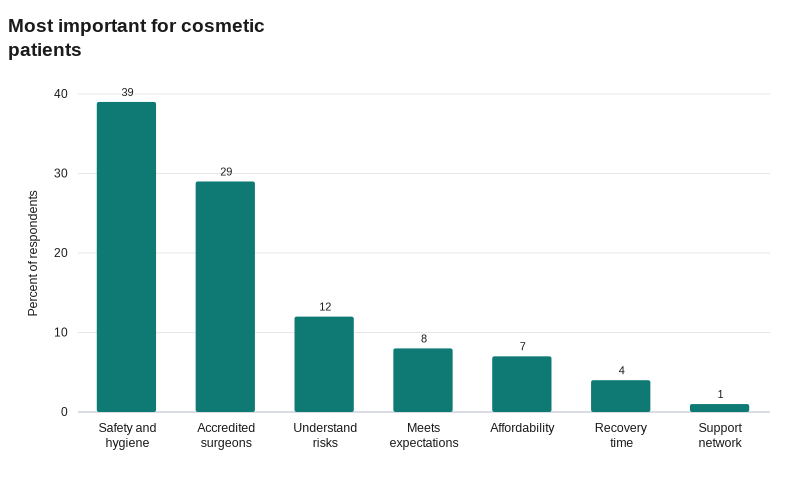
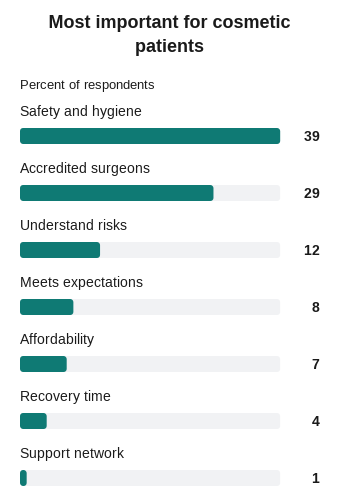
Source: ACCSM media release, Table 13.
The chart shows safety, hygiene and qualified practitioners ahead of price. This is a question about what matters in general, not what makes someone book.
On how people choose a surgeon (Table 5): a medical recommendation 37%, word of mouth 28%, reviews from former patients 20%, surgeon availability 7%, cost 6% and website 2%. A website scoring 2% as the main factor does not mean it is unimportant. People check a website after a referral, so it needs to confirm the practitioner’s registration, qualifications and accreditation clearly.
Source: ACCSM media release, Table 5.
What this means for clinics
- Do not quote “7 million Australians want surgery”. The source says almost 7 million are considering it, and that includes people who answered “maybe”.
- Lead service pages with practitioner qualifications, accreditation, safety information and a clear explanation of risks, because those are what respondents ranked highest.
- Make referral and review paths easy. Referrals and word of mouth were the top two ways people choose a surgeon.
- Check every claim on your site against the current Ahpra and Medical Board advertising guidance.
If you are not sure your site clears the current bar, get in touch with ClinicCode and we will check it and flag what to fix. See also how many cosmetic procedures Australia performs yearly.
Sources and References
- ACCSM media release, “More than a third of Australians considering cosmetic surgery” (June 2023): all survey figures, tables and the sample description
- Healthcare Channel, “Booming demand: Over 7M Australians considering Cosmetic Surgery in next decade”: secondary report of the same release, used to cross-check the state and generation figures
- Medical Board of Australia, FAQ on guidelines for advertising cosmetic surgery: 1 July 2023 start for cosmetic surgery advertising guidelines
Vikas Thakur
Founder, Perth. 16 years of experience from working at TPG, iiNet and Monadelphous, now helping Australian clinics keep their websites, ads and online presence AHPRA compliant.