Dental Practice Costs: 61% to 73% of Turnover (ATO 2023-24)
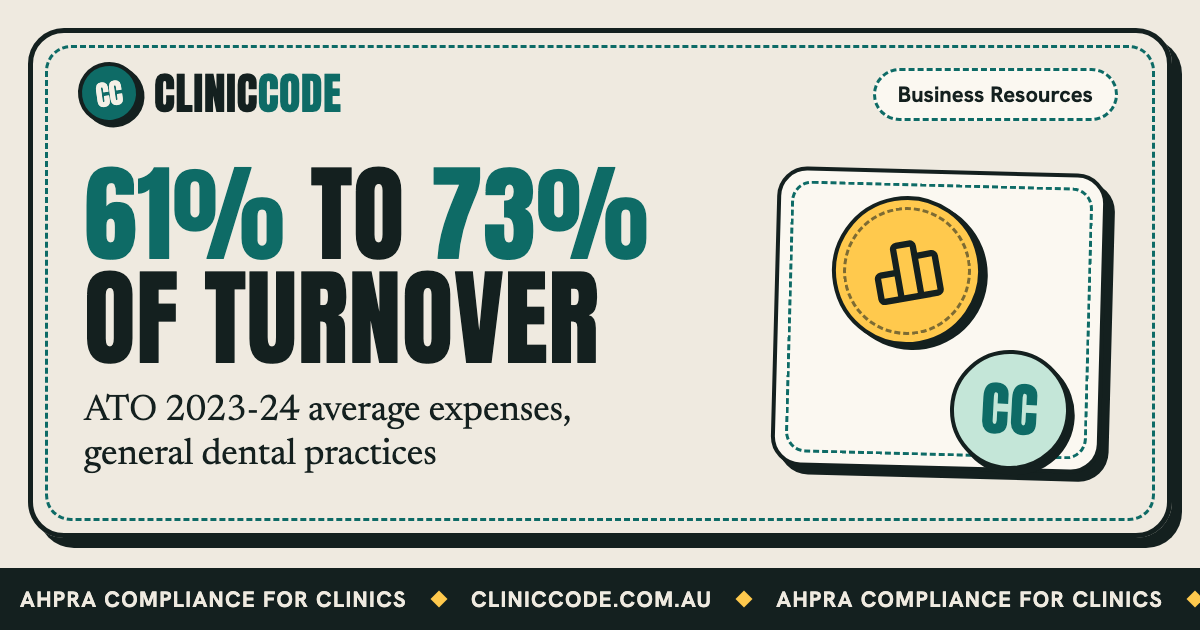
The ATO’s 2023-24 small business benchmarks put total expenses for general dental practices at 73% of turnover above $815,000, and 61% at the smallest size. Here is what that leaves, and why paper profit is not cash.
 Vikas Thakur Founder, Perth Updated Nov 23, 2026 7 min read Fact checked
Key takeaways
- The ATO’s 2023-24 benchmarks for general dental surgeons show average total expenses of 73% of turnover above $815,000, 69% from $435,001 to $815,000 and 61% from $50,000 to $435,000
- Taking those averages from 100%, what is left is 27%, 31% and 39% (our arithmetic, not an ATO profit figure)
- Labour is the biggest line the ATO lists, with ranges of 23% to 41% of turnover across the three bands
- One Insight Dental Consulting example of a $2 million revenue practice shows $250,000 net profit but a $40,000 loss after commitments
- AIHW says registered dentists rose from around 15,800 in 2014 to around 21,000 in 2024
- CommBank’s survey of 414 decision-makers and influencers at dental practices found 70% prioritising at least one initiative to acquire new patients and 52% at least one to drive efficiencies
The ATO publishes average total expenses for general dental practices by turnover band. Take that average from 100% and you get a rough margin: 27% for practices above $815,000 and 39% for the smallest band. That subtraction is our arithmetic, not an ATO profit figure. A margin on paper also differs from cash in the bank, and one worked example shows how far the two can sit apart.
What the ATO’s Benchmarks Actually Measure
The ATO’s dental surgeons (general) page says the benchmarks “use information reported on tax returns for the 2023-24 financial year”. It says they do not apply to “dental specialists, hygienists, assistants or technicians”. Its key benchmark is total expenses divided by annual turnover.
| Annual turnover | Average total expenses | Remainder (our arithmetic, 100% minus average) |
|---|---|---|
| $50,000 to $435,000 | 61% | 39% |
| $435,001 to $815,000 | 69% | 31% |
| More than $815,000 | 73% | 27% |
Source: ATO, Dental surgeons (general), 2023-24. The page was last updated 16 March 2026. The remainder column is ours.
The ATO also publishes a range for each band. For practices above $815,000, total expenses run from 67% to 80% of turnover. So the 27% remainder is an average, and individual practices sit well either side of it.
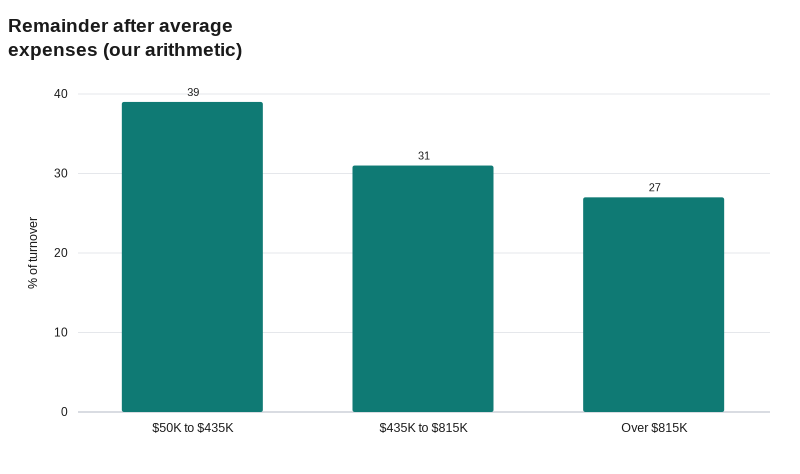
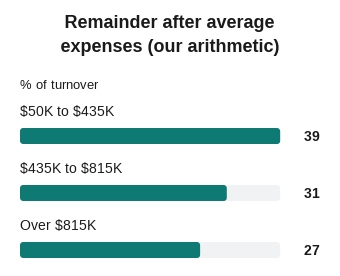
Source: ATO, Dental surgeons (general), 2023-24. Bars are our arithmetic from the ATO’s average total expenses (61%, 69%, 73%).
The remainder is smaller in the larger bands. The ATO page does not say why. Larger practices carry more staff and premises, but the page does not break that down, so treat the reason as a question for your accountant.
Takeaway: On the ATO’s averages, the remainder after expenses is lower for practices above $435,000 than for the smallest band.
Where the Money Goes
The ATO lists three expense lines against turnover. Not every business reports every expense, and the ATO says to use these only as a guide where they apply to you.
| Expense as share of turnover | $50,000 to $435,000 | $435,001 to $815,000 | More than $815,000 |
|---|---|---|---|
| Labour | 25% to 41% | 24% to 37% | 23% to 37% |
| Rent | 9% to 15% | 7% to 10% | 4% to 7% |
| Motor vehicle | 1% to 3% | 1% | 0% to 1% |
Source: ATO, Dental surgeons (general), 2023-24.
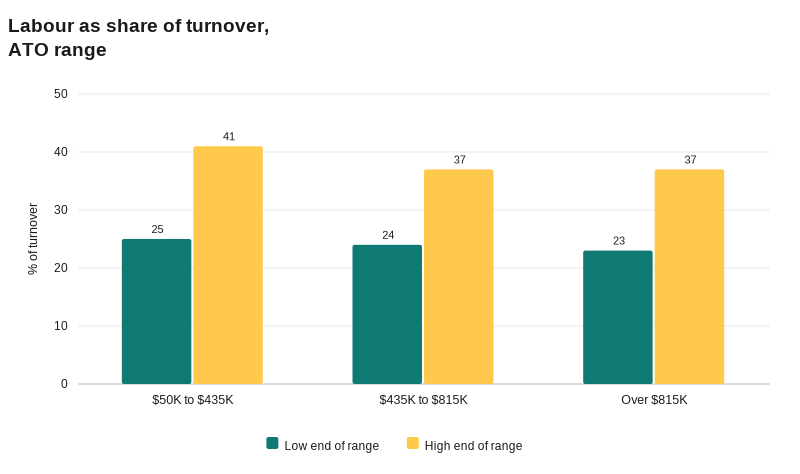
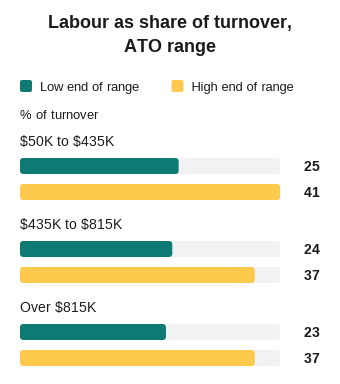
Source: ATO, Dental surgeons (general), 2023-24. Each pair of bars is the low and high end of one published range.
Labour has the highest range in every band. The rest of the expenses (materials, lab fees, software, insurance, marketing and so on) are not itemised on the ATO page. Every dollar of marketing that produces no booking comes out of the same remainder.
Takeaway: Labour is the largest expense line the ATO lists, so staffing decisions move the remainder more than rent or vehicles do.
Paper Profit vs Cash Reality
A benchmark describes an average, not a specific practice. Insight Dental Consulting’s research page gives this example: “A suburban practice reported $2 million in annual revenue and a 12.5% net profit margin after dentist commissions and management fees, equating to $250,000 in net profit.” The page then sets out commitments that come after that profit.
| Line item | Amount |
|---|---|
| Net profit | $250,000 |
| Corporate tax at 30% | $75,000 |
| Staff entitlements (25% of total wages) | $60,000 |
| Loan principal repayments ($400k loan, 5 year term, $100k balloon) | $80,000 |
| Capital savings (equal to depreciation) | $70,000 |
| Bad debts | $5,000 |
| Profit (loss) after commitments | ($40,000) |
Source: Insight Dental Consulting, research. We could not tell from the page whether this is one named practice or an illustrative case, so treat it as an example.
The page says: “Despite showing a quarter of a million dollars in net profit, the practice actually made a loss of $40,000.”
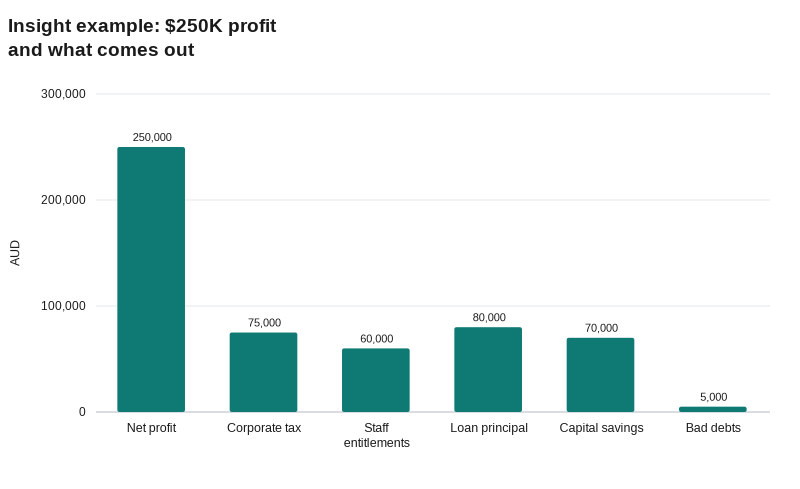
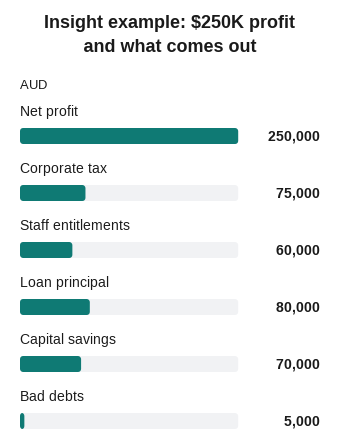
Source: Insight Dental Consulting, research. The $250,000 profit less the other five amounts gives the $40,000 loss.
A practice with that little room has no slack for wasted marketing spend or a compliance problem that forces a site rebuild. ClinicCode checks a site and ad accounts against current advertising rules before a problem turns into an unbudgeted cost.
Takeaway: Profit on the accounts can still be a cash loss once tax, entitlements and debt repayments come out, so watch cash flow as well as margin.
Growing Competition, Same Advertising Rules
The AIHW’s dental workforce page says: “The number of registered dentists in Australia increased from around 15,800 in 2014 to around 21,000 in 2024.” That is about a third more dentists (our arithmetic). More dentists means more competition for each new patient, and the cost of winning that patient comes out of the margin above. The AIHW page does not give practice revenue or patient demand, so we do not claim demand grew more slowly.
CommBank’s Dental Insights Report page describes a “quantitative survey of 414 decision-makers and influencers at dental practices across Australia”, run between 27 October 2023 and 17 November 2023. It says “70% of dental practices are prioritising at least one initiative to acquire new patients” and “52% of dental practices are prioritising at least one initiative to drive efficiencies”.
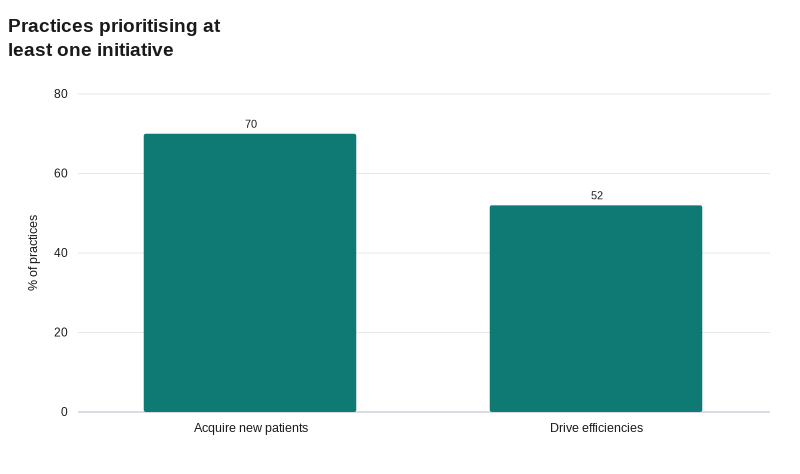
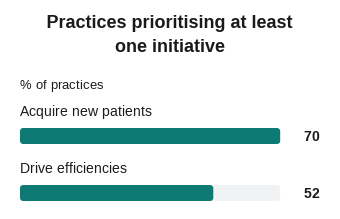
Source: CommBank, Dental Insights Report, survey of 414, Oct to Nov 2023.
Dental advertising is regulated, and the same advertising rules that apply to cosmetic clinics matter here. See ClinicCode’s dental advertising rules guide and check the regulator’s current guidance before publishing.
Takeaway: More dentists and an active push for new patients mean acquisition spend has to work harder inside the advertising rules.
Where Website Spend Can Move Margin
Labour and other running costs take most of turnover, so one lever practices control is what it costs to win each new patient. A slow site that hides pricing or makes booking hard can push that cost up. A fast site built around the treatments patients search for, with an easy booking path, can help bring it down. We have no sourced figure for how much, so we do not give one.
ClinicCode builds cosmetic clinic websites for dental and cosmetic clinics, with pages for the treatments that drive bookings, built to current advertising rules, and structured so a visitor can book rather than hunt for a phone number.
Takeaway: Lowering what it costs to win the next booking is a lever a practice controls directly.
Get Your Practice’s Numbers Reviewed
A thin margin leaves little room for wasted marketing spend or an avoidable compliance problem. ClinicCode fixes dental and cosmetic clinic websites against current advertising rules and rebuilds them to convert more of the traffic already arriving.
Talk to ClinicCode about your practice’s website and patient acquisition
Sources and References
- Australian Taxation Office - Small business benchmarks, dental surgeons (general), 2023-24 financial year, last updated 16 March 2026.
- Insight Dental Consulting - Research page with a $2 million revenue practice example.
- Australian Institute of Health and Welfare - Dental workforce, registered dentists 2014 to 2024.
- Commonwealth Bank - Dental Insights Report page, survey of 414 decision-makers and influencers at dental practices, 27 October to 17 November 2023.
Related reading:
- AHPRA Advertising Rules for Cosmetic Dentistry: advertising rules for dental and cosmetic practices.
- Clinic Website Design: website builds for dental and cosmetic clinics.
ATO figures are the 2023-24 benchmarks as shown on the page when we opened it on 23 November 2026.
Vikas Thakur
Founder, Perth. 16 years of experience from working at TPG, iiNet and Monadelphous, now helping Australian clinics keep their websites, ads and online presence AHPRA compliant.