HealthEngine’s $2.9M Penalty: Running Compliant Clinic Reviews
The Federal Court ordered HealthEngine to pay $2.9 million in 2020 over misleading patient reviews and data sharing, per the ACCC. Here is what that means for a clinic’s reviews.
 Vikas Thakur Founder, Perth 12 min read Fact checked
Key takeaways
- On 20 August 2020 the Federal Court ordered HealthEngine to pay $2.9 million in penalties for misleading conduct over patient reviews and the sharing of patient information with private health insurance brokers
- HealthEngine admitted that between 31 March 2015 and 1 March 2018 it did not publish around 17,000 reviews and edited around 3,000 to remove negative aspects or embellish them
- Service Seeking was ordered to pay $600,000 on 22 July 2020; about 17,000 of about 21,000 “Fast Feedback” reviews were published automatically without customer input
- In an ACCC sweep announced 7 December 2023, 37 per cent of the 137 businesses reviewed had engaged in concerning review conduct (a mix of sectors, with health products among the lowest)
- Removalist Citymove paid a $6,600 penalty (an infringement notice) after the ACCC took action in 2011 over copied testimonials
- Ahpra’s testimonial rule only catches a review that refers to a clinical aspect: a symptom, a diagnosis or treatment, or an outcome
A health booking platform was ordered to pay $2.9 million in Federal Court penalties in 2020. The ACCC says it did not publish around 17,000 patient reviews and edited around 3,000 to remove negative aspects or to embellish them. The $2.9 million covered that conduct and a separate matter, the sharing of patient information with private health insurance brokers. A cosmetic clinic collecting Google reviews sits under two separate rulebooks: the ACCC’s rules on genuine, unedited reviews, and Ahpra’s ban on testimonials in advertising. This guide sets out what each says, using the ACCC and Ahpra pages themselves, and what that means for the reviews on your clinic’s website.
The $2.9 Million Case That Set the Bar for Health Reviews
HealthEngine ran an online booking system and health directory. Per the ACCC’s media release of 20 August 2020, the Federal Court ordered it to pay $2.9 million in penalties for misleading conduct in relation to the sharing of patient personal information with private health insurance brokers and publishing misleading patient reviews and ratings. HealthEngine admitted that between 31 March 2015 and 1 March 2018 it did not publish around 17,000 reviews and edited around 3,000 reviews to remove negative aspects, or to embellish them. It also admitted it misrepresented to consumers the reasons why it did not publish a rating for some practices.
The ACCC’s Chair said at the time that it was particularly concerned about the misleading conduct connected to reviews, because patients may have visited practices based on manipulated reviews that did not accurately reflect other patients’ experiences. The release does not split the $2.9 million between the review conduct and the data-sharing conduct.
Takeaway: The penalty was not about a single fake review. It was about a business deciding which genuine reviews its patients were allowed to see, alongside a separate data-sharing finding.
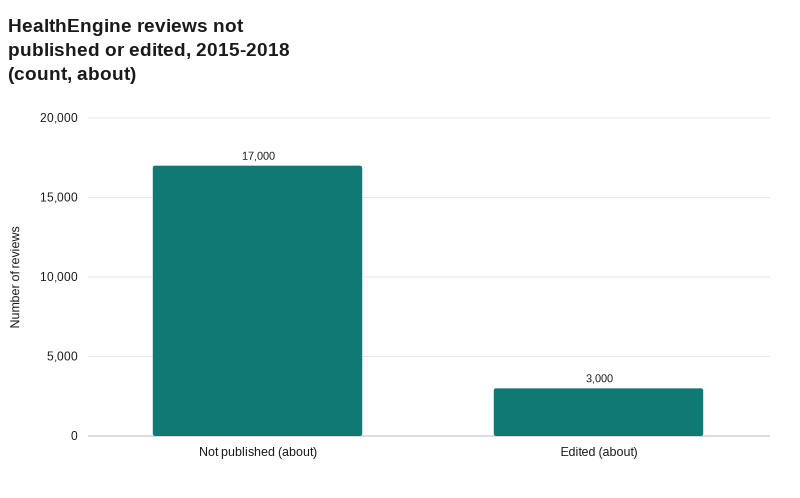
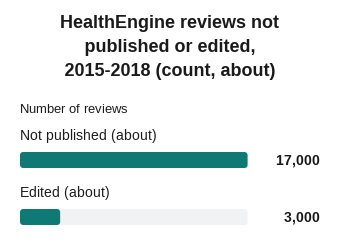
Source: ACCC, HealthEngine to pay $2.9 million for misleading reviews and patient referrals, 24 November 2026. Counts of reviews, as admitted by HealthEngine, for 31 March 2015 to 1 March 2018; both figures are the ACCC’s “around” numbers.
The ACCC’s Rules for Any Business That Collects Reviews
HealthEngine is not an isolated case. The ACCC’s online reviews guidance says reviews should be independent and reflect the genuine opinion of the person who experienced the product or service, and that it is against the law for a business to create fake or misleading reviews, or arrange for others to. It lists situations where reviews can mislead: reviews written by family, employees or people paid in some way by the business without stating the connection, reviews created by someone who has not used the product or service, and reviews edited or changed by someone else after being created. It also says a business may mislead consumers if it suppresses or edits negative reviews or removes genuine negative reviews.
On incentives, the same page says offering incentives for positive reviews risks misleading consumers and breaching the law. Incentives (the page names discounts and free gifts) must be applied regardless of whether the reviewer leaves a positive or negative review, and clearly disclosed.
Two other cases show this applies beyond healthcare. The ACCC’s Service Seeking release describes an online tasking platform whose “Fast Feedback” feature let businesses draft their own reviews, including a star rating, which were emailed to customers. If a customer did not respond within three days, the review was published automatically. The feature was used to create about 21,000 reviews between 12 July 2016 and 29 November 2018, and about 17,000 were automatically published without customer input. The Federal Court ordered $600,000 in penalties on 22 July 2020. In 2011, according to the ACCC’s online reviews page, removalist Citymove had copied testimonials from an unrelated review website, changed them and published them on its own site, and paid a $6,600 penalty under an infringement notice.
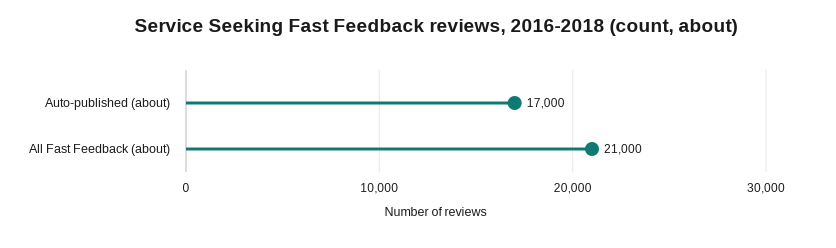
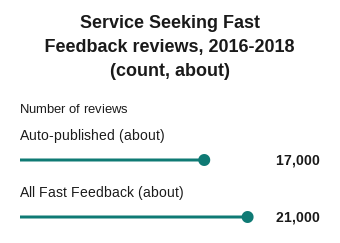
Source: ACCC, Service Seeking to pay penalty for misleading online customer reviews, 24 November 2026. Counts of reviews created with the Fast Feedback feature between 12 July 2016 and 29 November 2018; “auto-published” means published without customer input.
| Business | Penalty (AUD) | Year | What the ACCC says went wrong |
|---|---|---|---|
| Citymove | $6,600 (infringement notice) | 2011 | Copied testimonials from an unrelated review website, changed them and published them on its own site |
| Service Seeking | $600,000 | 2020 | Let businesses draft their own reviews, published automatically if the customer did not respond in three days |
| HealthEngine | $2.9 million (covers reviews and data sharing) | 2020 | Did not publish around 17,000 reviews and edited around 3,000 |
Source: ACCC online reviews guidance, Service Seeking release and HealthEngine release, 24 November 2026. Penalty amounts in AUD as stated by the ACCC; the three are different kinds of outcome, so they are not a like-for-like scale.
The ACCC’s December 2023 sweep shows review manipulation was still being found. In its release of 7 December 2023, the ACCC said 37 per cent of the 137 businesses reviewed in an internet sweep had engaged in concerning conduct. The release says the sectors with the highest proportions of potentially fake or misleading reviews were household appliances and electronics, beauty products, and home improvement and household products and services, and the lowest were health products, and food and restaurants. It does not report a figure for clinics.
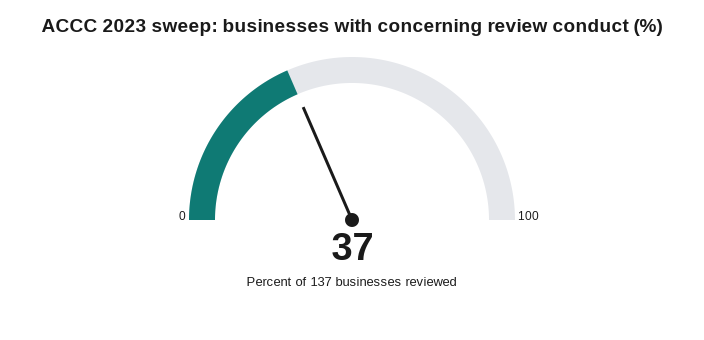
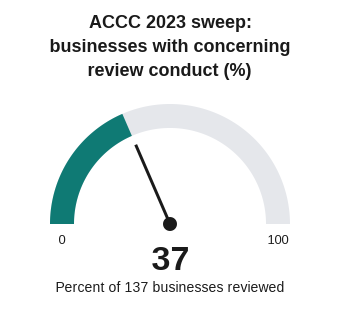
Source: ACCC, Scrutiny of influencers and businesses for misleading advertising and online reviews continues, 7 December 2023, seen 24 November 2026. Percent of the 137 businesses reviewed in the sweep, across sectors, not clinics specifically.
Takeaway: Across these cases, the ACCC’s position is that a business can have reviews on its platform, but it must not create them, edit them or choose which genuine ones the public sees.
Where Ahpra’s Rules Add a Second Layer
For a cosmetic clinic, the ACCC’s rules on how a review is collected and shown are only half the picture. Ahpra’s testimonial page says the National Law does not allow testimonials or purported testimonials to be used to advertise regulated health services, and that this includes testimonials that are selectively published or edited, or fake.
Ahpra defines a testimonial as recommendations or positive statements about the clinical aspects of a regulated health service used in advertising. A clinical aspect exists if one of these is expressed: the specific symptom or reason for seeking treatment; the specific diagnosis or treatment provided; or the specific outcome, or the skills or experience of the practitioner, either directly or via comparison. Ahpra says comments about customer service or communication style that do not refer to clinical aspects are not testimonials and may be used in advertising.
Ahpra also says the prohibition does not affect patients posting reviews on review platforms, and only applies when an advertiser uses testimonials to advertise a regulated health service. The two tests stack: a review can pass the ACCC’s genuineness rules and still be one Ahpra does not allow in advertising. We cover the clinical aspect test in our guide to Google Reviews and AHPRA.
On penalties, Ahpra’s Advertising and the law page says advertising breaches may be prosecuted, with a maximum of $60,000 per offence for an individual and $120,000 per offence for a body corporate. It says the penalty increase followed a 2022 amendment to the National Law, and that as of July 2024 the increased penalties apply in all jurisdictions, including Western Australia.
Takeaway: Passing the ACCC’s rules on how a review was collected says nothing about whether Ahpra allows a clinic to use that review in advertising. Both tests apply.
A Compliant Review Request Process
Steps 2 to 4 follow the ACCC and Ahpra pages cited above. Steps 1 and 5 are our view.
- Ask every patient the same way, in our view, rather than only the ones staff believe are happy. The ACCC page does not set a rule on who to ask, but selective asking sits close to the selective publishing it warns about.
- Never draft or edit the review yourself. The ACCC lists reviews edited or changed by someone else after being created as potentially misleading, and Ahpra lists selectively edited testimonials.
- Disclose any incentive, and apply it either way. The ACCC says incentives must be applied regardless of whether the review is positive or negative, and clearly disclosed.
- Do not suppress negative reviews. The ACCC says suppressing or editing negative reviews, or removing genuine negative reviews, may mislead consumers; this is the conduct HealthEngine admitted to.
- Keep the request free of clinical language, in our view. “How was your visit today” points a patient at service; “how happy are you with your results” invites an outcome comment, which Ahpra treats as a clinical aspect if the clinic later uses it in advertising.
Takeaway: In our view, the safest process is the plainest one: ask everyone the same neutral question, leave the wording to the patient, and do not pick which genuine reviews appear.
What This Means for Your Clinic’s Website
Because Ahpra’s test turns on clinical aspects, it affects which reviews a clinic can put in its own advertising, including on its website. Ahpra’s examples of comments that are not testimonials are customer service and communication style. A page that quotes comments of that kind stays outside the testimonial rule. A page that quotes reviews of treatments or outcomes does not, even where the review is genuine and unedited, because Ahpra says comments about clinical aspects are testimonials and cannot be used in advertising.
In our view, that makes service, process and credentials the safer subjects for a landing page, and a website built for cosmetic clinics should keep that separation deliberate. ClinicCode can check the review widgets already live on a clinic’s site against both rulebooks.
Takeaway: Which reviews a clinic may display in advertising depends on what the review says, not on how genuine it is.
The Source Pages
Screenshots of the pages cited in this post, taken on 24 November 2026 and framed on the passage each one supports.
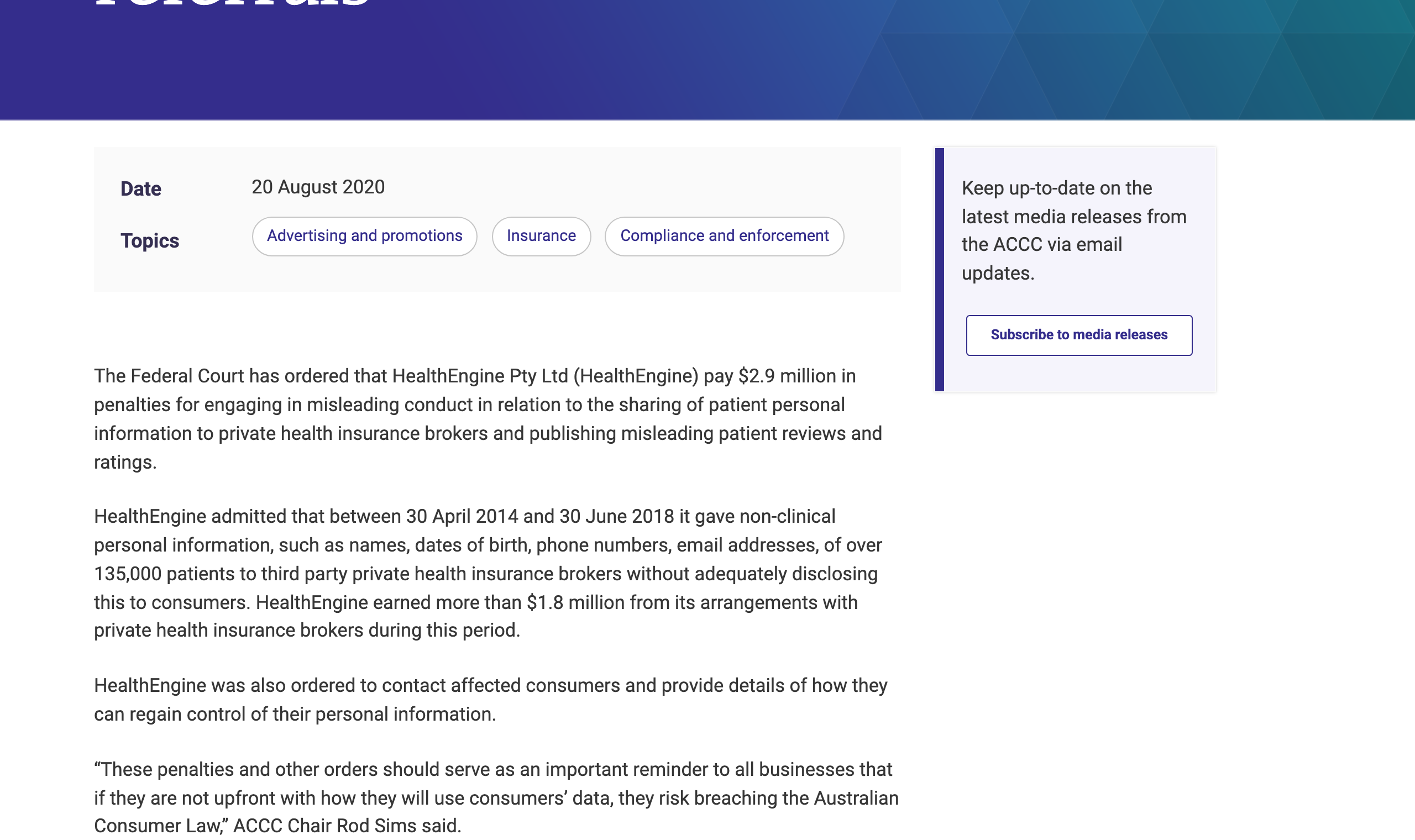
Source: ACCC, HealthEngine to pay $2.9 million for misleading reviews and patient referrals, screenshot taken 24 November 2026.
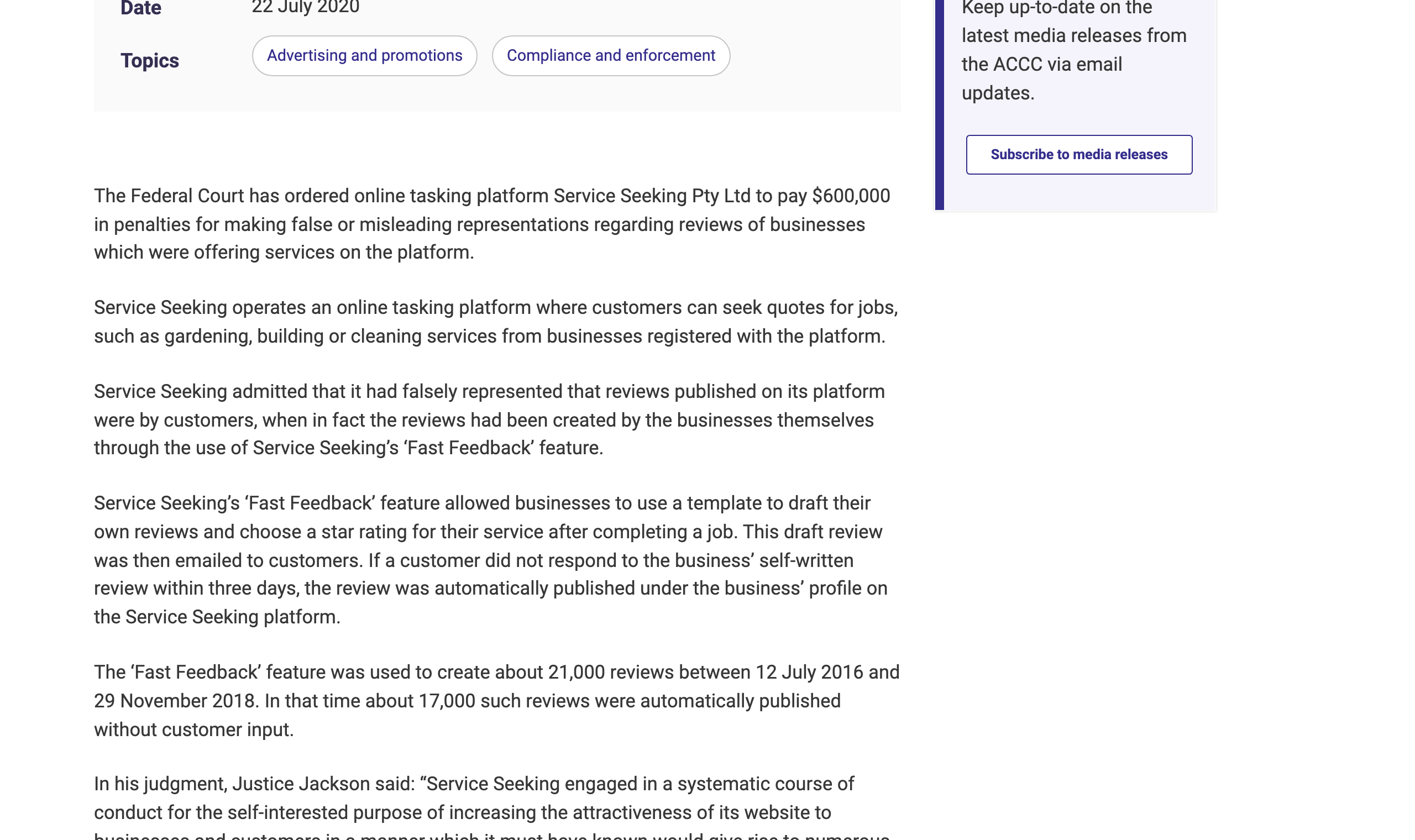
Source: ACCC, Service Seeking to pay penalty for misleading online customer reviews, screenshot taken 24 November 2026.
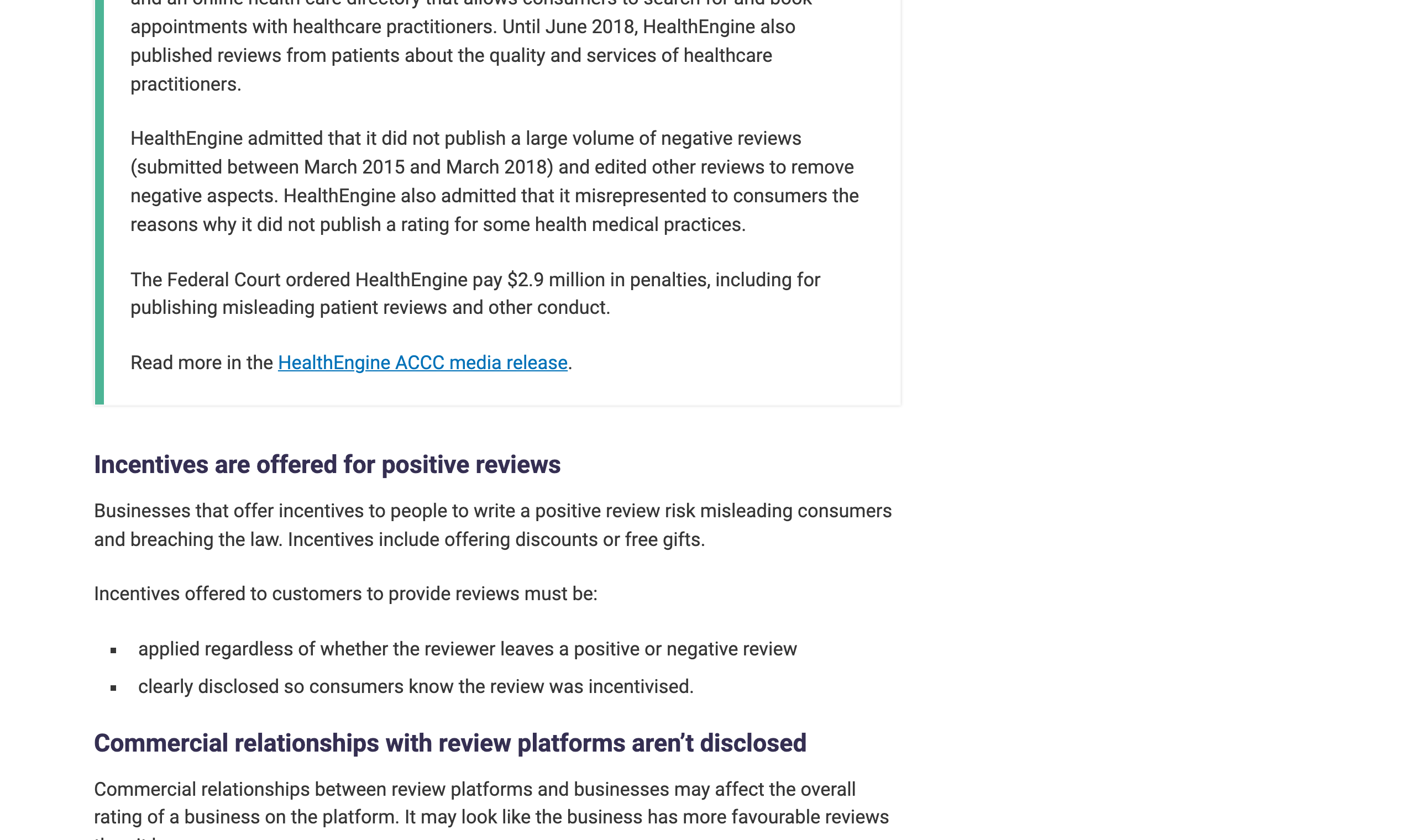
Source: ACCC, Online reviews for product and services, screenshot taken 24 November 2026.
FAQ
Can a cosmetic clinic ask patients to leave a Google review?
Nothing on the ACCC’s online reviews page stops a business asking for reviews. The page says reviews should be independent and reflect the genuine opinion of the person who used the service, and that it is against the law to create fake or misleading reviews or arrange for others to. In our view, the safe approach is to ask every patient the same way and leave the wording to them.
Is it against the rules to hide or delete negative Google reviews?
The ACCC says a business may mislead consumers if it suppresses or edits negative reviews or removes genuine negative reviews. In the HealthEngine case, the Federal Court ordered $2.9 million in penalties, covering misleading reviews and the sharing of patient information with insurance brokers. HealthEngine admitted it did not publish around 17,000 reviews and edited around 3,000.
Can a clinic offer a discount in exchange for a review?
The ACCC says offering incentives for positive reviews risks misleading consumers and breaching the law. Where an incentive is offered, the ACCC says it must be applied whether the reviewer leaves a positive or negative review, and clearly disclosed so consumers know the review was incentivised.
Does Ahpra’s testimonial ban apply to Google reviews the same way the ACCC’s rules do?
No, they test different things. The ACCC’s page covers whether reviews are genuine and fairly presented. Ahpra’s testimonial rule applies when an advertiser uses a review that refers to a clinical aspect of a regulated health service (a symptom, a diagnosis or treatment, or an outcome) to advertise. Ahpra says patients posting reviews on review platforms are not affected by the prohibition.
Get Your Review Strategy Fixed
ClinicCode fixes the review widgets and request flows already live on your clinic’s website and Google Business Profile against both the ACCC’s rules and Ahpra’s testimonial test.
Talk to us about your clinic’s review strategy
Sources and References
ACCC - HealthEngine to pay $2.9 million for misleading reviews and patient referrals, 20 August 2020
ACCC - Service Seeking to pay penalty for misleading online customer reviews, 22 July 2020
ACCC - Online reviews for product and services: review rules, incentives and the Citymove case study
ACCC - Scrutiny of influencers and businesses for misleading advertising and online reviews continues, 7 December 2023
Ahpra - Testimonials: understand the requirements, including the clinical aspects test
Ahpra - Advertising and the law: penalties for advertising breaches
Related reading:
- Google Reviews and AHPRA: the full clinical aspect test for what counts as a banned testimonial
- AHPRA Testimonial Ban: the full testimonial rule and penalty history
- AHPRA Advertising Fines for Cosmetic Clinics: the full penalty structure
- Clinic Website Design: compliant website builds for AHPRA-regulated clinics
For review widgets and request flows that stay inside both rulebooks from day one, talk to us about your clinic’s marketing.
Vikas Thakur
Founder, Perth. 16 years of experience from working at TPG, iiNet and Monadelphous, now helping Australian clinics keep their websites, ads and online presence AHPRA compliant.