Subscription Cancellation Rules 2027: Clinic Memberships
From 1 July 2027, a consumer or small-business membership needs an easy-to-find, straightforward way to cancel, online if sign-up is online. The Competition and Consumer Amendment (Unfair Trading Practices) Act 2026 is assented but not yet commenced, and an existing membership is caught only once it renews. This guide covers what qualifies and what the build needs to do about it.
 Vikas Thakur Founder, Perth 14 min read Fact checked
Key takeaways
- The Competition and Consumer Amendment (Unfair Trading Practices) Act 2026 (No. 64, 2026) states it was assented to on 6 July 2026, and its commencement table says the whole Act commences on 1 July 2027
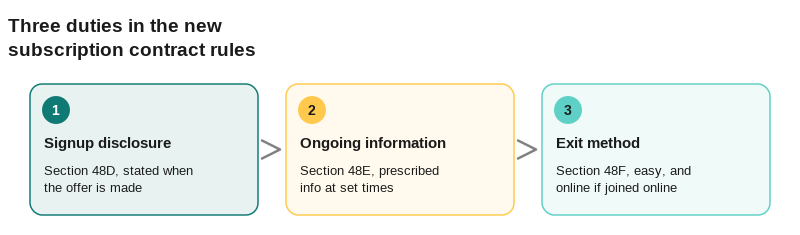
- A new Division 4A of Part 3-1 of the Australian Consumer Law defines a subscription contract and creates a signup disclosure duty (section 48D), an ongoing information duty (section 48E) and an exit method duty (section 48F)
- The exit method duty requires a way to end the contract that is easy to find, straightforward and needs only reasonably necessary steps. If the subscriber signed up online, or the supplier offers online sign-up, one way to cancel must be online
- A contract for payment in instalments is excluded from the definition (section 48C(1)(d)). A recurring membership that renews automatically can meet the definition
- Existing memberships are not automatically caught. Sections 48B, 48E and 48F apply once a contract entered into before commencement is renewed, extended, continued or varied on or after commencement
- Allens summarises the maximum penalty under the new regime for corporations as the greater of $100 million, three times the benefit or 30% of turnover, per contravention
- As at 25 November 2026, the subscription contract rules are assented but not commenced. Nothing is required of your booking or membership portal today, but a renewal or a variation after commencement can bring an existing contract into scope
The Competition and Consumer Amendment (Unfair Trading Practices) Act 2026 has been assented to but, on its own commencement table, does not commence until 1 July 2027. A clinic running a monthly skincare subscription, a laser package with automatic renewal, or any recurring membership that meets the Act’s definition of a subscription contract will have to say upfront what the patient is signing, and provide a cancellation path that is easy to find and, in some cases, available online. In our view, a membership that auto-renews with no visible cancel button is the pattern to fix before commencement, not after.
What the Law Actually Says
The Act as made, published on the Federal Register of Legislation (No. 64, 2026) is an Act to amend the Competition and Consumer Act 2010. The page records “Assented to 6 July 2026”. Section 2 sets one commencement date for the whole Act: 1 July 2027.
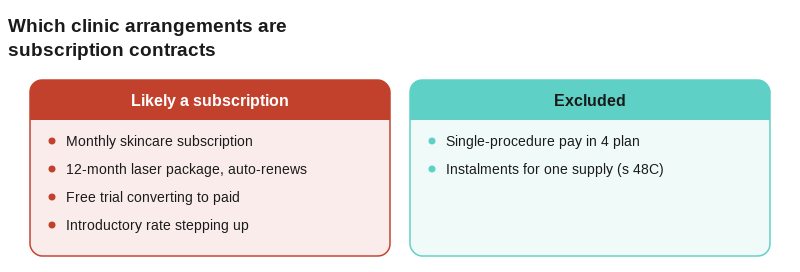
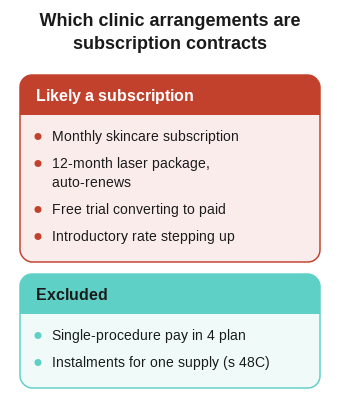
Part 3 of Schedule 1 inserts a new Division 4A, Subscription contracts, into Part 3-1 of the Australian Consumer Law. Section 48B defines a subscription contract as one that meets any of four requirements and is not an excluded subscription contract. The four are recurring supply for an indefinite period with automatic liability to pay, supply in a fixed period that continues after the period ends unless stopped, an initial free period followed by automatic liability to pay, and an initial period at one rate that steps up automatically to a higher rate. Each needs a right for the person to end the contract. Section 48C excludes a lease, a licence in respect of real property, a contract of hire-purchase, a contract for payment in instalments, a contract for supply of childcare, a contract for school or pre-school tuition, and any kind prescribed by regulation.
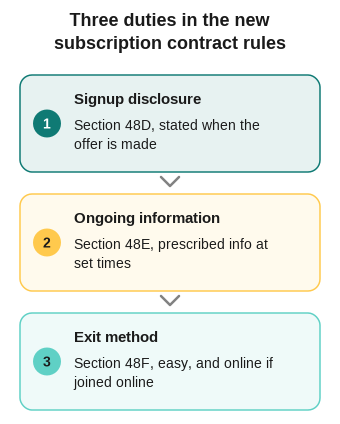
Three duties follow. Section 48D requires a supplier, when making the offer, to disclose a statement that the contract would be a subscription contract, and information about liabilities to pay, the period of the contract, renewal or continuation, any notice required before the subscriber can end it, and how to end it. The disclosure must be audible within a reasonable time before the person could agree, or legible, prominent and unambiguous in close proximity to where they can agree, unless regulations prescribe another manner. Section 48E requires prescribed information to be given at prescribed times while a prescribed subscription contract is in effect, so its content depends on regulations. Section 48F is the exit method duty. The supplier must provide a way to end the contract, and each way must be easy to find, straightforward, and need only steps reasonably necessary to end the contract and protect the subscriber’s interests. If the subscriber enters the contract online, or the supplier provides an online way of entering that kind of contract, one way to end it must be online.
Allens summarises the reform as new disclosure, notification and cancellation requirements for subscription contracts, sitting alongside a general prohibition on unfair trading practices. That general prohibition is section 28B of the Act. It covers conduct towards a consumer that manipulates the consumer or unreasonably distorts their decision-making environment and causes or is likely to cause detriment. Its examples include creating an environment, including through design elements in digital interfaces, that places the consumer under unreasonable pressure or obstructs them from making or fulfilling their decision.
Source: Competition and Consumer Amendment (Unfair Trading Practices) Act 2026, sections 2, 28B and 48B to 48F (Federal Register of Legislation), and Allens, both seen 25 November 2026.
Takeaway: the rule names four ways a contract becomes a subscription contract and a short exclusion list, so a recurring clinic arrangement with automatic charging and a right to cancel needs to be checked against all four.
What This Means for the Build
Reporting the definition is one thing. Working out which of your memberships it touches is another. The steps below are our view of a sensible build order, not requirements stated in the Act.
Find every recurring charge on your booking or CRM platform. Skin subscriptions, laser package top-ups, membership tiers and standing appointment plans are the obvious candidates. A plan to pay for a single procedure in instalments is, on its face, a contract for payment in instalments, which section 48C excludes.
Add a subscription flag to your data model. For each recurring product, record which of the four section 48B requirements applies (indefinite, fixed with automatic continuation, initial free period, or initial discount period). Section 48D asks for the same five matters whichever applies, but the facts to state differ.
Build the signup disclosure into the checkout step, not only the terms page. Section 48D asks for the statement and information in close proximity to where the person can agree to enter the contract, or audibly within a reasonable time before.
Give the exit path equal visibility to the signup path. If a patient can join from a self-serve online form, section 48F requires one way to end the contract to be online. In our view, a cancel link inside an account portal is easier to defend than a support email address that may or may not get answered. Allens reports the Explanatory Memorandum’s example that requiring a subscriber to cancel in person is unlikely to be considered reasonable.
Tag existing memberships by renewal date, not by signup date. Under section 312 of the application provisions, a contract entered into before commencement is outside sections 48B, 48E and 48F until it is renewed, extended, continued or varied. A membership signed before 1 July 2027 that auto-renews in March 2028 becomes subject to sections 48B, 48E and 48F from that renewal. Section 48F covers only a subscription contract that meets the consumer or small-business requirement (section 48G). Your renewal calendar is the practical trigger.
Takeaway: in our view, the build work is mostly data modelling, working out which recurring product is a subscription contract and when the duties start for each one.
Which Membership Contracts the New Duties Reach
| Recurring arrangement | Section 48B requirement | Likely subscription contract | Build priority (our view) |
|---|---|---|---|
| Monthly skincare product subscription | Indefinite period | Yes, if it meets section 48B(2) | Signup disclosure and online exit path |
| 12-month laser package, auto-renews | Fixed period, continues unless stopped | Yes, if it meets section 48B(3) | Renewal date tracking, exit path |
| Free trial membership converting to paid | Initial free period | Yes, if it meets section 48B(5) | Disclosure of conversion date and price |
| Introductory-rate membership stepping up | Initial discount period | Yes, if it meets section 48B(6) | Disclosure of the higher ongoing rate |
| Single-procedure “pay in 4” plan | Excluded, payment in instalments (section 48C(1)(d)) | Excluded, in our view | None under Division 4A |
| Corporate wellness membership, small business buyer | Standard form contract and small business requirement (section 48G(2)) | Yes, if the subscriber employs fewer than 100 persons or has turnover under $10,000,000 | Same duties as a consumer contract |
Source: Competition and Consumer Amendment (Unfair Trading Practices) Act 2026, sections 48B, 48C and 48G (Federal Register of Legislation), seen 25 November 2026. The “Build priority” column is our view.
Takeaway: the table splits on one question. Does the arrangement keep supplying and keep charging until someone actively stops it, or does it end on its own once a fixed number of payments is made.
A Worked Example
Hypothetical cosmetic clinic. A clinic sells a “Glow Membership”, billed monthly and automatically, covering one facial and a discount on injectables. Patients sign up through an online form embedded in the clinic’s booking widget. Cancelling currently requires calling the front desk during business hours. If the contract has no end date, charges automatically and lets the patient end it, it meets the indefinite-period requirement in section 48B(2). Because the patient signed up online, section 48F requires one way to end the contract to be online once the duty applies to that contract. The fix, in our view, is a “manage membership” link in the patient’s online account or a hosted cancellation form that confirms receipt immediately, sitting alongside the phone option.
This example is hypothetical and carries no real clinic’s prices or terms.
What to Check on Your Own Site
- List every recurring product, membership or package your booking and CRM platforms currently bill automatically.
- For each one, check which section 48B requirement applies: indefinite, fixed with continuation, free-period conversion, or discount-period step-up.
- Confirm any instalment finance plans are limited to payment for a single supply, so the section 48C exclusion fits.
- Test your current cancellation path as a patient would. Is there any way to end a membership without a phone call, if the patient joined online?
- Check your membership terms for the five matters section 48D requires disclosed: liabilities to pay, period, renewal or continuation, notice required, and how to end the contract.
- Note each membership’s renewal date. That date, not 1 July 2027, is when sections 48B, 48E and 48F start for an existing contract that renews.
The Enforcement Anchor
The subscription contract provisions are not in force, so no enforcement under them can exist yet. That is a fact about timing, not a reason to treat the pattern as low-risk.
The ACCC is already pursuing conduct of a similar kind under existing law. On 27 October 2025, the ACCC announced Federal Court proceedings against Microsoft, alleging that Microsoft misled approximately 2.7 million Australian customers about Microsoft 365 subscription options and price increases after it integrated Copilot. The ACCC alleges subscribers with auto-renewal were told they had to accept the Copilot-integrated plan at a higher price or cancel, and that a cheaper “Classic” plan was only revealed on the page after they began cancelling. These are allegations, they are contested in court, and the case is not brought under the new subscription contract duties.
The ACCC states the annual price of the Microsoft 365 Personal plan increased by 45 per cent from $109 to $159, and the Family plan by 29 per cent from $139 to $179.
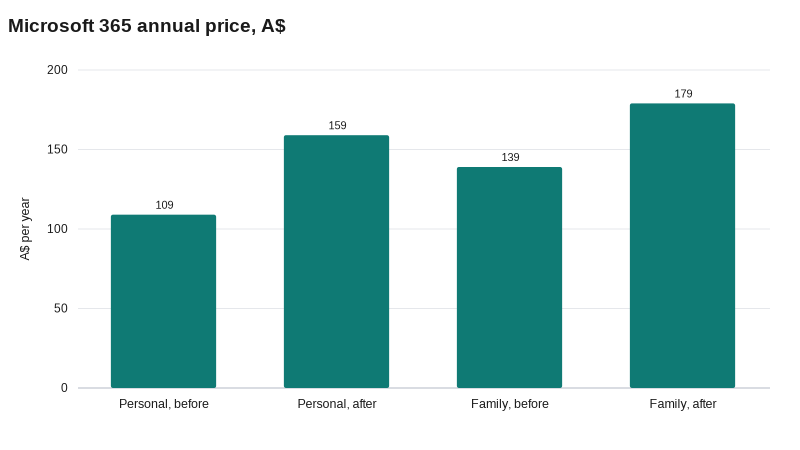
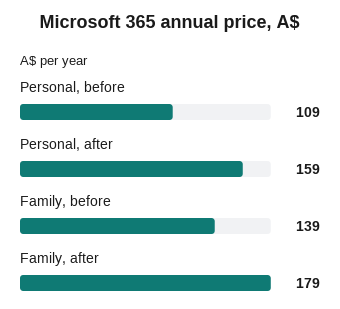
Source: ACCC media release, 27 October 2025, seen 25 November 2026. Prices are Australian dollars per year for Microsoft 365 Personal and Family before and after Copilot integration, as stated by the ACCC.
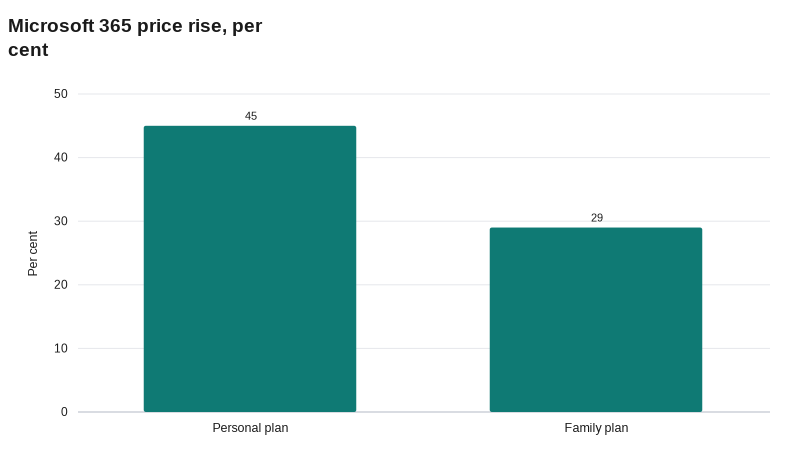
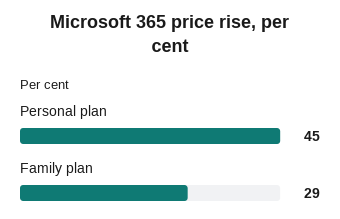
Source: ACCC media release, 27 October 2025, seen 25 November 2026. The percentage rises are the ACCC’s figures for the annual price of each plan after Copilot integration, in Australia.
Takeaway: the new subscription-specific duties have no enforcement record yet because they are not law. The ACCC has already taken a cancellation-flow case to court under the law that exists today.
Where This Gets Hard
The Act’s notes say a pecuniary penalty may be imposed for a contravention of sections 48D(2), 48E(1) and 48F(1). We did not verify a maximum penalty specific to those three provisions. Allens gives the headline corporate maximum for the new regime as the greater of $100 million, three times the benefit or 30% of turnover per contravention. Treat that as the regime’s headline figure, not a confirmed figure for a Division 4A breach alone.
The ongoing information duty in section 48E is not self-executing. It requires information prescribed by regulation at times prescribed by regulation. Allens says the Government has not indicated what, if any, ongoing notification requirements may be considered, so there is nothing fixed to build against for that duty yet. The signup disclosure and exit method duties stand on their own wording.
The text of section 48F is that the exit way must be easy to find, straightforward and need only reasonably necessary steps. In our view the build consequence is a self-service cancellation path that is live and tested. Whether a specific membership structure or cancellation flow satisfies the test in your circumstances is a question for your medical defence organisation or your lawyer.
Status
Assented, not commenced. As at 25 November 2026, the Competition and Consumer Amendment (Unfair Trading Practices) Act 2026 states it was assented to on 6 July 2026, and its commencement table sets 1 July 2027 for the whole Act. The Parliamentary Library Bills Digest also lists commencement as 1 July 2027. An existing membership contract comes within sections 48B, 48E and 48F only once it is renewed, extended, continued or varied on or after that date.
Frequently Asked Questions
Does a clinic’s monthly skincare subscription count as a subscription contract?
It can. Section 48B of the Act catches a contract with terms providing for recurring or continuing supply for an indefinite period, where the patient automatically incurs liability to pay and has a right to end the contract. A monthly skincare product subscription or an ongoing treatment membership that works this way meets that description, provided it is not on the excluded list in section 48C.
Is a payment plan for a single cosmetic procedure a subscription contract?
Section 48C(1)(d) excludes a contract for payment in instalments. In our view, a straightforward plan to pay for one procedure over several months fits that exclusion. The picture changes if the arrangement also provides for ongoing, automatically continuing treatment after the instalments end. At that point it can meet the fixed-period or indefinite-period tests in section 48B in its own right.
Does a membership signed up before commencement need to change on 1 July 2027?
Not automatically. The Act’s application provisions, in Part 4 of Schedule 1, say sections 48B, 48E and 48F do not apply to a contract entered into before commencement. They start applying to that contract only if it is renewed, extended, continued or varied on or after 1 July 2027, from the date that renewal or variation takes effect.
Can a clinic still require a phone call to cancel a membership?
A phone-only exit is hard to square with section 48F. The way to end the contract has to be easy to find, straightforward, and need only the steps reasonably necessary. If the subscriber signed up online, or the clinic offers an online way to sign up for that kind of contract, at least one of the ways to cancel must also be online.
Does the exit method rule apply to a membership sold to a small business?
Yes, if the contract meets the Act’s small business requirement. That means a standard form contract where the subscriber employs fewer than 100 persons, or had turnover under $10,000,000 in its last income year, or both. A corporate wellness membership sold to a small partner business is covered on the same terms as one sold to an individual patient.
Get Your Membership Flow Scoped
Turning a “call to cancel” membership into one that meets the section 48F exit method duty is a scoped build: a self-service cancellation path in your patient portal, a disclosure step at signup, and a renewal calendar that tells you which contracts the new duties have reached. If you would rather have that mapped and built than work it out clause by clause yourself, talk to us about your membership and booking flow.
Sources
- Federal Register of Legislation, C2026A00064, as made (PDF) - Competition and Consumer Amendment (Unfair Trading Practices) Act 2026 (No. 64, 2026), “Assented to 6 July 2026”. Seen 25 November 2026.
- Allens - Australia’s new unfair trading practices regime, what businesses need to know, July 2026. Seen 25 November 2026.
- ACCC - Microsoft in court for allegedly misleading millions of Australians over Microsoft 365 subscriptions, 27 October 2025. Seen 25 November 2026.
- Parliament of Australia - Bills Digest, Competition and Consumer Amendment (Unfair Trading Practices) Bill 2026. Seen 25 November 2026.
Last reviewed: 25 November 2026.
Vikas Thakur
Founder, Perth. 16 years of experience from working at TPG, iiNet and Monadelphous, now helping Australian clinics keep their websites, ads and online presence AHPRA compliant.