Porcelain vs Composite Veneers: What the Research Says
A systematic review of porcelain veneers reports 95.5% cumulative survival at 10 years. A meta-analysis of resin composite veneers reports 88% survival. Here is what those two reviews measured, and what they did not.
 Vikas Thakur Founder, Perth Updated Nov 23, 2026 7 min read Fact checked
Key takeaways
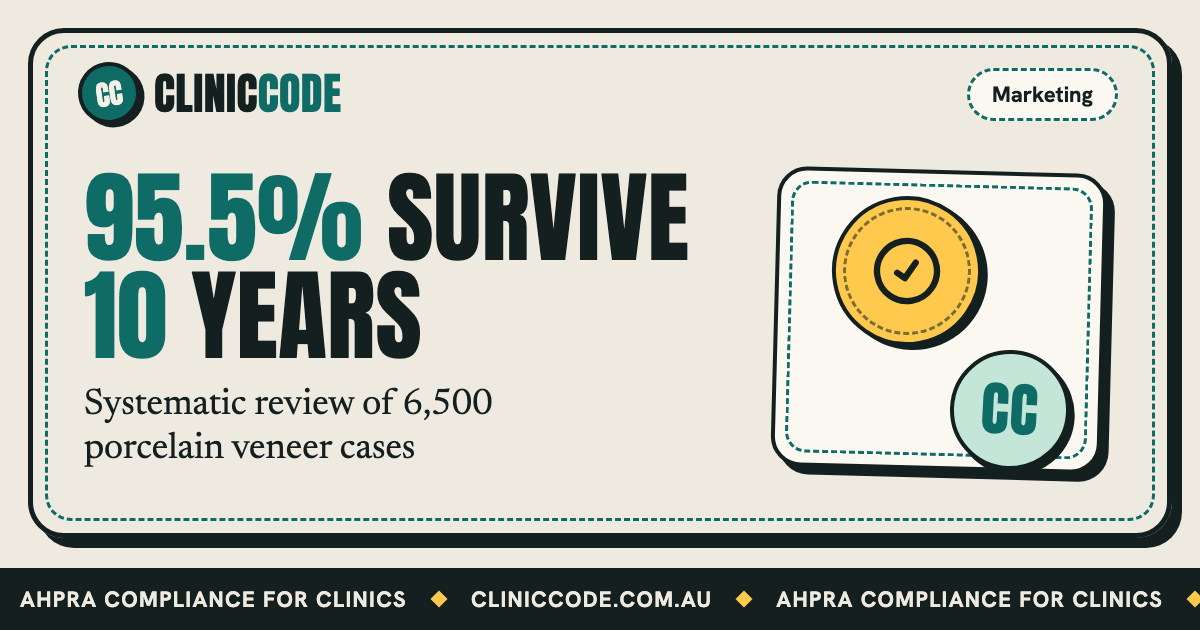
- A 2021 systematic review of porcelain laminate veneers included 25 studies and 6500 veneers and reports a 95.5% estimated cumulative survival rate at 10 years (Alenezi et al. 2021)
- A 2023 systematic review and meta-analysis of resin composite laminate veneers reports an estimated survival rate of 88% overall, 91% for direct and 84% for indirect veneers (summary of Lim et al. 2023). The abstract says 7 studies were included (3 randomised controlled trials and 4 cohort studies) and gives 88% (95% CI 81% to 94%) as the pooled survival of the 3 randomised controlled trials, with follow-up of 24 to 97 months (Lim et al. 2023 abstract)
- The two reviews used different follow-up periods and inclusion rules, so the figures are not a like-for-like head-to-head
- In the porcelain review, fracture and debonding were the main reasons veneers failed, mostly in the early years after cementation
- Composite chips can generally be repaired by adding resin; a fractured porcelain veneer generally cannot be patched as durably and often needs replacing
- This post quotes only the headline figures stated in the abstracts and the summary page
Systematic reviews put the 10-year survival of porcelain veneers at about 95.5% and the pooled survival of resin composite veneers at about 88%. Those numbers come from different kinds of studies with different follow-up, so they do not settle which material is better for a given patient. This post sets out what each review says, where the figures stop being comparable, and how staining, repair and maintenance should weigh in the decision. For per-tooth pricing in Australia, see our veneers cost breakdown. This post is about the decision, not the dollar figure.
What the Research Says About Lifespan
Composite veneers are resin, built up and shaped on the tooth by the dentist, often in one visit. Porcelain veneers are lab-fabricated ceramic shells bonded on over two appointments.
The porcelain evidence is a 2021 systematic review by Alenezi and colleagues. The abstract states: “Twenty-five studies were included, with 6500 PLVs” and “The 10-year estimated cumulative survival rate (CSR) of PLVs was 95.5%.” It included clinical series published in the previous 25 years with a minimum follow-up of 3 years. Source: Long-Term Survival and Complication Rates of Porcelain Laminate Veneers in Clinical Studies: A Systematic Review.
The composite evidence is a 2023 systematic review and meta-analysis by Lim and colleagues. The summary page states: “The outcomes of this review showed a moderately high estimated survival rate (88%) for resin composite laminate veneers.” Source: Rizdentopedia summary of Lim et al. (2023).
Takeaway: Both materials show high survival in published reviews, but the figures come from different studies, so read them as two separate data points, not a ranking.
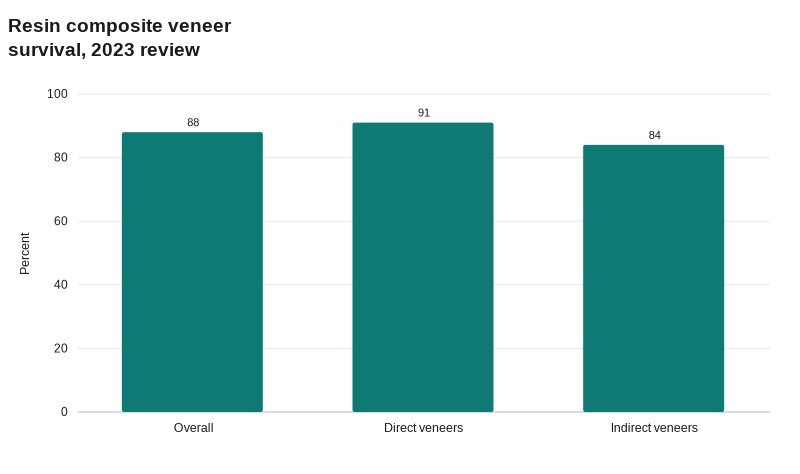
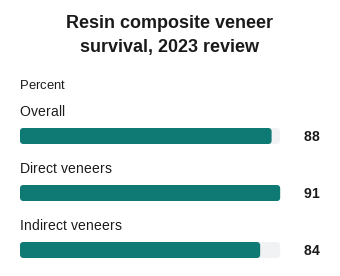
Source: Rizdentopedia, summary of Lim et al. 2023.
What Fails, and When
The porcelain review reports that fracture is the most common complication, followed by debonding, and that both occur mostly in the early years after cementation. It also reports 10-year cumulative survival of 96.3% for fracture, 99.2% for debonding, 99.3% for secondary caries and 99.0% for endodontic treatment need, each considered as an isolated failure reason. Source: Alenezi et al. 2021.
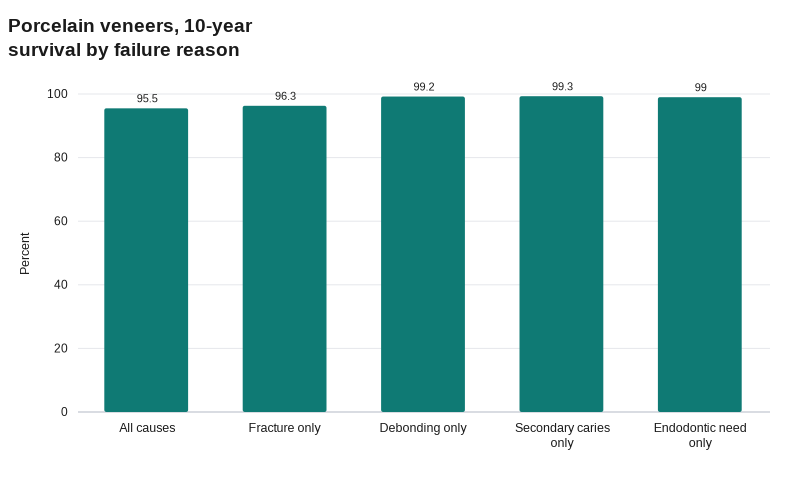
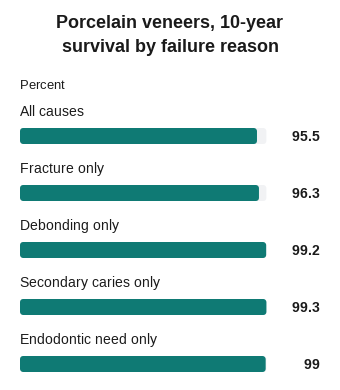
Source: Alenezi et al. 2021, abstract.
The same review reports that porcelain veneers without incisal coverage failed more often than those with it, and that non-feldspathic porcelains performed better than feldspathic ones. Your dentist’s preparation design and material choice matter, alongside the headline figure.
Takeaway: A single survival figure hides which failure mode is driving it, and fracture and debonding, the main complications, more commonly happen in the first years after fitting.
Why a Clinic’s Lifespan Quote Is Only a Rough Guide
Review figures are pooled estimates. They depend on how each study defined failure, how long patients were followed and which dentists and materials were involved. We have not verified any single “average lifespan in years” figure for either material, so we do not give one. Treat any lifespan quote from a clinic, including ours, as a prompt to ask which study it comes from and how failure was defined.
We also looked for a widely repeated online claim about a “2019 Burke study of 2,000 veneers over 20 years”. We could not verify it and do not rely on it.
Takeaway: Ask any clinic quoting a lifespan for the study behind it.
Staining and Discolouration
Porcelain’s glazed ceramic surface is generally considered more resistant to surface staining than resin, which is more porous. We have not cited a study with a specific timeframe for colour change, so we do not give one. If you drink a lot of coffee, tea or red wine, or smoke, raise it with your dentist when choosing a material, and ask how the margin where the veneer meets the tooth will be maintained.
Takeaway: Surface stain resistance leans toward porcelain, but the margin and your habits still matter.
Can You Repair a Chip, or Do You Start Over?
A small chip in a composite veneer can generally be repaired by adding matching resin, shaping and polishing it, often in the same appointment. A fractured porcelain veneer is usually harder to repair durably, and in many cases it means a new impression, a new lab-made veneer and a second bonding appointment. Ask your dentist what they would do for a chip on the specific tooth in question.
Takeaway: Composite is easier to repair; porcelain trades repairability for surface durability.
Maintenance: What Helps Either Material Last
Factors dentists commonly raise are teeth grinding (bruxism), heavy staining habits, the health of the underlying tooth and regular check-ups. We have not sourced numeric effects for these, so none are given. If you grind your teeth, ask whether a nightguard is advised. If the tooth has had root canal treatment, ask how that affects the choice of material.
Takeaway: Follow-up care and protecting the veneer from grinding matter for either material.
So Which One Should You Choose?
Cost is the other half of this decision, and exact pricing sits in our Australian veneers cost guide. Porcelain generally costs more upfront and composite less, so the right choice depends on the quotes in front of you, your budget and how you weigh repairability against surface durability.
As a rule of thumb, composite suits a smaller budget, a faster timeline, or a patient who wants an option that is easier to repair. Porcelain suits a patient who prioritises stain resistance and longevity and accepts that a fracture may mean replacement and two appointments.
Takeaway: Neither material is objectively better. They trade upfront cost, repair flexibility and expected longevity differently.
Ahpra Advertising Rules Apply to Lifespan Claims Too
Dentists are registered under the Dental Board of Australia, and the same advertising section of the National Law applies. Ahpra’s guidelines say advertising must not be “false, misleading or deceptive, or likely to be misleading or deceptive”, and that advertising can mislead through “emphasis, comparison, contrast or omission”. They also say section 133(1)(c) “specifically prohibits advertising a regulated health service in a way that uses testimonials”. Source: Ahpra, Guidelines for advertising a regulated health service.
A claim like “veneers that last forever” or “guaranteed 20 years” is the kind of unqualified outcome claim that is hard to defend against those tests. Our breakdown of Ahpra’s advertising rules for cosmetic dentistry covers more. If your practice’s website or social content has not been reviewed against the current rules, talk to ClinicCode.
Takeaway: A compliant website reflects real ranges and real variation, not guarantees.
How ClinicCode Builds Compliant Cosmetic Dentistry Websites
ClinicCode is an Ahpra-compliance specialist for Australian cosmetic clinics and dental practices, built to handle the advertising rules from the first line of copy rather than bolting compliance on afterward. For practices that want the fixes, the compliant rebuild and ongoing compliant ad management as one service, ClinicCode’s compliance fixes are built for regulated dental and cosmetic clinics.
Data sources: Alenezi et al., “Long-Term Survival and Complication Rates of Porcelain Laminate Veneers in Clinical Studies: A Systematic Review”, 2021; Rizdentopedia summary of Lim et al., “Survival and Complication Rates of Resin Composite Laminate Veneers: A Systematic Review and Meta-Analysis”, 2023; Ahpra, Guidelines for advertising a regulated health service.
ClinicCode builds Ahpra-compliant websites for Australian cosmetic clinics and dental practices. Contact us to discuss a compliant rebuild.
Vikas Thakur
Founder, Perth. 16 years of experience from working at TPG, iiNet and Monadelphous, now helping Australian clinics keep their websites, ads and online presence AHPRA compliant.