Cosmetic Surgery Statistics Australia: US$1.9B Market (2025)
IMARC Group puts Australia’s cosmetic surgery market at USD 1,942.5 million in 2025 and USD 4,145.4 million by 2034. The ACCSM’s 2023 survey adds who is considering surgery. Full data breakdown.
 Vikas Thakur Founder, Perth Updated Nov 24, 2026 5 min read Fact checked
Key takeaways
- IMARC Group puts Australia’s cosmetic surgery market at USD 1,942.5 million in 2025 (IMARC Group)
- IMARC projects USD 4,145.4 million by 2034 (IMARC Group)
- The Australasian College of Cosmetic Surgery and Medicine (ACCSM) says more than 500,000 procedures a year cost more than $1 billion (ACCSM media release, 18 June 2023)
- In the same ACCSM survey of 1,000 people, almost 7 million Australians (38% of adults) said they were considering cosmetic surgery in the next 10 years (ACCSM)
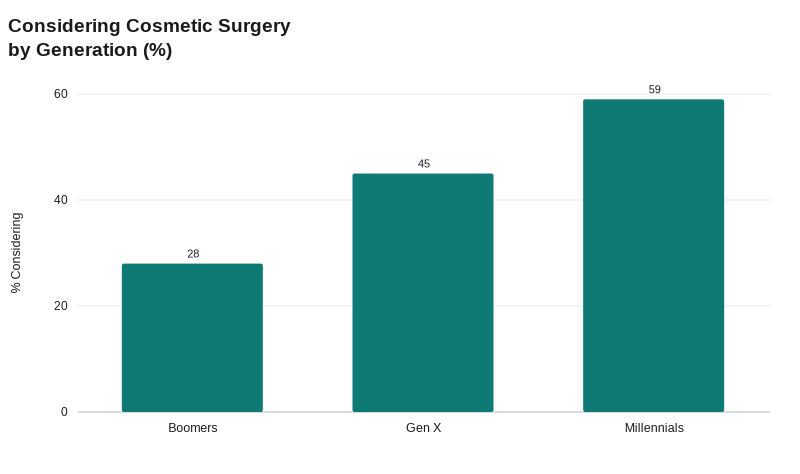
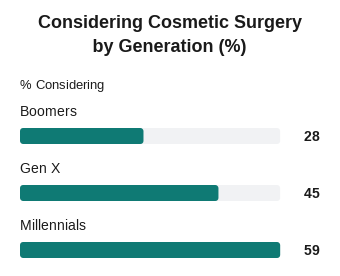
- 59% of Millennials said they were considering surgery, against 45% of Gen X and 28% of Boomers (ACCSM)
- Respondents who had had surgery named rhinoplasty, breast augmentation and blepharoplasty as the three most common procedures (ACCSM)
- Ahpra says advertising offences carry a maximum penalty of $60,000 per offence for an individual and $120,000 for a body corporate (Ahpra)
IMARC Group puts the Australian cosmetic surgery market at USD 1,942.5 million in 2025 and projects USD 4,145.4 million by 2034, according to IMARC Group’s Australia cosmetic surgery market page. Those are US dollar figures from a market-research publisher, so treat them as an estimate, not a count. On our own arithmetic from those two IMARC figures, the projection is a little over double the 2025 value.
The ACCSM’s June 2023 survey gives a demand-side view. Its media release says almost 7 million Australians, 38% of the adult population, are considering cosmetic surgery in the next 10 years, and that more than $1 billion is spent every year on more than 500,000 procedures (ACCSM media release). Those spend and volume figures are the ACCSM’s own statement in the release, which does not show how they were calculated. The survey was a nationally representative sample of 1,000 respondents, run on the ACCSM’s behalf by PureProfile.
Here’s the statistical picture, and what it means for how clinics compete for that demand.
Market Size and Forecast
| Year | Market Size (USD) |
|---|---|
| 2025 | $1,942.5 million |
| 2026 | $2,154.6 million |
| 2034 (forecast) | $4,145.4 million |
Source: IMARC Group, Australia Cosmetic Surgery Market. Figures are in US dollars.
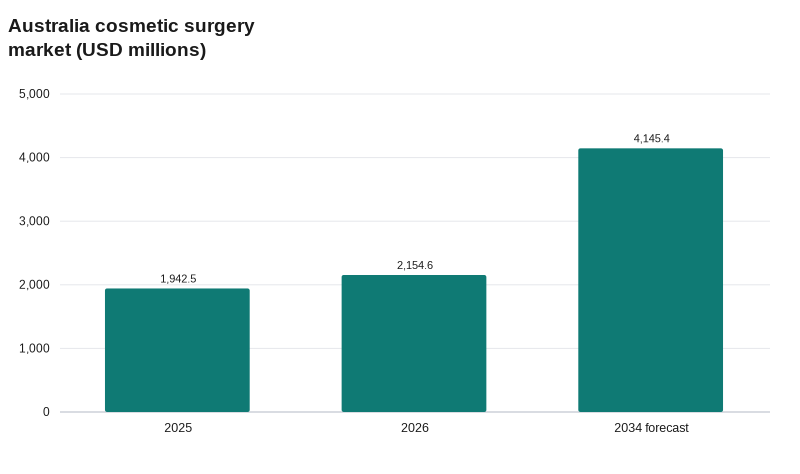
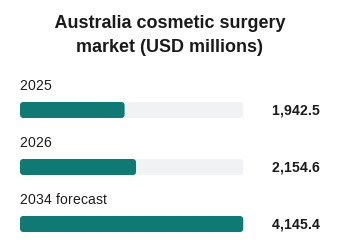
Source: IMARC Group, Australia Cosmetic Surgery Market. US dollars; the 2034 value is IMARC’s projection.
This is IMARC’s figure for the cosmetic surgery market. We did not find a source for how it compares with non-surgical categories such as injectables, so this post does not compare the two.
Takeaway: If IMARC’s projection holds, the market more than doubles between 2025 and 2034. Treat it as a forecast from one publisher, not a certainty.
Who’s Actually Considering a Procedure
Demand isn’t evenly spread across age groups. The ACCSM survey found Millennials (aged 23 to 42 in its definition) were the most likely generation to be considering cosmetic surgery in the next decade.
| Generation | % Considering a Procedure |
|---|---|
| Millennials | 59% |
| Gen X | 45% |
| Boomers | 28% |
Source: ACCSM media release, 18 June 2023. Share considering cosmetic surgery in the next 10 years, survey of 1,000 Australians.
The ACCSM release says almost half of those considering surgery are doing so to “feel better about themselves” (ACCSM). That framing matters for marketing: this is a self-motivated buyer, not one who needs convincing the category exists.
Takeaway: Millennials are the group most likely to be considering surgery in this survey, which should shape both the tone and the channel mix of clinic marketing. This is stated intent from one 2023 survey, not procedures performed.
The Most Common Procedures
In the ACCSM survey, rhinoplasty, breast augmentation and blepharoplasty (eyelid surgery) were the three most common procedures among respondents who had had cosmetic surgery (ACCSM). Each carries its own advertising constraints. For higher risk non-surgical cosmetic procedures, Ahpra’s guidelines in effect from 2 September 2025 allow before-and-after images only under strict conditions (genuine images of the practitioner’s own patients, no editing or enhancing, and a prominent warning that results may differ) (Ahpra).
Takeaway: The most in-demand procedures are also the most visually driven ones to market, which is where the image rules matter most.
A Bigger Market, Under Stricter Rules
Ahpra says the National Law specifically prohibits testimonials in advertising, and that advertising of higher risk cosmetic procedures must not use them (Ahpra). Its penalties page says the maximum penalty for an advertising offence is $60,000 per offence for an individual and $120,000 per offence for a body corporate, and that these increased penalties apply in all jurisdictions, including Western Australia, as of July 2024 (Ahpra, Advertising and the law).
Clinics scaling into this growth need a website built to convert on compliant content alone. If you haven’t checked your current site against the current Ahpra rules, ClinicCode can review it and flag what needs to change.
For clinics building or rebuilding for this market, ClinicCode designs AHPRA and TGA-compliant cosmetic clinic websites from the first wireframe, so growth and compliance aren’t competing priorities.
Data sources: IMARC Group, Australia Cosmetic Surgery Market; ACCSM media release, 18 June 2023; Ahpra, Advertising and the law; Ahpra, Cosmetic procedure advertising guidelines.
ClinicCode builds AHPRA-compliant websites for Australian cosmetic clinics. Contact us to discuss a compliant rebuild.
Vikas Thakur
Founder, Perth. 16 years of experience from working at TPG, iiNet and Monadelphous, now helping Australian clinics keep their websites, ads and online presence AHPRA compliant.