Clinic Email Marketing Rules 2026: Spam Act and Ahpra
Clinic email marketing sits under the Spam Act and Ahpra’s advertising rules, and the ACMA penalised Lululemon, Latitude Finance and TAB in 2026. Here is what each layer requires.
 Vikas Thakur Founder, Perth 9 min read Fact checked
Key takeaways
- The ACMA announced three spam penalties in 2026: Lululemon $702,900, Latitude Finance $3.96 million and TAB more than $2.7 million (TAB’s covers telemarketing as well as spam)
- Lululemon paid $702,900 for sending more than 370,000 emails with commercial content and no way to unsubscribe, after treating shipping and order-confirmation emails with marketing content as service messages
- Latitude Finance paid $3.96 million in April 2026, its second spam penalty after $1.55 million in 2022
- TAB’s more than $2.7 million covers telemarketing breaches and more than 217,000 marketing emails and SMS sent over 16 days to customers who had unsubscribed from specific channels
- The ACMA’s guidance requires an unsubscribe option that is actioned within 5 working days and is functional for at least 30 days after the message is sent
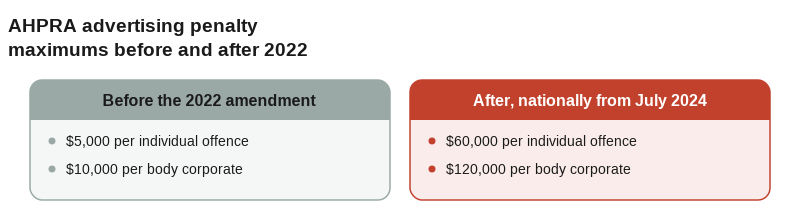
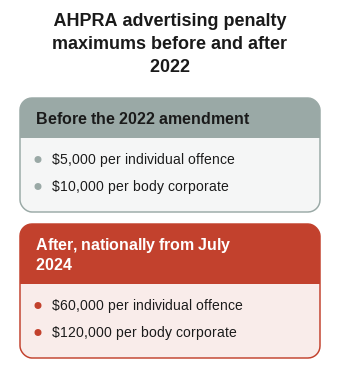
- Ahpra’s maximum advertising penalty is $120,000 per offence for a body corporate and $60,000 for an individual, up from $10,000 and $5,000 after a 2022 National Law amendment, and Ahpra says the higher penalties apply in all jurisdictions, including Western Australia, from July 2024
Three Australian businesses were penalised by the ACMA in 2026 for spam breaches, and one of those penalties also covers telemarketing. Lululemon, Latitude Finance and TAB are not clinics, but the Spam Act rules the ACMA applied to them are the ones its guidance gives to any business sending marketing emails, cosmetic clinics included.
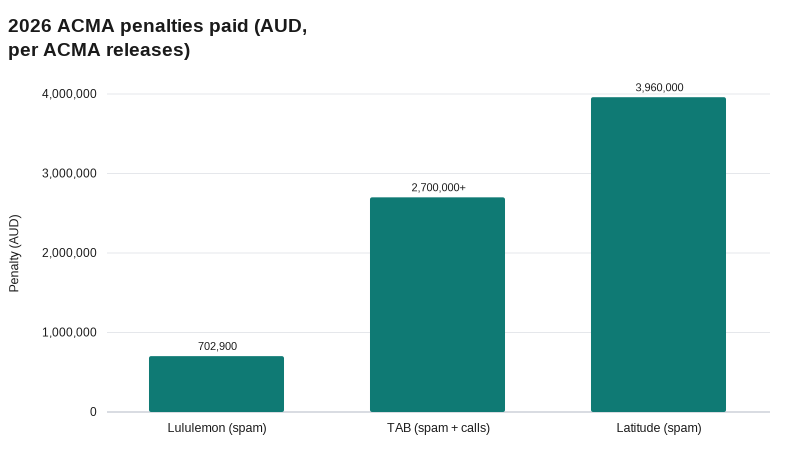
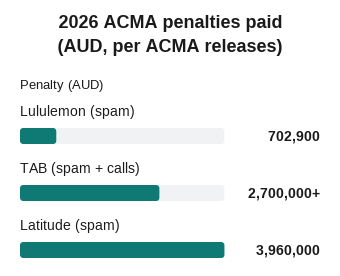
Source: ACMA media releases, Lululemon (11 March 2026), Latitude Finance (15 April 2026) and TAB (22 July 2026), seen 24 November 2026. Figures are penalties in AUD; the TAB figure is “more than” $2.7 million and covers telemarketing as well as spam.
A clinic’s booking system sends appointment confirmations. Its CRM sends recall reminders. Its marketing platform sends offers to a patient list. The ACMA’s position, stated in the Lululemon release, is that if an electronic message contains any promotional or sales content, it is considered commercial regardless of whether it has another purpose. So any of those messages that carries promotional content falls under the same spam rules.
Clinics also have a second layer to think about: Ahpra’s advertising rules, which list electronic media among the forms of advertising they cover. Here is what each layer says, and what it means for the systems sending your clinic’s emails.
What the Spam Act Requires
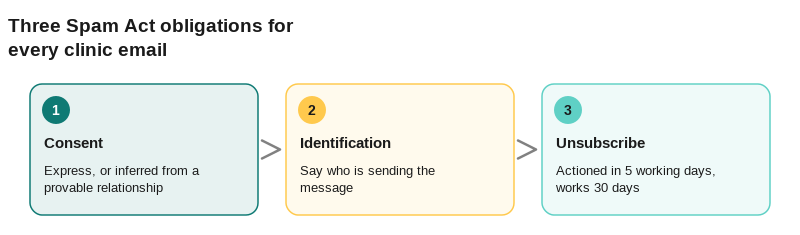
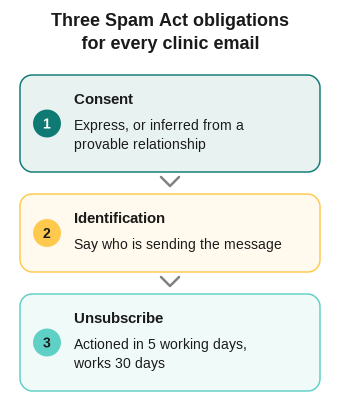
The ACMA’s “Avoid sending spam” guidance says the Spam Act 2003 and the Spam Regulations set out your responsibilities. If you plan to send marketing emails or messages, you must first have consent, and each message must identify you as the sender, contain your contact details and make it easy to unsubscribe.
Source: ACMA, Avoid sending spam (page last updated 29 November 2024), seen 24 November 2026.
Consent can be express or inferred. Express consent means the person knows and accepts they will receive marketing from you, for example by filling in a form, ticking a box on a website, over the phone or face to face. The ACMA says to keep a record of who gave consent, when and how, because under the Spam Act it is up to you to prove you have it. Inferred consent applies where the person has knowingly and directly given their address and it is reasonable to believe they would expect marketing from your business. The ACMA says this is usually a provable, ongoing relationship with marketing directly related to it, that it does not cover sending messages after someone has just bought something, and that it is not as reliable as express consent.
On unsubscribing, the ACMA says every commercial message must contain an unsubscribe option that is presented clearly, honours a request within 5 working days, does not require a fee, is functional for at least 30 days after you sent the message, and does not require extra personal information or a login or account to unsubscribe.
Takeaway: Consent you can prove, accurate sender identification and an unsubscribe option that works are the three requirements the ACMA sets out for every marketing email.
What Three 2026 Enforcement Actions Show
The ACMA found that between 1 December 2024 and 5 January 2025, Lululemon sent more than 370,000 emails with commercial content and no way to unsubscribe, after mischaracterising service messages (delivery and order confirmations) that also had a clear marketing purpose. The ACMA’s advice is that the simplest way to comply is to keep service messages separate from sales content and links, and it said this was its fifth enforcement action in 18 months against businesses that treated messages as non-commercial when they carried commercial material. A clinic confirmation email that also promotes a treatment offer fits the pattern the ACMA describes.
TAB paid more than $2.7 million. For telemarketing, the ACMA found between February 2024 and June 2025 351 calls to numbers on the Do Not Call Register without consent, 82 calls outside permitted hours and nearly 4,000 calls without properly identifying the caller or the purpose of the call. On email, TAB self-reported in 2025 that it sent more than 217,000 marketing emails and SMS over a 16-day period to customers who had unsubscribed from specific marketing channels, and the ACMA took that into account in setting the penalty.
Latitude Finance paid $3.96 million in April 2026 after the ACMA found it breached the spam laws more than 2.7 million times. Between March 2024 and April 2025 it sent more than 2.3 million marketing messages without accurate contact information, and 344,416 of those also lacked a working unsubscribe function. Recipients were told they could reply “STOP”, but many messages could not be unsubscribed from that way. It was the second time the ACMA had acted against Latitude: in 2022 it paid a $1.55 million penalty for similar contraventions.
Takeaway: In our view, the common thread is that each case turned on how the sending systems were set up (message classification, unsubscribe handling, contact details), which is what a clinic can check in its own booking system and CRM.
Ahpra’s Advertising Rules Cover Electronic Media
The Ahpra advertising guidelines say the definition of advertising “includes but is not limited to all forms of verbal, printed or electronic public communication that promotes a regulated health service provider to attract a person to the provider”. The list of examples includes “mobile communications or other displays”, “internet (including websites and social media)” and “all electronic media that promotes a particular regulated health service provider”. In our view, a promotional email newsletter falls inside that description.
The guidelines say advertising must not use testimonials or purported testimonials, create an unreasonable expectation of beneficial treatment, or be false, misleading or deceptive. ClinicCode checks a clinic’s website against these rules.
Ahpra’s Advertising and the law page gives the maximum financial penalty for an advertising offence as $60,000 per offence for an individual and $120,000 per offence for a body corporate. The guidelines page says these were increased by a 2022 National Law amendment from $5,000 and $10,000, and that as of July 2024 the increased penalties apply in all jurisdictions, including Western Australia.
Source: Ahpra, Advertising and the law and Ahpra, Advertising guidelines, seen 24 November 2026. Figures are maximum financial penalties per offence in AUD.
Takeaway: In our view, a promotional email is advertising under Ahpra’s definition, so the maximum penalties above apply to what goes out in the newsletter as they do to a website.
What This Means for Your Website and Booking System
In our view, the practical fix sits upstream of the email platform. A booking form or intake process that captures explicit, opt-in consent for marketing (separate from consent to treatment) gives you the recorded consent the ACMA says you must be able to prove. An unsubscribe link that removes a contact from every system that sends marketing, not only the newsletter tool, addresses the unsubscribe failures in the Latitude and TAB cases. Keeping service messages such as booking confirmations free of promotional content and links is the approach the ACMA recommended after the Lululemon case.
Takeaway: The compliance work belongs in the booking form and the unsubscribe handling in your CRM, not in a disclaimer added to the bottom of an email.
FAQ
Does the Spam Act 2003 apply to a cosmetic clinic’s email marketing?
The ACMA’s guidance says that if you send marketing emails or messages you must first have consent, and each message must identify you as the sender, contain your contact details and make it easy to unsubscribe. Its page sets no separate rules for clinics, so a clinic’s marketing emails sit under the same guidance as any other business’s.
Is a clinic’s promotional email newsletter considered “advertising” under Ahpra’s rules?
Very likely, in our view. Ahpra’s advertising guidelines list “all electronic media that promotes a particular regulated health service provider” among the forms of advertising, so a promotional newsletter should be treated like a website, with no testimonials and no unreasonable expectation of beneficial treatment.
What happens if a clinic keeps emailing patients after they unsubscribe?
The ACMA treats it as a spam breach. In July 2026 it announced that TAB paid more than $2.7 million in penalties for spam and telemarketing breaches, including more than 217,000 marketing emails and SMS sent over a 16-day period to customers who had unsubscribed from specific marketing channels.
Get Your Clinic’s Marketing Systems Checked
ClinicCode fixes cosmetic clinic websites, booking forms and marketing systems against Ahpra’s advertising rules and the ACMA’s consent and unsubscribe requirements.
Talk to us about your clinic’s email and booking systems.
Sources and References
ACMA - Avoid sending spam: consent types, sender identification, the 5 working day and 30 day unsubscribe rules
ACMA - Lululemon penalised $702K for spam breaches (11 March 2026)
ACMA - Latitude Finance pays $3.96m for more spam breaches (15 April 2026)
ACMA - TAB pays $2.7m for telemarketing and spam breaches (22 July 2026)
Ahpra - Advertising and the law: maximum penalties per offence
Ahpra - Advertising guidelines: definition of advertising, the 2022 penalty increase and the July 2024 national application
Related reading:
- AHPRA Advertising Fines for Cosmetic Clinics: the full National Law penalty structure
- Meta’s New Ad Rules Won’t Save You From a $120K AHPRA Fine: why platform approval never equals AHPRA compliance
Vikas Thakur
Founder, Perth. 16 years of experience from working at TPG, iiNet and Monadelphous, now helping Australian clinics keep their websites, ads and online presence AHPRA compliant.