ADA Survey: 60% Say Social Media Influenced Cosmetic Dental Care
The ADA’s 2025 Consumer Survey found 60% of respondents said social media influenced their choice of cosmetic dental procedures. Here is what that means for a practice website.
 Vikas Thakur Founder, Perth 9 min read Fact checked
Key takeaways
- The Australian Dental Association’s 2025 Consumer Survey (more than 25,000 Australians), reported on 31 July 2026, found 60% of respondents said social media influenced their decision to pursue cosmetic dental procedures (ADA)
- The same release found 60% of Australians aged 18-25 have experienced wisdom tooth related issues, and 38% of 18-25 year olds in contact and high-impact sports reported wearing a mouthguard
- A follow-up ADA article dated 4 August 2026 quotes Dr Andrew Gikas, an ADA Board director, saying patients arrive with preset ideas about cosmetic options and “don’t always rely on the best, evidence-based, information” (ADA)
- Ahpra’s guidelines for non-surgical cosmetic procedures were issued on 2 September 2025 and name dental veneers as a higher risk procedure for advertising (Ahpra)
- Ahpra’s advertising guidelines say advertising of higher risk cosmetic procedures must not use testimonials, and that before and after images may create unrealistic expectations
- In our view, social media is where the interest starts and the practice website is where Ahpra’s advertising rules apply to what the patient reads next
The Australian Dental Association’s 2025 Consumer Survey, reported on 31 July 2026, found 60% of respondents said social media influenced their decision to pursue cosmetic dental procedures. The survey covered more than 25,000 Australians. The ADA release does not break that 60% down by platform, age or procedure, so it does not tell a practice which channel to prioritise.
Here is the part that matters for your website. In our view, the patient who was influenced on social media lands on your website next, and your website is where Ahpra’s advertising rules apply to your own words and images. If that page leans on outcome language, the compliance exposure sits with the practice.
This post covers what the ADA’s survey says, what a follow-up ADA piece says about patient requests, and what Ahpra’s cosmetic advertising guidelines say a practice website must avoid.
What the ADA Survey Actually Found
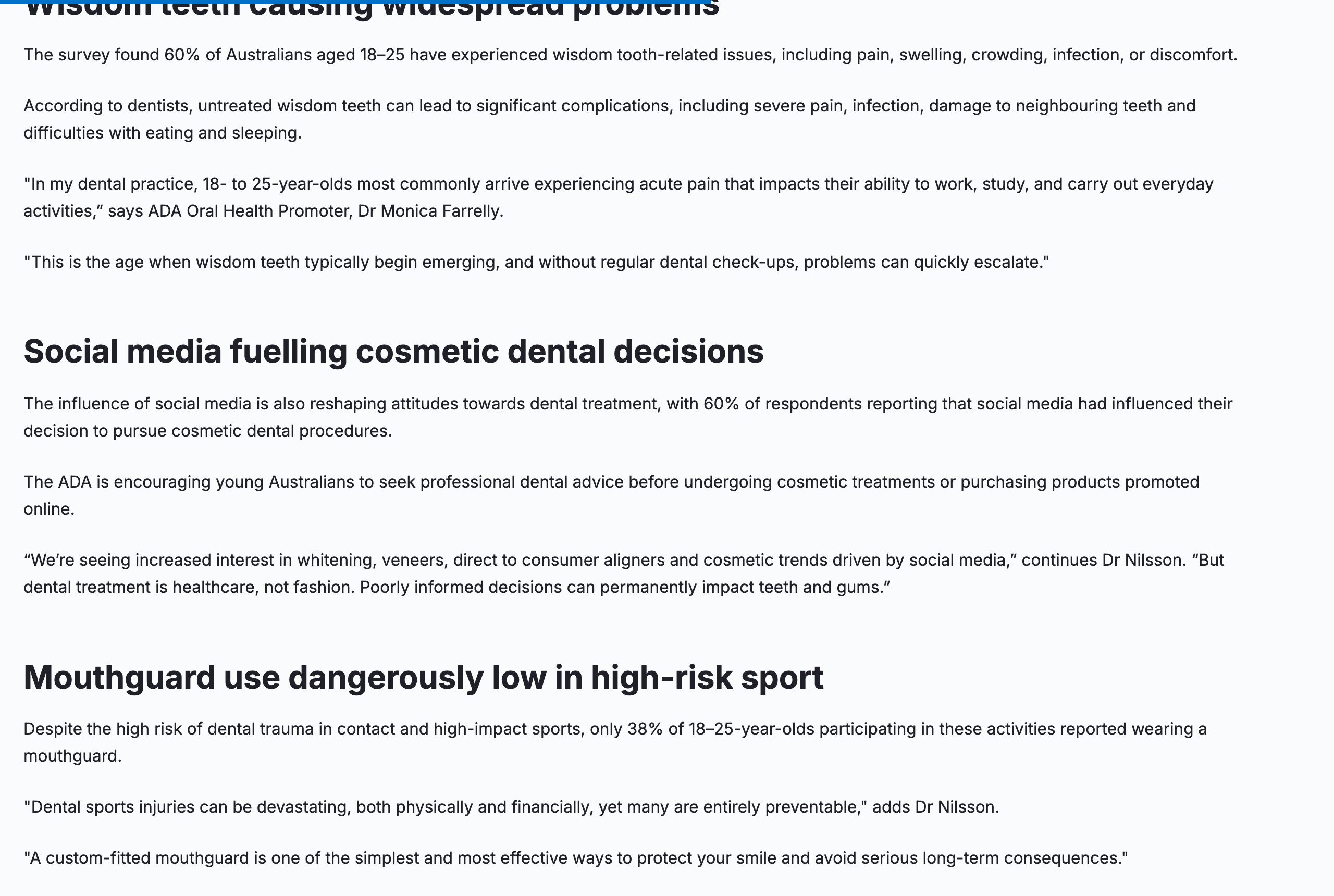
The ADA’s 2025 Consumer Survey covered more than 25,000 Australians and was released during Dental Health Week 2026. The ADA release says 60% of respondents said social media influenced their decision to pursue cosmetic dental procedures.
The same release covered general oral health. It says 60% of Australians aged 18-25 have experienced wisdom tooth related issues, such as pain, swelling, crowding, infection or discomfort, and that only 38% of 18-25 year olds in contact and high-impact sports reported wearing a mouthguard. The two figures have different bases (all Australians aged 18-25 versus those playing contact or high-impact sports), so they should not be compared directly.
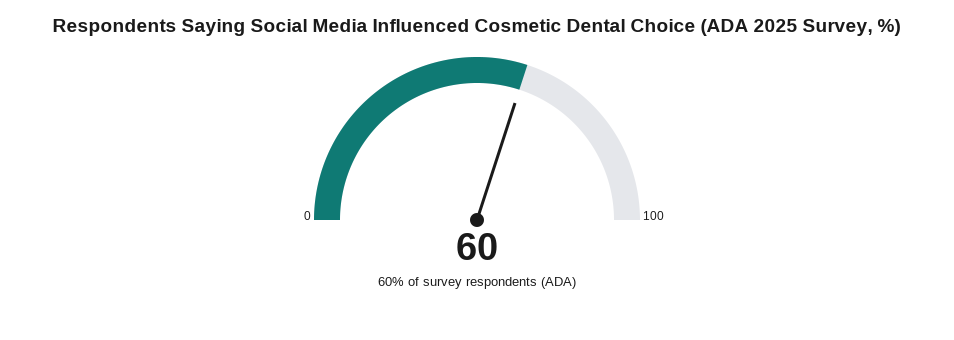
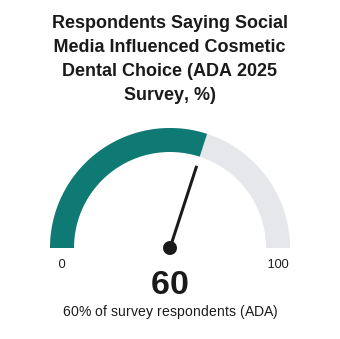
Source: Australian Dental Association, Young Australians at risk of falling through the cracks on dental health, 31 July 2026. Figure is percent of respondents to the ADA 2025 Consumer Survey (more than 25,000 Australians).
Takeaway: The 60% figure says social media influenced decisions. It does not say which platform, which procedure or how many people went on to book.
What the ADA Says About Patient Requests
A second ADA article, dated 4 August 2026, quotes Dr Andrew Gikas, an ADA Board director and clinic director of the University of Melbourne Dental Clinic. He says more patients are asking if aspects of their smile can be improved, through whitening, orthodontics or other cosmetic procedures. He says patients arrive with preset ideas and don’t always rely on the best, evidence-based information.
He advises choosing a dentist who will explain the benefits, limitations, risks and alternatives of treatment, and adds that if a dentist advises against a particular cosmetic procedure, it is worth listening carefully to their reason.
Whether a procedure is clinically appropriate is a decision for the dentist, and ClinicCode has no view on it. In our view, a practice website is one place where a patient can get factual process information before the first consultation.
Takeaway: The ADA’s concern is the quality of information patients bring with them. The website is a place the practice controls.
What This Means for Your Website
ClinicCode builds and fixes websites. We do not advise which cosmetic procedures suit a patient. In our view, three website changes follow from the ADA’s findings:
- Process pages, not outcome pages. Describe what happens during the appointment, what aftercare involves and the limits of treatment, rather than promising a result. The ADA’s own commentary raises concern about smile ideals shaped by social media.
- Clear indicative pricing. A visible price range sets an honest expectation before someone books. This is our view as a web developer. The ADA survey does not test it.
- A mobile-friendly booking form. If the referral comes from a social app on a phone, the booking form has to work on that phone.
Takeaway: None of this is about whether a procedure suits a given patient. It is about giving that patient factual information on the page.
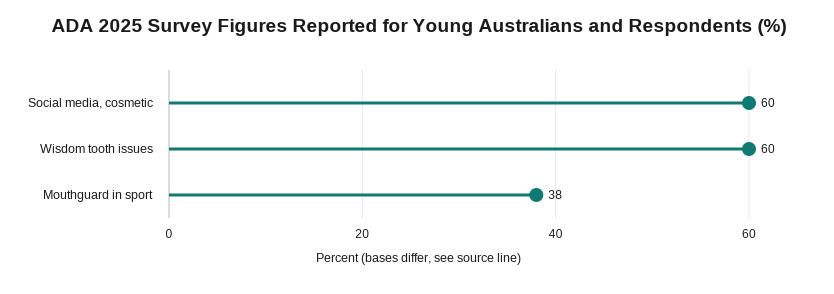
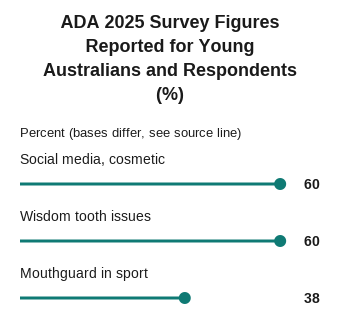
Source: Australian Dental Association, Young Australians at risk of falling through the cracks on dental health, 31 July 2026. Social media: percent of survey respondents who said it influenced their decision to pursue cosmetic dental procedures. Wisdom tooth issues: percent of Australians aged 18-25. Mouthguard: percent of 18-25 year olds in contact and high-impact sports who reported wearing one.
The Ahpra Rules Still Apply Once the Click Lands
Ahpra’s guidelines for advertising higher risk cosmetic procedures apply to those advertising such procedures, including “business, partnerships and corporate entities”. The page lists dental veneers among its examples. It says advertising of higher risk cosmetic procedures must not use testimonials, that before and after images may create unrealistic expectations, that images must not be edited or enhanced, and that an after image should state how long after the procedure it was taken. Ahpra’s announcement of the guidelines is dated 2 September 2025 and says they are in effect from that day.
Ahpra’s general advertising guidelines separately say section 133(1)(c) of the National Law prohibits advertising a regulated health service in a way that uses testimonials. We did not confirm from these pages whether other cosmetic dental procedures, such as whitening, fall in the higher risk category, so check Ahpra’s guidelines and the Dental Board before publishing a new treatment page. Our breakdown of the dental-specific Ahpra advertising rules goes further.
Takeaway: The survey is a demand signal, not a compliance signal. It does not change what your website is allowed to show.
Measuring Whether the Traffic Converts
A decision being influenced by social media is not the same as a share of your bookings coming from social media. The ADA survey does not measure bookings.
In our view, a practice can close that gap without a rebuild: tag campaign links per platform, track booking form completion as a goal, and check which landing pages social visitors convert on.
Takeaway: The ADA’s finding tells you where influence may start. Your own analytics tell you whether it turns into booked patients.
The Source Pages
Screenshots of the pages cited in this post, taken on 24 November 2026 and framed on the passage each one supports.
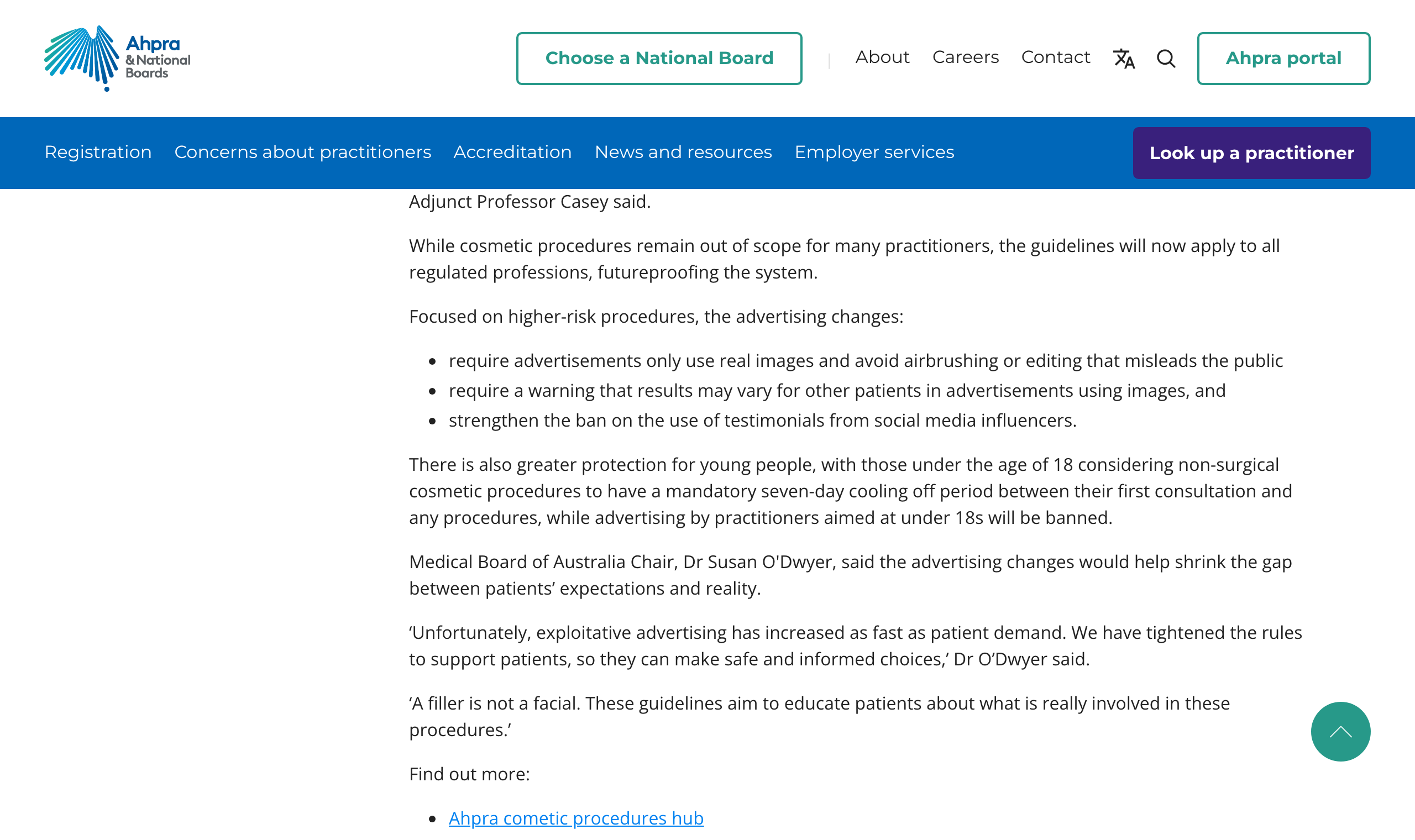
Source: Ahpra news, 2 September 2025, screenshot taken 24 November 2026.
FAQ
Does the ADA’s 60% figure mean my practice should post more on social media?
The survey shows where interest is forming, not what your practice’s social output should be. In our view, a patient who arrives from a social post lands on your website next, so that is where factual, compliant content matters.
What can a cosmetic dental website show, given Ahpra’s rules on testimonials and before and after images?
Ahpra’s advertising guidelines for higher risk cosmetic procedures, which name dental veneers as an example, say advertising must not use testimonials, that before and after images may create unrealistic expectations, and that images must not be edited or enhanced. A compliant page describes the treatment process and aftercare rather than promising a result. See our full breakdown of the dental-specific rules.
Should our website show exact prices for veneers or whitening?
In our view, a clear indicative price range is a reasonable way to set expectations before a patient books a consultation. This is a website and content decision, not a clinical or legal one, and nothing in the ADA survey tests it.
How do we know if our social media traffic is actually converting into bookings?
In our view, tag each social platform as a separate traffic source in your analytics and track it through to a completed booking form submission, not just a landing page visit. Without that, a practice cannot tell which platform or landing page produced a booking.
Get a Compliant Website Built for Social-Referred Patients
ClinicCode builds and fixes cosmetic clinic and dental practice websites against the current Ahpra advertising rules, with mobile-friendly booking flows. See how a compliant build looks on our cosmetic clinic website page, or get in touch about your practice.
Sources and References
- Australian Dental Association - primary source: 2025 Consumer Survey findings, including the 60% social media figure, dated 31 July 2026
- Australian Dental Association - follow-up commentary dated 4 August 2026, including Dr Andrew Gikas’s remarks
- Ahpra, Guidelines for advertising higher risk cosmetic procedures - testimonials, before and after images, dental veneers named as an example
- Ahpra, New guidelines for cosmetic procedures - dated 2 September 2025, in effect from that day
- Ahpra, Advertising guidelines - section 133(1)(c) testimonials prohibition
- Ahpra Advertising Rules for Cosmetic Dentistry - our breakdown for dental practices
Related reading:
- Clinic Website Design: compliant website builds for Ahpra-regulated practices
- Cosmetic Dentistry Market Australia: market context for the demand this survey describes
Vikas Thakur
Founder, Perth. 16 years of experience from working at TPG, iiNet and Monadelphous, now helping Australian clinics keep their websites, ads and online presence AHPRA compliant.