WCAG 2.2 for Clinic Websites: Target Size, Focus, Maguire
WCAG 2.2 adds nine success criteria, including a 24 by 24 CSS pixel minimum target size, and Maguire v SOCOG shows how an access complaint can play out. This guide sticks to what the W3C and the Justice and Equity Centre publish.
 Vikas Thakur Founder, Perth 8 min read Fact checked
Key takeaways
- The W3C says WCAG 2.2 has 9 additional success criteria since WCAG 2.1, and that 4.1.1 Parsing is removed
- Criterion 2.5.8 Target Size (Minimum) is Level AA: pointer targets are at least 24 by 24 CSS pixels, unless an exception applies
- Criterion 2.4.11 Focus Not Obscured (Minimum) is Level AA: a focused component is not entirely hidden by author-created content
- The Disability Discrimination Act 1992 has a section 24 headed “Goods, services and facilities”
- In Maguire v SOCOG (2000), a blind complainant won a finding of unlawful discrimination over the Sydney Olympics website, and a later $20,000 damages award
- The Australian Human Rights Commission’s digital accessibility page says: “Organisations should conform with WCAG 2.2 at a minimum Level AA”
This post covers what the WCAG 2.2 standard says about two success criteria worth checking on a clinic site, what the Australian Human Rights Commission says about WCAG 2.2, and what one Australian case shows about accessibility complaints.
The Commission’s page on standards and guidelines for digital accessibility says: “The latest version is WCAG 2.2 (released in October 2023). Organisations should conform with WCAG 2.2 at a minimum Level AA and consider appropriate Level AAA success criteria”. Page seen 25 November 2026. Whether your practice is bound to a particular level is a question for your lawyer.
What WCAG 2.2 Changed
The W3C’s “What’s New in WCAG 2.2” page says WCAG 2.2 has “9 additional success criteria since WCAG 2.1”, and that “4.1.1 Parsing is obsolete and removed from WCAG 2.2”. The same page gives the date WCAG 2.2 became a W3C Recommendation as 5 October 2023. W3C, What’s New in WCAG 2.2.
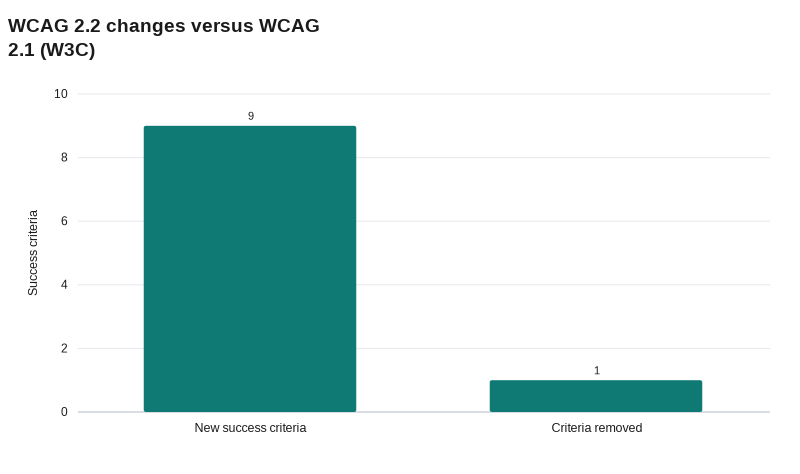
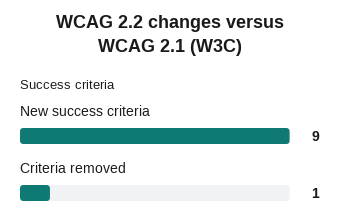
Source: W3C, What’s New in WCAG 2.2 and W3C, WCAG 2.2, seen 25 November 2026. The one removed criterion is 4.1.1 Parsing.
Two New Level AA Criteria Clinic Sites Should Check
The W3C lists both of these as Level AA.
- 2.5.8 Target Size (Minimum): “The size of the target for pointer inputs is at least 24 by 24 CSS pixels, except where” an exception applies. The W3C names the exceptions as spacing, equivalent, inline, user agent control and essential.
- 2.4.11 Focus Not Obscured (Minimum): “When a user interface component receives keyboard focus, the component is not entirely hidden due to author-created content.”
In our view, the places to look first on a clinic or dental site are the booking widget’s date cells, gallery arrows, mobile menu icons, and any sticky header, cookie banner or chat widget that could sit over a focused field. That list is our judgement, not a finding from the W3C.
Source: W3C, What’s New in WCAG 2.2 (criterion names, level and wording) and W3C, WCAG 2.2 (2.5.8 listed as a new AA criterion), seen 25 November 2026.
Takeaway: The 24 by 24 pixel target rule and the focus rule are Level AA criteria in WCAG 2.2, so they are the first two places to test a booking flow.
Two Illustrations From a Clinic and a Dental Practice
These are illustrations, not audit results.
Picture a clinic homepage where the “Book a Consultation” button is a small graphic with no padding. If its pointer target is smaller than 24 by 24 CSS pixels and none of the exceptions applies, it would not meet 2.5.8. A larger hit area is the fix, and the W3C’s criterion text is the place to check which exceptions apply.
Picture a dental practice’s intake form that uses grey placeholder text inside each field in place of a visible label. In our view, a visible label tied to its field is the safer build. We have not tested that example against a particular success criterion, so check it against the W3C’s WCAG 2.2 text before relying on it.
What to Check on Your Own Site
- Every clickable or tappable element is at least 24 by 24 CSS pixels, or meets one of the exceptions the W3C lists for 2.5.8
- A keyboard focus indicator is never entirely hidden by a sticky header, cookie banner or chat widget (2.4.11)
- Every form field has a visible label, not a placeholder alone (our view)
- Any third-party booking widget is tested with a keyboard alone (our view)
- An automated scan plus one manual keyboard pass is run before a new page goes live (our view)
What Maguire v SOCOG Shows
The Justice and Equity Centre, which represented the complainant, describes Maguire v SOCOG (2000) as “one of the first complaints worldwide to consider website accessibility”. Bruce Maguire was blind and could not buy Sydney 2000 Olympics tickets through the process offered. He complained to the Human Rights and Equal Opportunity Commission, now the Australian Human Rights Commission. The website issue became a separate complaint with its own hearing.
SOCOG argued an accessible version of its website would cost $2.2m and take 368 days. The Commissioner rejected that, “convinced by the evidence of Worthington and Treviranus that an accessible website would cost around $30,000 and take four weeks to build”, as the Centre puts it. The Commissioner found SOCOG had unlawfully discriminated, and ordered it to make its website accessible. When SOCOG only partially complied, a third complaint ended with $20,000 in damages “in recognition of the hurt and humiliation he suffered from the extended discrimination”.
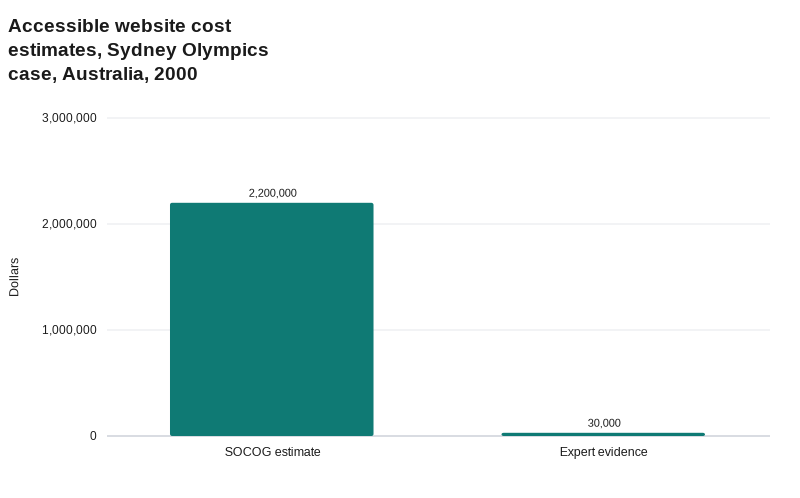
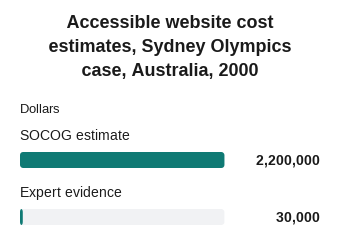
Source: Justice and Equity Centre, Beating discrimination at the Sydney Olympics, seen 25 November 2026. The page gives “$2.2m” and “around $30,000” without stating a currency; the case is Australian.
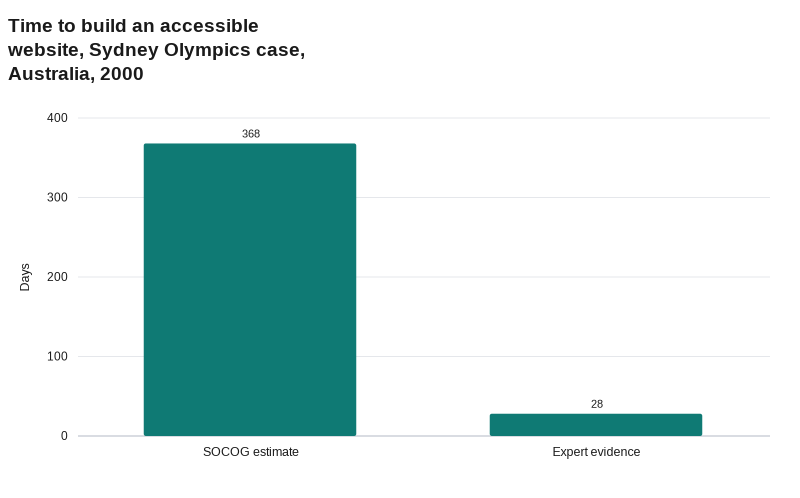
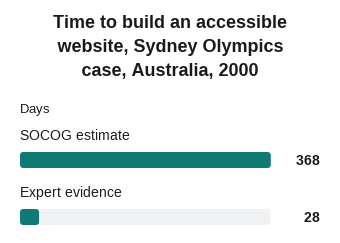
Source: Justice and Equity Centre, Beating discrimination at the Sydney Olympics, seen 25 November 2026. The page says 368 days and four weeks; the 28 days is our arithmetic: 4 weeks multiplied by 7 days.
The Centre adds that soon after the Commission’s decisions, “the Australian Government required all agency websites to pass accessibility tests”. The case predates WCAG 2.2 by more than two decades.
Takeaway: An Australian complaint process has ordered a website to be made accessible and has awarded damages, on the Justice and Equity Centre’s account of the case.
Where This Gets Hard
In our view, passing an automated scan does not prove a site is usable with a keyboard or screen reader, and a third-party booking widget is only as accessible as its vendor makes it. We found no source on who is responsible for a vendor’s widget, so do not read this post as saying either way. For what the law requires of your practice, speak to your lawyer or your medical defence organisation.
The Law Behind It
The Federal Register of Legislation shows the Disability Discrimination Act 1992 as in force, with a section 24 headed “Goods, services and facilities”. We did not read the text of section 24. Federal Register of Legislation, Disability Discrimination Act 1992, seen 25 November 2026.
If you want a second opinion on your clinic or dental practice site, the ClinicCode contact page is the fastest way to start.
Frequently Asked Questions
What is new in WCAG 2.2 compared with WCAG 2.1?
The W3C says WCAG 2.2 has nine additional success criteria since WCAG 2.1, and that 4.1.1 Parsing is obsolete and removed from WCAG 2.2. Two of the new Level AA criteria are 2.5.8 Target Size (Minimum) and 2.4.11 Focus Not Obscured (Minimum).
What does the 24 by 24 pixel rule in WCAG 2.2 cover?
Criterion 2.5.8 Target Size (Minimum) is a Level AA criterion. It says the size of the target for pointer inputs is at least 24 by 24 CSS pixels, except where an exception applies. The W3C names the exceptions as spacing, equivalent, inline, user agent control and essential.
Has an Australian organisation been found to discriminate over an inaccessible website?
Yes. The Justice and Equity Centre reports that in Maguire v SOCOG (2000), the Commissioner found the Sydney Organising Committee for the Olympic Games had unlawfully discriminated against a blind complainant and ordered it to make its website accessible. After partial compliance, the Commissioner awarded $20,000 in damages in a third complaint. The case predates WCAG 2.2 by more than two decades.
Need a hand with your website?
If you want a second pair of eyes on how this applies to your own site, request a callback and we will talk it through.
Sources and References
- World Wide Web Consortium, “What’s New in WCAG 2.2”. w3.org. Date checked: 25 November 2026.
- World Wide Web Consortium, “Web Content Accessibility Guidelines (WCAG) 2.2”. w3.org. Date checked: 25 November 2026.
- Justice and Equity Centre, “Beating discrimination at the Sydney Olympics”. jec.org.au. Date checked: 25 November 2026.
- Disability Discrimination Act 1992 (Cth), Federal Register of Legislation. legislation.gov.au. Date checked: 25 November 2026.
- Australian Human Rights Commission, “Standards and Guidelines on digital accessibility”. humanrights.gov.au. Date checked: 25 November 2026.
Last reviewed: 25 November 2026.
Vikas Thakur
Founder, Perth. 16 years of experience from working at TPG, iiNet and Monadelphous, now helping Australian clinics keep their websites, ads and online presence AHPRA compliant.