TGA Issues $19,800 in Notices to a Nurse and Individual
The TGA announced 5 infringement notices totalling $19,800 to a Victorian nurse and a Victorian-based individual on 17 June 2026. The notices relate to alleged imports of unapproved cosmetic injectables that were not on the ARTG. The import case is not a website problem on its own, but the TGA says it is targeting unapproved therapeutic goods used in cosmetic procedures, which is a reason to read what your own site says about products.
 Vikas Thakur Founder, Perth 9 min read Fact checked
Five infringement notices. One nurse. One individual. $19,800 in total. On 17 June 2026, the TGA announced that it had issued the notices to a Victorian nurse and a Victorian-based individual for the alleged unlawful importation of unapproved cosmetic injectables. The release does not name either party. This is an import case, not a website case. We cover it because the TGA says it is targeting unapproved goods used in cosmetic procedures, and in our view that is a good prompt to read what your own site says about products. Source: TGA media release, published 17 June 2026, seen 25 November 2026.
Key takeaways
- The TGA issued 5 infringement notices totalling $19,800 to a Victorian nurse and a Victorian-based individual, announced on 17 June 2026.
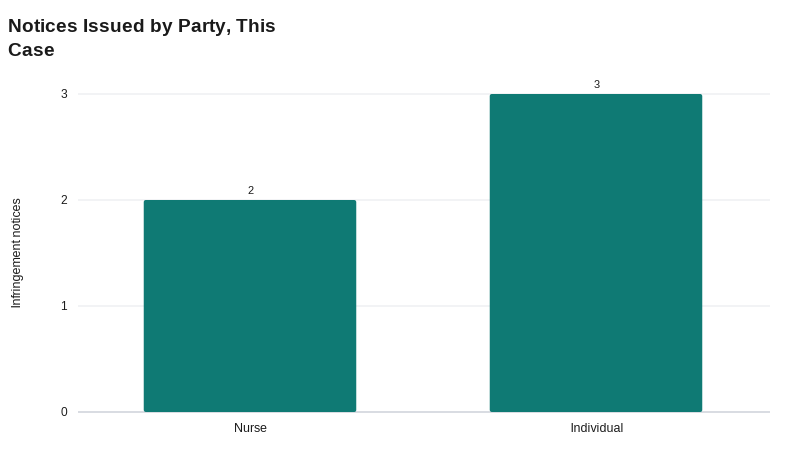
- The nurse was issued 2 notices totalling $7,920. The individual was issued 3 notices totalling $11,880.
- Both are alleged to have imported unapproved pre-filled syringes containing hyaluronic acid, poly-L-lactic acid and lidocaine.
- The individual is also alleged to have imported unapproved prescription-only tranexamic acid without an exemption.
- The release says the notices were paid in May 2026.
- The release says the TGA is targeting unapproved therapeutic goods used in cosmetic procedures as part of its Compliance Principles 2026 and 2027.
- The release shows images of two unapproved products, Profilo and sculptura, described as parallel imported cosmetic injectables not approved for the Australian market. It does not say these were the goods in this case.
- The release page lists three related releases on cosmetic injectable or unapproved goods imports, dated 6 July 2026, 26 March 2026 and 18 December 2025.
What the TGA actually said
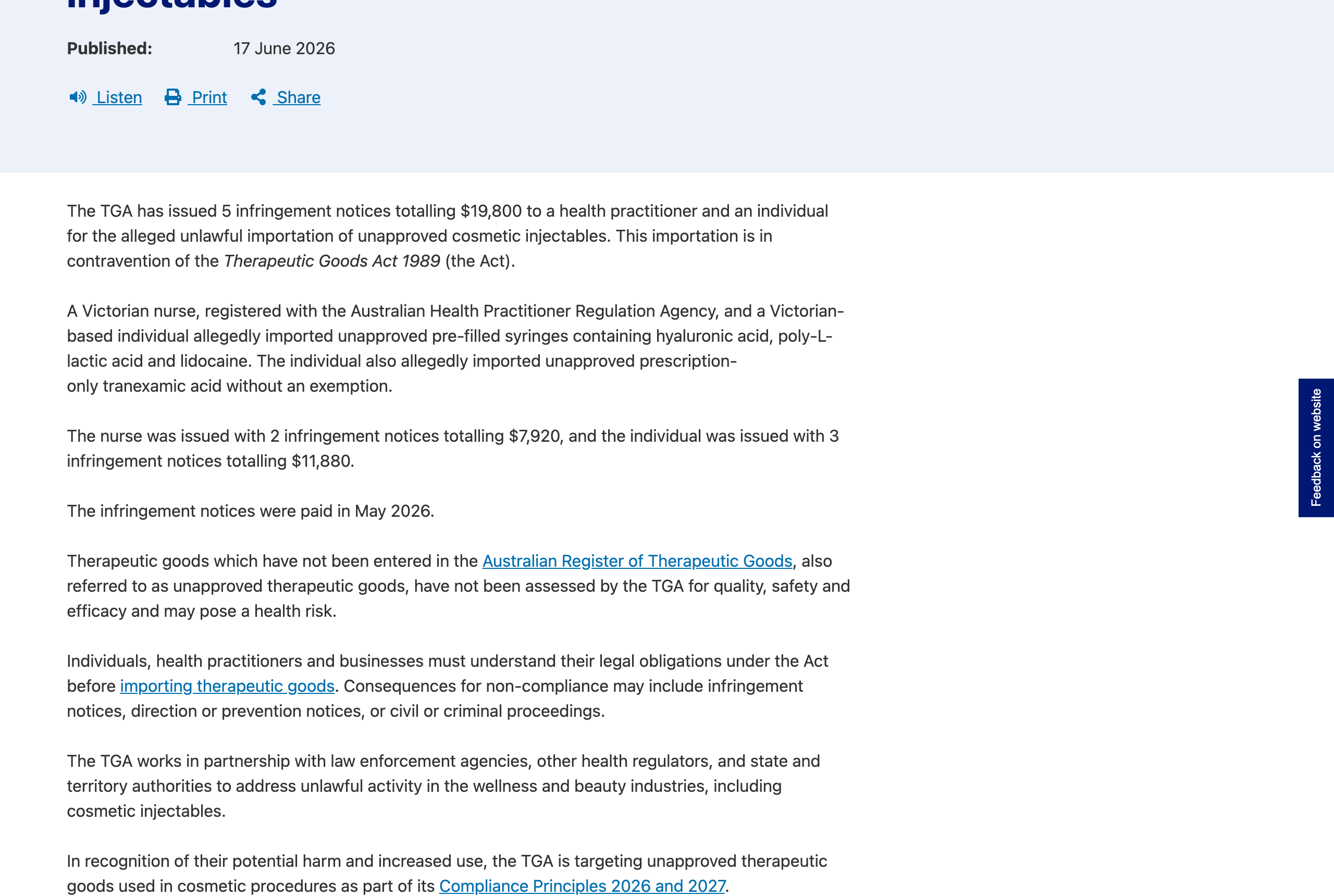
A Victorian nurse, registered with the Australian Health Practitioner Regulation Agency, and a Victorian-based individual allegedly imported unapproved pre-filled syringes containing hyaluronic acid, poly-L-lactic acid and lidocaine. The individual also allegedly imported unapproved prescription-only tranexamic acid without an exemption. The release says goods not entered on the Australian Register of Therapeutic Goods (ARTG) are unapproved, “have not been assessed by the TGA for quality, safety and efficacy and may pose a health risk.”
The nurse was issued 2 infringement notices totalling $7,920. The individual was issued 3, totalling $11,880. The release says the notices were paid in May 2026. The release is dated 17 June 2026.
Here is the per-notice figure (our arithmetic: $7,920 divided by 2 notices is $3,960, and $11,880 divided by 3 notices is $3,960). Both inputs are in the release. We do not know why the amounts match, and the release does not say.
The release also states that “the TGA is targeting unapproved therapeutic goods used in cosmetic procedures as part of its Compliance Principles 2026 and 2027.” It lists the possible consequences of non-compliance as “infringement notices, direction or prevention notices, or civil or criminal proceedings.” The release page shows images of Profilo and sculptura, which it describes as “parallel imported cosmetic injectables not approved for the Australian market”.
In our view, product names like these are the kind of thing a clinic might list on a treatment menu or in a booking dropdown. That is our reading, not something the TGA says.
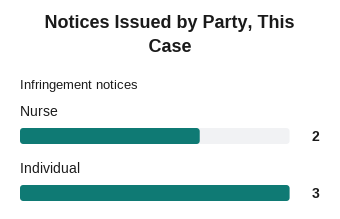
Source: TGA media release, published 17 June 2026, seen 25 November 2026.
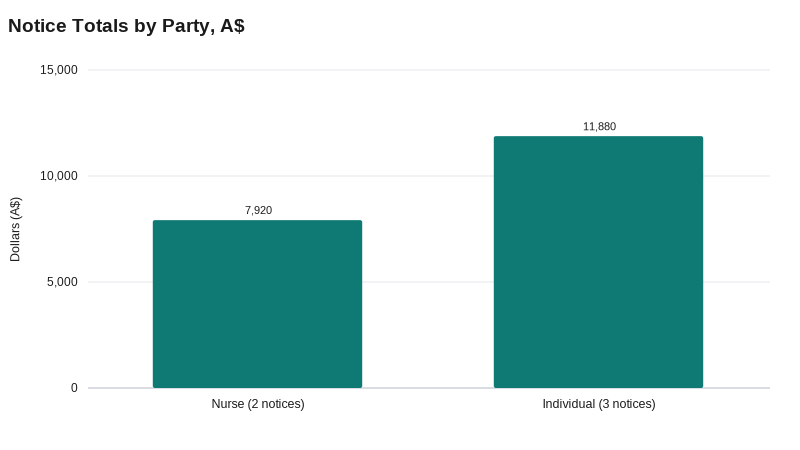
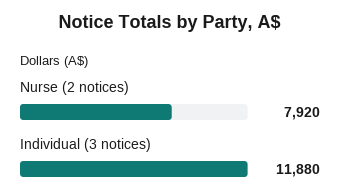
Source: TGA media release, published 17 June 2026, seen 25 November 2026. Both totals are as stated in the release. The two add to the $19,800 total it states.
Takeaway: The dollar figure is the headline. The stated focus on cosmetic procedures is the part to act on.
Why an import case can touch your website
An infringement notice for importation is about what crossed the border. It is not about what a clinic published online, and the release does not mention either party’s website.
The TGA does say how it wants concerns reported: “If you suspect non-compliance in relation to therapeutic goods, or their advertising, you can report it to the TGA at any time.” That is a reminder that advertising and goods are both in the TGA’s remit.
In our view, three website patterns are worth a second look. These are our judgement, not findings from the TGA:
- Named product ranges. A treatment page that names a specific product invites the question of whether that product is on the ARTG.
- Sourcing language. Phrases such as “in-house sourced” or “clinically imported” make a claim you may be asked to back up.
- Before-and-after captions. A caption that names a treatment next to product claims links a claim to an image.
None of this means a clinic did anything wrong. It means the website is public.
Takeaway: An import breach and a website content gap are two separate questions. A clinic site is where the second one is visible.
What to check on your own site this week
This is not legal advice, and it is not clinical advice about which products to use. It is a website content check. Here are four places to look, in our view in order of how easy they are to find:
| Page element | What to look for | Why it matters (our view) |
|---|---|---|
| Treatment/service pages | Any named injectable brand or generic “range” language | A named product raises the question of its ARTG status |
| About/sourcing copy | Phrases like “in-house sourced”, “premium range”, “clinically imported” | A sourcing claim is one you may need to support |
| Before/after galleries | Captions naming a procedure alongside product claims | Ties a claim to a specific image |
| Booking widgets and menus | Dropdown or package names referencing specific product lines | A product name can sit here unnoticed |
Source for the table: our own checklist, written in response to the TGA media release, published 17 June 2026, seen 25 November 2026. It is not a TGA checklist.
If a page names a specific product, look it up in the TGA’s ARTG search, which the TGA describes as a search of “medicines, medical devices and biologicals that can be supplied within Australia”, before deciding whether the copy needs to change.
Takeaway: Treat this as a four-item checklist, not a legal review.
The pattern, not just the case
The release page lists three related releases. One is dated 6 July 2026, when the TGA said it issued 3 infringement notices totalling $11,880 to a nurse. One is dated 26 March 2026, covering 6 notices totalling $23,760 to 2 health practitioners and one individual. One is dated 18 December 2025, covering 5 notices totalling $19,800 to a NSW-based individual. Each is described on the page as alleged unlawful importation.
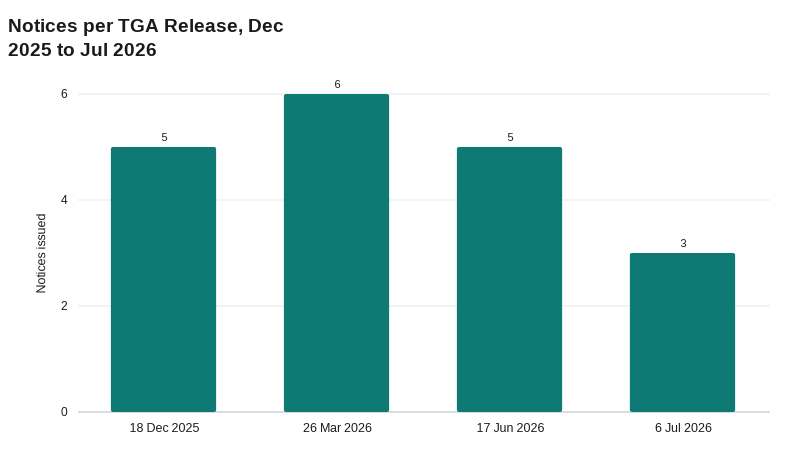
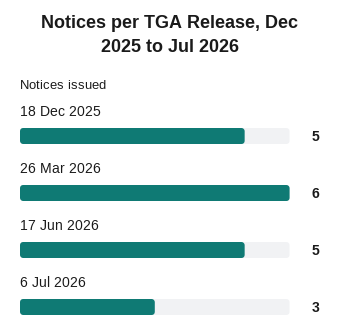
Source: the 17 June 2026 TGA release and the three related release summaries listed on its page, seen 25 November 2026. The releases cover different people and goods, so the bars are not a trend line.
The Compliance Principles 2026 and 2027 page says the principles cover 1 January 2026 to 31 December 2027, and that priority focus areas “will be reviewed every quarter and updated as required.” We did not find cosmetic injectables named on that page’s text, so we rely on the 17 June release for that link.
Whether any of this applies to your clinic, your supplier or your website is a question for your medical defence organisation or your lawyer.
Takeaway: One case is a headline. In our view, repeated releases on the same topic are a reason to check your own pages.
Frequently Asked Questions
How much did the TGA fine the nurse and the individual?
The TGA issued 5 infringement notices totalling $19,800, announced in a media release on 17 June 2026. A Victorian nurse, registered with Ahpra, was issued 2 notices totalling $7,920. A Victorian-based individual was issued 3 notices totalling $11,880. The release says the notices were paid in May 2026. The imports are alleged.
What products were involved in the TGA case?
The nurse and the individual allegedly imported unapproved pre-filled syringes containing hyaluronic acid, poly-L-lactic acid and lidocaine. The individual also allegedly imported unapproved prescription-only tranexamic acid without an exemption. The TGA says goods not entered on the Australian Register of Therapeutic Goods are unapproved and have not been assessed by the TGA for quality, safety and efficacy.
Does an unlisted ARTG product automatically mean my website is non-compliant?
No source we opened says so. The TGA case is about importation, which is a separate question from website content. In our view, a site that names a product is worth checking against the ARTG. Whether either issue applies to your circumstances is a question for your medical defence organisation or your lawyer.
What are the TGA Compliance Principles 2026 and 2027?
They are five compliance principles, with priority focus areas, that guide the TGA’s compliance activities on importing, exporting, supplying, manufacturing and advertising therapeutic goods for 1 January 2026 to 31 December 2027. The TGA says the focus areas are reviewed every quarter. Its 17 June 2026 release says it is targeting unapproved therapeutic goods used in cosmetic procedures as part of these principles.
Need a hand with your website?
If you want a second pair of eyes on how this applies to your own site, request a callback and we will talk it through.
Sources and References
- Therapeutic Goods Administration, “TGA issues infringement notices to a health professional and an individual for alleged unlawful importation of cosmetic injectables,” media release, published 17 June 2026. tga.gov.au. Date checked: 25 November 2026. Source for the $19,800 total, the $7,920 and $11,880 figures, the notice counts, the products, the May 2026 payment, the Compliance Principles quote, the Profilo and sculptura caption and the related releases list.
- Therapeutic Goods Administration, “Australian Register of Therapeutic Goods (ARTG).” tga.gov.au. Date checked: 25 November 2026. Source for the description of the ARTG search.
- Therapeutic Goods Administration, “Compliance Principles 2026 and 2027,” last updated 10 June 2026. tga.gov.au. Date checked: 25 November 2026. Source for the 1 January 2026 to 31 December 2027 period and the quarterly review of focus areas.
Vikas Thakur
Founder, Perth. 16 years of experience from working at TPG, iiNet and Monadelphous, now helping Australian clinics keep their websites, ads and online presence AHPRA compliant.